
Brussels – The European Parliament is threatening to veto the proposal, while farmers are ready to bring their tractors back to Brussels. The EU’s proposed multiannual financial framework (MFF 2028–2034) put forward by the President of the European Council, António Costa, heats the political debate and stokes emotions. There are plenty of tensions and divisions. The first reaction to the proposal for 181 billion euros in cuts came from France, with the President of the Republic describing the proposal as “very disappointing”, particularly given the funds being taken away from agriculture.
For Germany, on the other hand, the problem with Costa’s proposal is that “its size remains too high”, the Federal Government said in a statement, in a clear call for further cuts. For Paris and Berlin, Costa’s draft budget “does not constitute a basis for negotiation”, albeit for different and opposed reasons, and this week’s extraordinary meeting of heads of state and government (26 and 27 November) therefore faces an uphill struggle.
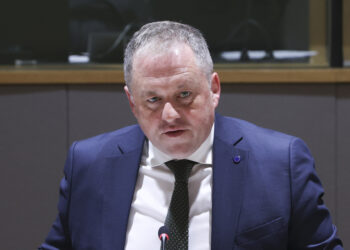
While the member states appear divided, distant and quarrelsome in the Council, members of the European Parliament are threatening to veto the proposal. Siegfried Mureșan, co-rapporteur on the dossier for the European People’s Party (EPP), once again lays bare the internal divisions within his own political group: “The negotiating framework is taking us backwards, rather than preparing Europe for the challenges that lie ahead”, he said. He then warned: “Securing an absolute majority to approve the budget is more difficult than ever”. This is no small matter, given that, as he deliberately points out, “an agreement is only possible if Parliament is listened to”, and Parliament is calling for increases rather than cuts.
On the same wavelength, Carla Tavares (S&D), the other co-rapporteur for the text, said: “We cannot promise Europeans greater security, competitiveness, prosperity and decent jobs while cutting the resources needed to deliver them.”
The President of the European Committee of the Regions (CoR), Kata Tüttő, was scathing: “European competitiveness, in perspective. EU budget proposal: 226 billion euros a year. Less than 2 per cent of total public spending. Nvidia alone lost 440 billion euros in market value in one day”. She then took a swipe at the reform of cohesion policy and the decentralised management of funds. “But sure, Europe’s competitiveness lives or dies on whether we put an extra €16bn a year into centralised calls rather than invest it across Europe’s regions.”
The proposed multi-year budget is a provocation to the agricultural sector, which is determined to respond: “Significant cuts to the Common Agricultural Policy (CAP) remain, confirming farmers’ determination to protest from 26 November”, said Copa and Cogeca, the European farmers’ organisations, who are calling for mobilisation: “On 26 November, we will march in Brussels, to coincide with the meeting of EU leaders on the Union’s next budget”.
The CIA – Italian Farmers’ Confederation – announced its participation, alongside Confagricoltura. This poses a headache for Italy and the Meloni government, as a significant section of the agricultural sector is exerting pressure to alter negotiations that are more complicated than ever.
English version by the Translation Service of Withub