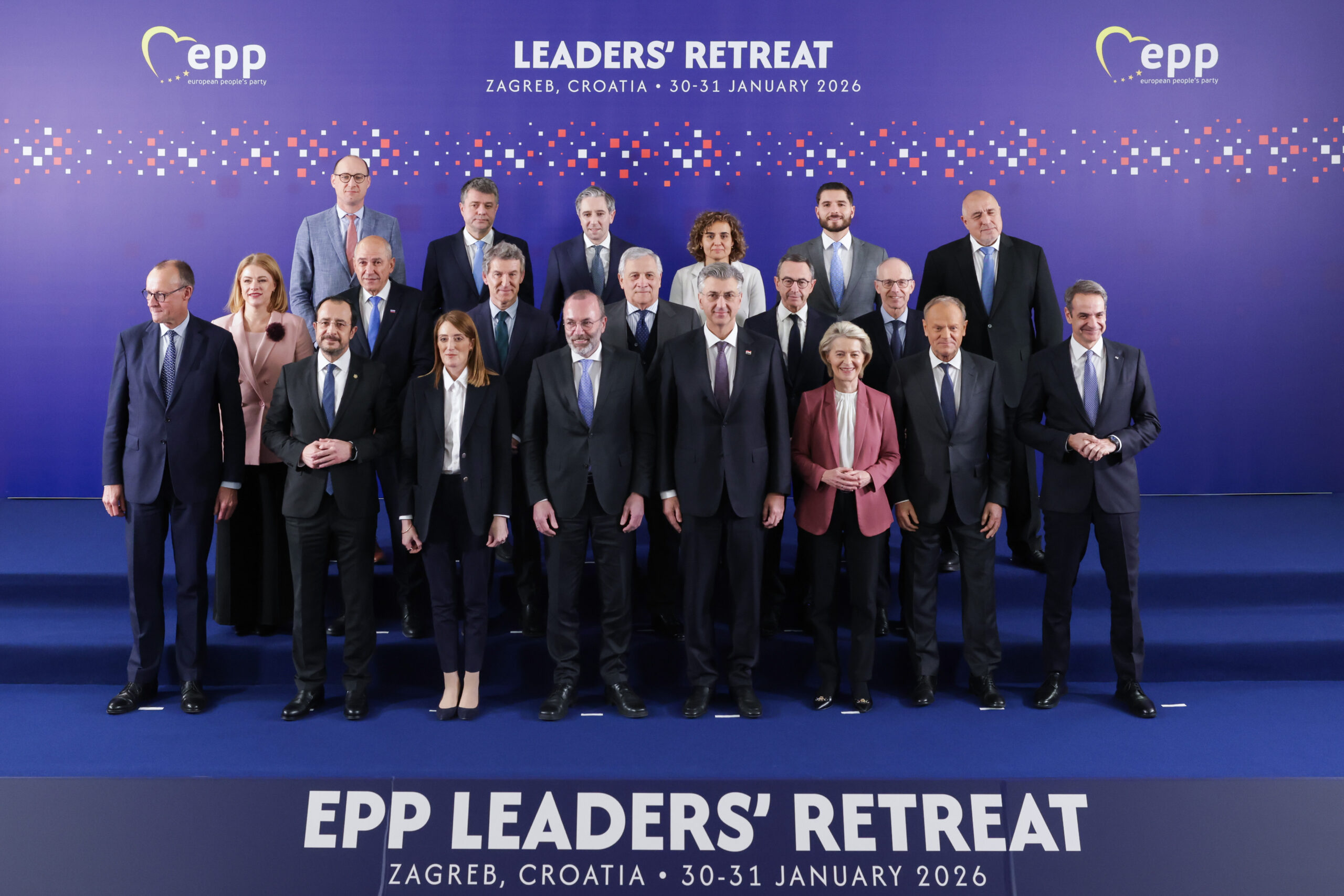
Brussels – The European Union’s draft multiannual financial framework (MFF 2028–2034) is causing discontent within the European People’s Party (EPP), where divisions and rifts are emerging between the parliamentary group, the party and its leaders.
The plenary debate preceding next week’s summit of heads of state and government – which will also focus on the budget – is bringing these divisions to the fore.
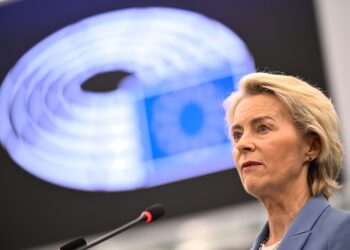
Danuse Nerudova, a Czech MEP from the European People’s Party, is perhaps the one who best articulates the EPP’s concerns: “The Parliament wants a strong budget. Three new sources of own resources are on the table: if the leaders do not approve them, they will have to explain why the EU’s financial programmes will be empty, and make it clear that the responsibility for this will not lie with Brussels.”
This is a direct attack on the EU’s heads of state and government, who are calling for cuts – starting with German Chancellor Friedrich Merz, the driving force behind this austerity policy, as also reiterated by her Minister for European Affairs and party colleague (CDU, affiliated with the EPP), Gunther Krichbaum. It is a move that offers the opportunity to publicly cement a new political alliance with the Socialists in the name of securing more resources. “Can we count on the EPP to defend the budget?”, asks the Spaniard Marco Ros Sempere (S&D). “Certainly,” assures Nerudova.
https://www.eunews.it/en/2026/07/02/the-eibs-role-and-own-resources-for-5g-pierrakakis-sparks-debate-on-the-eus-multiannual-budget/
But the critical voices within the EPP group are not limited to the Czech MEP’s remarks. Monika Hohlmeier, vice-president of the Budgets Committee, a German member of Chancellor Merz’s CUD, denounces “national self-interest” which is influencing the debate on the forthcoming multiannual budget. “European programmes create synergies,” she insists, in what is an explicit call to abandon the logic of cuts. Similar calls have been made by the Bulgarian Andrey Nokanov, also a member of the EPP: “We do not have the resources to be stronger and more competitive.”
From the Polish MEP from the EPP, Michal Szczerba, a specific request: “Avoid cutting military mobility.” This request drew a cryptic, somewhat critical response from the conservative Roberts Zile (ECR): “That, too, requires money and investment…”
The vice-chair of the EPP Group, Sigfried Muresan, takes a stand against the leaders, albeit in less strident terms: “Any debate on cuts amounts to weakening Europe, and any cut that weakens Europe is not a basis for negotiation,” for this Parliament, he warns, and not without reason. Because in the never-simple political debate on the budget, various forms of convergence are emerging, dictated by differing interests, but in any case aimed at rejecting the position of the Council and the Member States.
There is a section of the sovereigntist movement, as demonstrated by the Hungarian MEP Eniko Gyori (PfE), that is ready to vote alongside the People’s Party, Socialists, Greens, and Liberals in favour of a larger budget: “Parliament should remain faithful to its proposal to increase by 10 per cent the budget level, and reject cuts to agricultural policy and cohesion funding,” she emphasises.
Gyori herself, however, says “no” to the idea of new own resources – money that goes directly into the European Commission’s coffers without having to be requested from national governments. These are “taxes,” she argues, and “European citizens do not need new taxes.” It is a pity that the call to approve the new own resources comes from the benches of the People’s Party (EPP), the Socialists (S&D), the Liberals (RE) and even the Greens. These convergences and alliances are taking shape largely due to internal discontent within the European People’s Party, which is at odds with the party and the EU leaders who belong to it.
English version by the Translation Service of Withub