
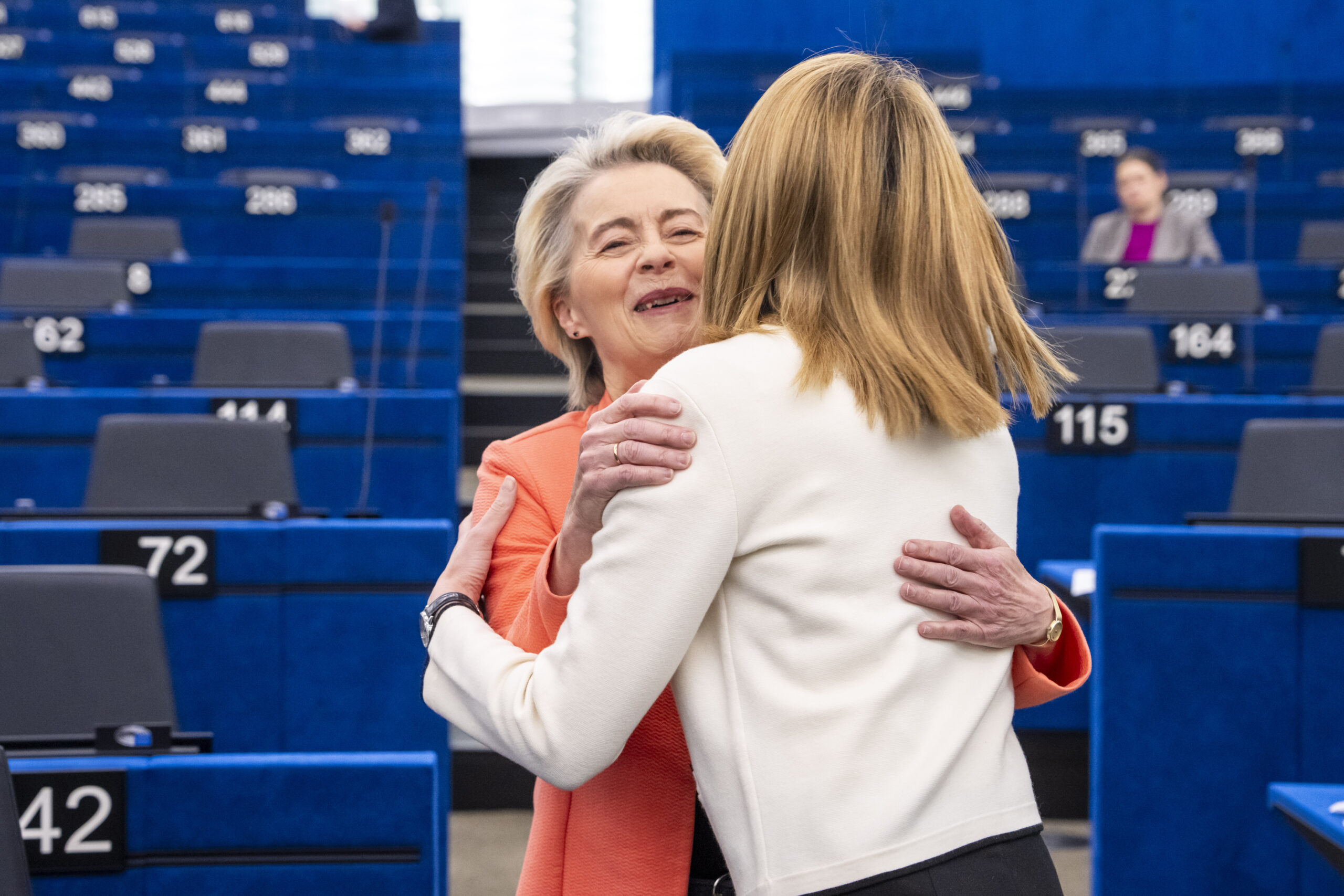
from our correspondent in Strasbourg – The need to secure a just and lasting peace in Ukraine, the European Union’s role in negotiations with Moscow, and the defence of the international order. These are the key issues at the heart of the debate that took place today (25 November) in the plenary session in Strasbourg, with the participation of the President of the European Commission, Ursula von der Leyen, and the Irish Presidency of the Council of the EU. Also at the heart of the discussion were the outcomes of the European summit in Dublin on 12 and 13 November and the recent meeting in China between Donald Trump, Xi Jinping and Vladimir Putin. The debate highlighted differing positions among the political groups, particularly regarding the strategy to adopt to end the conflict and the role Europe must play at the negotiating table.
Charlie McConalogue, representing the Irish Presidency, opened the debate, reiterating that the Russian war constitutes “an attack on a country’s sovereignty”, with direct consequences not only for Ukraine’s future, but also “for European security”. The objective, he stressed, must be “a comprehensive, just and lasting peace, based on the United Nations Charter and international law”. For this reason, European participation in the negotiations is essential: “The EU must speak with a clear and united voice”, not least in view of the central role it will be called upon to play in shaping any eventual agreement.
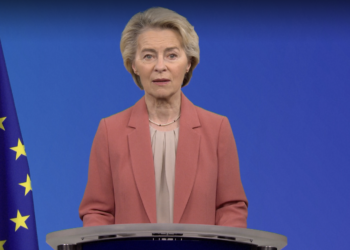
In her speech, von der Leyen emphasised the need to support Kyiv while simultaneously increasing pressure on Moscow. For Ukrainian children, “war is the only reality they have ever known. For these children’s sake, the war must end!” she said. Since the start of the invasion, “Europe has provided Ukraine with over 235 billion euros”. But that is not enough. The President also announced that Ukraine’s financial needs for 2026 are covered, but that for the following year there remains a shortfall of around 70 billion. Hence, the proposal for a new European support instrument worth 45 billion in 2027, of which 20 billion will be allocated to the budget and 25 billion to military assistance. Repayment, she clarified, will only be required once Russia has compensated for the damage caused by the war.
Alongside financial and military support, the President highlighted the effectiveness of sanctions, announcing the twenty-second package of measures against Moscow, with further restrictions on the financial and energy sectors and on Russia’s shadow fleet. Sport and culture, too, must remain free from Kremlin propaganda: “They must never become tools of Russian propaganda”. On the diplomatic front, von der Leyen called on Moscow to agree to a winter ceasefire regarding energy infrastructure and a truce to ensure the safe passage of food exports through the Black Sea. Peace, she concluded, must protect “Ukraine’s sovereignty” and guarantee its long-term security.
On behalf of the European People’s Party, MEP Andrzej Halicki called for the war to end as soon as possible, stressing that much will depend on Europe’s determination to maintain a strong and consistent stance. It is not just a question of military assistance, but also of financial resources: “Money is one of the issues for Ukraine,” he pointed out.
Speaking on behalf of the Socialists and Democrats, Nacho Sánchez Amor described European support for Kyiv as a matter of principle rather than a purely commercial approach: “We do not support Ukraine for the sake of future business deals, but because it is the right thing to do.” At stake, he added, is not just the fate of a country, but “the defence of the international order”.
Harald Vilimsky (Patriots for Europe), on the other hand, criticised the EU for failing to take on a mediating role from the outset: “Peace must be the objective; war can never be an objective.” From the ECR, Adam Bielan described the conflict as the bloodiest since the Second World War. Bielan criticised the fact that, since the invasion, the EU has “paradoxically transferred more money to Putin than it has allocated to Kyiv”.
Valérie Hayer, speaking on behalf of Renew Europe, warned that three autocrats are attempting to build a new world order without Europe. “What sort of image are we projecting if we do not have a single voice to represent us?” she asked, reiterating that cutting off aid to Kyiv would play into Putin’s hands: “Ukraine’s security is our security”. Mārtiņš Staķis, speaking on behalf of the Greens/EFA, also stressed the need for a just peace, one that does not amount to a reward for the aggressors: “We do not want surrender, but a just peace.”
More critical was Özlem Demirel of the European Left, who denounced the lack of a genuine European political strategy and called for clarification on the negotiating group’s common line. She also contested what she considers to be a selective application of international law: “You like to talk about international law, but then where are the sanctions against Israel?”
Finally, Roberto Vannacci, speaking on behalf of the Europe of Sovereign Nations (ESN), launched a scathing attack on the EU Commission’s strategy, criticising the use of European bonds and the cost to citizens of supporting Kyiv. “Meanwhile, Trump, Xi and Putin are dividing up the world, and Frau von der Leyen is watching from the window,” he concluded.
Despite differences in positions, the debate in the European Parliament has brought a crucial issue back to the fore: what influence will the European Union be able to exert on peace-building and on shaping the continent’s future security architecture?
English version by the Translation Service of Withub