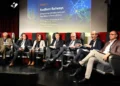
Brussels – European cancer services are increasingly exposed to hostile threats, and the EU’s security agenda cannot ignore this. This is the argument put forward in the new report “Cancer, Security & Resilience: A European agenda for preparedness and response”, drawn up by experts from the European Cancer Organisation (ECO) and presented today (19 November) at the European Cancer Summit in Brussels, during a session organised by the organisation’s Emergencies & Crises network.
The document begins with cyber-attacks. In 2023, the European Union Agency for Cybersecurity (ENISA) recorded 309 significant security incidents in the EU healthcare sector – more than in any other critical sector. The latest incident is the attack on French blood banks, which follows the suspension of radiotherapy in Ireland in 2021 and breaches at cancer centres in Cyprus, Spain, the United Kingdom and Belgium.
On the military front, the World Health Organisation (WHO) has documented over 3,000 attacks on healthcare facilities in Ukraine since the large-scale invasion in February 2022. As of September 2026, the Ukrainian Ministry of Health had recorded 340 facilities destroyed and a further 2,347 damaged.
Then there is misinformation. Of 3,876 tweets opposing the human papillomavirus (HPV) vaccine, 24 per cent contained false or misleading information, and these posts were retweeted more than five times as often as those in favour.
According to the network’s co-chair, Mark Lawler, of Queen’s University Belfast, “protecting health and cancer services must be an integral part of those plans.” His colleague Jacek Jassem, from the Medical University of Gdańsk, stressed that the Ukrainian experience shows that preparedness cannot begin once a crisis has already broken out: contingency plans, trained staff, secure supply chains and cross-border cooperation are needed.
The report proposes an integrated approach, known as “Medifence”, which combines health, security, defence and digital policies. It calls for independent investigations into unlawful attacks on healthcare facilities; the inclusion of cancer care needs in humanitarian planning; cybersecurity requirements in national cancer control plans, with dedicated EU funding in the 2028–2034 budget; and resilience testing of cancer care services, with an action plan for staff.
English version by the Translation Service of Withub