Brussels – What are quantum technologies used for? According to the European Commission, they are used to “do things that simply cannot be done today” and, for this reason, they must be strengthened across the EU, building on three essential pillars: excellence in research, industrial development, and the security of systems and supply chains. And then through resources, by setting up a dedicated fund – the Sovereign Tech Equity Fund (STEF) – which, while currently empty, is expected to hold an initial target of 50 billion euros, thereby helping to unlock investments of up to 400–500 billion euros. Its remit will be to support investment in strategic technologies and strengthen the EU’s technological sovereignty and economic security by providing venture capital and other forms of equity financing to businesses, with a scope extending beyond the quantum sector. These are the key points of the Quantum Act proposed today (25 November) by the European Commission. This is a new regulatory framework aimed at helping to transform European quantum research into products and services, strengthening supply chains and preparing European digital systems for post-quantum cryptography.
Quantum computing is a method of processing information that uses the laws of quantum mechanics to solve complex problems more quickly than traditional computers. In practical terms, the Commission explains, it enables us to “look far beneath the ground or under the sea and perform complex computational tasks…that the most powerful supercomputers cannot currently manage”, to help “send sensitive information safely”, or “to diagnose diseases more quickly and accurately by looking inside cells,” and much more. The European Union already boasts a “tradition of excellence in quantum research”, but this needs to be stepped up.
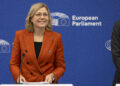
“Alongside artificial intelligence, the cloud and chips, quantum research completes our strategic approach to Europe’s technological sovereignty,” said Henna Virkkunen, Executive Vice-President for Technological Sovereignty, who presented the text in Strasbourg – on the sidelines of the European Parliament’s plenary session. According to a press release, the impact of quantum technologies will be profound, ranging “from satellite-free navigation and faster drug discovery to ultra-advanced batteries and next-generation secure communications”. An EU official explained that the dossier has been presented now because “we are at a turning point”, as quantum innovations “are coming to the market, one after the other, at different rates” and “according to forecasts by McKinsey (a consultancy firm, ed.), it is estimated that the global quantum market will reach a value of around 155 billion by 2035”. According to the same estimates, “the total value generated by the quantum sector for society as a whole – including savings and direct benefits – could reach, by 2035, between 1.3 and 2.7 trillion dollars”. This therefore represents a “huge impact, probably comparable only to that of artificial intelligence, both in terms of transformation and potential economic value”. In addition to the market, the other factor that has prompted the Berlaymont to take action is “the global race towards quantum technology”, given that “the United States and China are stepping up their efforts to bring quantum technologies from the laboratory to the market, and the time has therefore come for Europe to act too”, the official explained. According to EU sources, the United States is also “incorporating this aspect into its public procurement procedures”.
The three pillars of the Quantum Act
The Quantum Act is based on three main pillars:
excellence in research, the use of quantum technologies, and the security of systems and supply chains. Broadly speaking, the proposal aims to improve access to funding, shared infrastructure and specialised support services. The legislation will also support Europe’s transition to post-quantum cryptography, to help protect data, communications and critical infrastructure from future cyber risks linked to quantum computing. Another key element is the ‘Quantum Europe Framework’ initiative, which will bring together EU and national programmes around shared priorities for research and industry.
“As regards research and industrial implementation, the aim is to transform Europe’s strengths and leadership into large-scale industrial capacity.” Specifically, the document proposes establishing a new network of leading European research institutes to bring together world-class researchers and give them access to research facilities across Europe. This also includes ‘Grand Challenges’, a set of targeted funding calls and strategic initiatives aimed at overcoming major technological and engineering bottlenecks. The legislation will also support the creation of pan-European quantum infrastructures for researchers and businesses across Europe, providing access to quantum computers, quantum simulators and medical imaging enhanced by quantum technology. The Berlaymont building also calls for greater focus on “strategic projects to strengthen key quantum capabilities, including industrial applications and manufacturing”, by both the EU and by the Member States.
Regarding the final pillar – namely, the security of supply chains – the European Commission noted that “quantum technologies are becoming increasingly important for security, with both civilian and dual-use applications”. It therefore suggests that Member States work with the Commission to “monitor supply chains, identify critical suppliers and components, and mitigate supply chain risks”. Furthermore, the EU must also “collaborate with international partners” on this front. For this reason, the legislation advocates “a coordinated transition to post-quantum cryptography, with monitoring of preparedness and targeted procurement safeguards to help keep European digital systems secure”. EU sources have pointed out that “only 9 of the 47 critical components are actually produced locally”. This means that “we are heavily dependent on suppliers from third countries”, they stressed.
The new Fund
According to Virkunnen, in Europe “we boast the world’s largest number of scientific publications and talent in the field of quantum technology, as well as a thriving industrial base, with a third of all quantum start-ups based in Europe”. However, “our industrial ecosystem is fragile due to fragmented support across Member States and reduced access to private capital compared with the United States and China”. More specifically, “quantum start-ups in Europe have attracted only 5 per cent of global private funding, compared with 50 per cent in the United States”.
Consequently, the key measures include the new investment instrument, the Sovereign Technology Equity Fund (STEF). Its aim is to provide “equity and equity-like financing to support technologies essential to the Union’s technological sovereignty and economic security”. In this regard, the European Commission aims to work “closely with the European Investment Bank Group, Member States and other key stakeholders to set it up swiftly”. It will also help finance the Quantum Europe framework initiative – the plan adopted by the European Commission on 2 July 2025 to position the European Union as a world leader in quantum technologies by 2030 – and the measures outlined in the Commission’s technological sovereignty package. An EU official clarified that “this will be a new venture capital investment vehicle, aimed at funding technologies essential to the Union’s technological sovereignty and economic security”, which “will make large-scale direct investments in strategic European companies and industrial projects”. This instrument “will complement existing financial mechanisms, filling a significant gap in the European investment landscape”, the official emphasised.
“We have laid the legal foundations for this Fund, but we will now continue to work with the European Investment Bank, the Member States and private investors to set up this fund. And what we aim to achieve with this initiative is precisely what we are lacking at European level: we do not have the sort of capital fund that would enable us to invest effectively in our strategic technologies at the European level”, said Virkkunen, who pointed out that some Member States have their own, smaller sovereign wealth funds, but that when it comes to this type of critical technology, “investments in the hundreds of millions are often required, and it is precisely in these cases that we really need to pool our resources at the European level”. The aim is “to create a fund, and our target is now €50 billion”, the Commission Vice-President added. ““I believe this should provide a sufficient starting point to effectively mobilise the necessary investments, amounting to €400 or €500 billion. This is what we believe is necessary to underpin our technological sovereignty in the coming years, truly,” Virkkunen concluded.
Finally, the Berlaymont Building proposed establishing a Quantum Strategy Committee to bring together the Commission and the Member States to ensure the strategic coordination of national and European programmes. Specifically, “a European Quantum Alliance will bring together public and private stakeholders, including suppliers and end-users, universities, and research and technology organisations, to support this commitment”. The European Parliament and the Council will now examine the proposal. Future EU funding under the Quantum Act will depend on budgetary decisions and the rules governing the programmes in question. In 2025, the Commission adopted the Quantum Europe Strategy, in which it outlined public investment in the quantum sector by the EU and its Member States totalling more than 11 billion euros.
English version by the Translation Service of Withub