
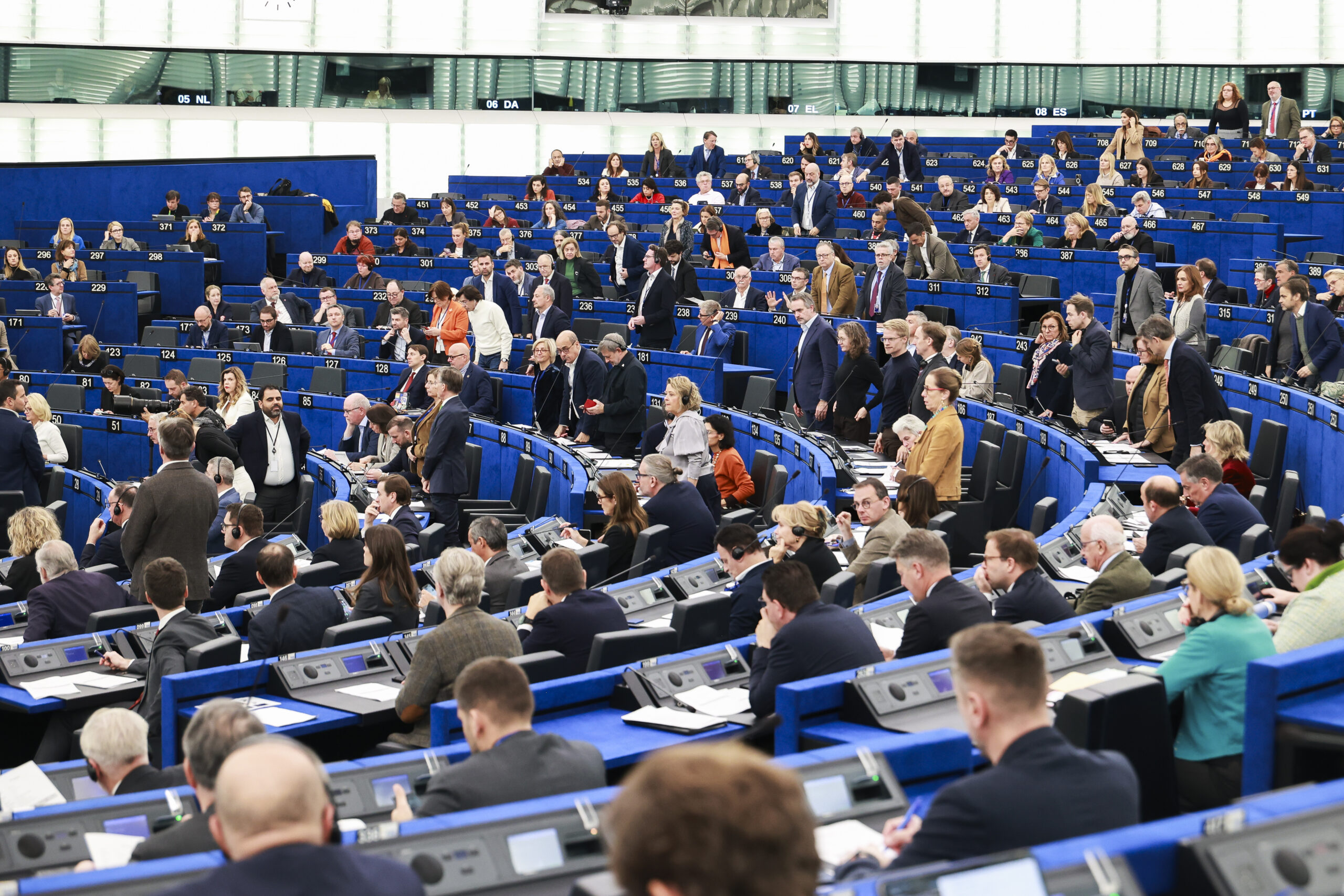
Brussels – Following the Trump administration’s numerous threats against the International Criminal Court (ICC), the European Parliament has taken a clear stand in favour of international justice. Today (25 November), the European Parliament adopted a resolution urging “the EU to support the international justice system,” as well as “to protect institutions and human rights defenders from external pressure.” The text follows the MEPs’ decision on 22 October to grant the Sakharov Prize for Freedom of Thought 2026 to the International Criminal Court (ICC) and its officials. Adopted in plenary with 438 votes in favour, 168 against and 38 abstentions, the resolution highlights “the unprecedented threats facing the international justice system – in particular the International Criminal Court (ICC) – which is subject to coercive pressure, unilateral sanctions and campaigns aimed at undermining its credibility and independence.” It also explicitly mentions “sanctions against ICC officials, freezing their assets and prohibiting any form of material or financial support,” imposed by the United States, alongside “other measures affecting UN mandate holders and partner non-governmental organisations.” The Greens MEP and rapporteur for the text, Mounir Satouri, stated: “We defend the EU’s sovereignty and international justice, without resorting to double standards.”
Among the various elements of the report, one that stands out is the call to update and implement the so-called blocking statute, the EU regulation that neutralises the extraterritorial effects of laws and sanctions imposed by third countries. According to MEPs, “US sanctions have caused concern amongst European banks, insurance companies, and digital service providers, leading to overzealous enforcement of the rules, which hinders payments and services essential to the functioning of international justice.” Consequently, the report proposes “a reduction in the EU’s structural dependencies on non-European financial and digital infrastructure, as well as the use of the anti-coercion instrument.” On this point, the European Parliament also emphasised “the importance of working with partner democracies to mitigate such pressures, through trade agreements and political dialogue.” “It is now up to the Commission to act decisively: to urgently activate the “blocking regulation” and launch a coordinated strategy to protect the ICC,” Satouri emphasised.
Another key point is “the granting of visas to witnesses and human rights defenders committed to ensuring that those responsible are held to account, in order to preserve the integrity of legal evidence before international courts.” Furthermore, while recalling the universality of the ICC, the Parliament calls on the European Council to “explicitly incorporate the Rome Statute into EU law.” MEPs noted that this would support “the crucial role of international justice in upholding the rule of law, ensuring accountability and protecting victims wherever they may be.”
The European Parliament emphasised that “international justice is a pillar of the EU’s strategic autonomy” and therefore called for a coordinated response “to ensure that impunity for the most serious crimes is not tolerated.” The plenary session called on the Commission and the EU High Representative for Foreign Affairs to propose a strategy and an action plan that include: “an assessment of existing instruments to address gaps; concrete protection mechanisms for judges, prosecutors, witnesses, and victims; robust and predictable financial support for international justice mechanisms; better coordination between EU Member States, the European Union Agency for Criminal Justice Cooperation (Eurojust) and the United Nations’ investigative mechanisms.” MEPs finally urged the Commission to present an annual report “on the implementation of this strategy, the impact of foreign sanctions and the use of EU funds earmarked for international justice.”
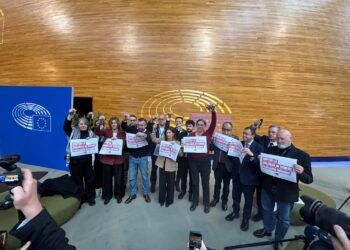
In addition to the report, 56 MEPs have sent an open letter to the President of the European Commission, Ursula von der Leyen, and to the Commissioner for Financial Services, Maria Luís Albuquerque, calling for the blocking statute to be updated before the US sanctions against the ICC come into force in April, and for a reduction in the dependencies that allow foreign sanctions lists to determine who can access banking services in Europe. In the letter, the signatories point out that the sanctions imposed by the US administration against judges and the International Criminal Court itself expose European citizens, banks, and institutions to the risk of secondary sanctions. The letter cites cases that have occurred in Italy, such as the freezing of accounts held by Cuban doctors in the public health service for the purpose of transferring part of their salaries. Drawing on data from the European Central Bank, the MEPs observed that at the root of the problem, “there is a structural dependency: over 60 per cent of card transactions in the euro area pass through international payment systems, compounded by the vulnerability of digital infrastructure, from the cloud to communication networks.”
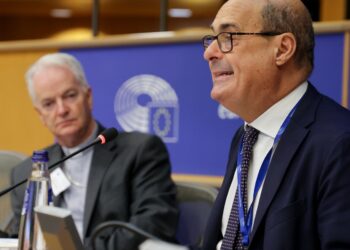
On the sidelines of the plenary session, a press conference was held on the topic, entitled “Who decides who can operate in the banking sector in Europe?”, focusing on extraterritorial sanctions imposed on EU entities. The event was organised by the PD (S&D) MEP and lead signatory of the letter, Brando Benifei, who stated: “We want European banks to be able to operate without facing retaliation from foreign actors. Let me be very clear: the issue of protecting the interests of European citizens will be at the heart of the mid-term elections to the European Parliament. Ursula von der Leyen must send a strong message: unilateral decisions taken illegally by extraterritorial actors cannot be accepted.” Alongside Benifei was the MEP elected with the Greens/Left Alliance, Benedetta Scuderi, who added: “We urgently need to protect our citizens, and the European Union must realise that we have no more time to waste: this issue concerns the EU’s ability to be digitally and fiscally autonomous.”
Similarly, some Member States are beginning to take the initiative. According to a report by the Dutch broadcaster BNR Nieuwsradio, the Netherlands would like to form a coalition against US sanctions against the ICC. The media outlet cites a letter sent by the Foreign Secretary, Tom Berendsen, and the Minister for Justice, David van Weel, to the Dutch House of Representatives, in which they ask that the period up to 7 April – the date on which the US will implement measures against the ICC – be used to “initiate a dialogue” with Washington. The Dutch ministers aim to discuss this during the annual meeting of the 125 signatory states to the Rome Statute – the document that forms the legal basis of the ICC – to be held in The Hague from 30 November to 7 December 2026. The Netherlands will first need to seek out partners, and the countries will discuss how they intend to engage with the United States.