
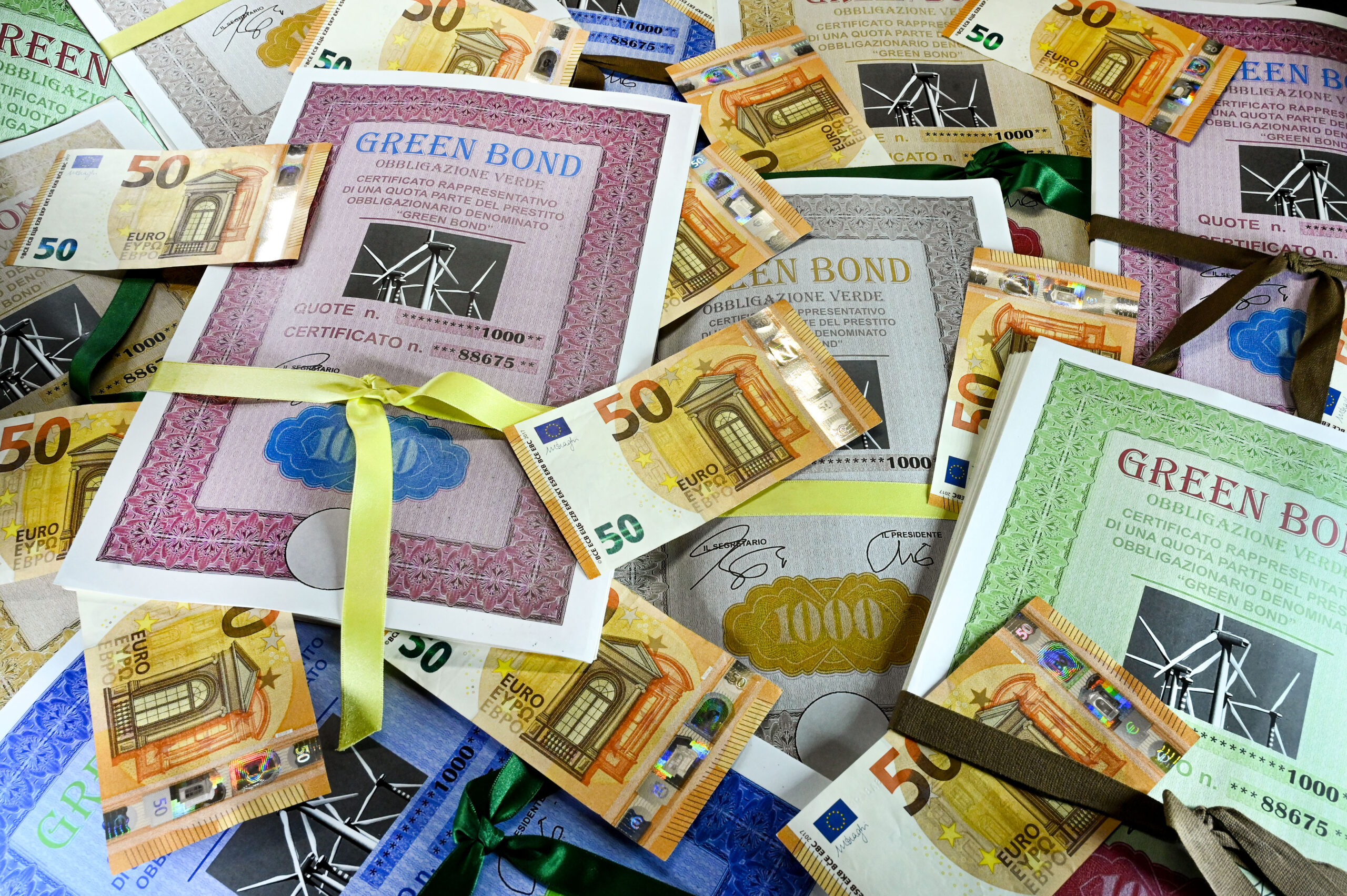
Brussels – European “green bonds” issued to finance the recovery of the EU and its Member States following the COVID-19 pandemic have raised funds that have been used for activities which are neither green nor sustainable. The criticism comes from the European Court of Auditors, in a new report that highlights the shortcomings of the NextGenerationEU post-pandemic recovery mechanism and the limitations of the European Commission’s management, and which also directly calls Italy to account.
Auditors in Luxembourg have analysed the documentation relating to the measures to be financed through green bonds in Germany, Greece, Spain, France, Italy, and Portugal. This was no coincidence, given “the high level of significance of the declared green expenditure.” Poland was also added to this list, due to the high level of planned green expenditure to be reported. Together, these seven Member States accounted for 88 per cent of the eligible green expenditure declared by all EU countries combined as at 1 August 2025.
By the end of 2025, the European Commission had issued NGEU green bonds worth €78.5 billion, with the aim of financing part of NextGenerationEU. This has made the EU a major issuer of “green” debt and has strengthened the euro’s role in the sustainable finance market. More in theory than in practice, however. Because “expenditure declared as ‘green’ is sometimes not green and is not always traceable,” the report states. Specifically, it is estimated that the eligible green expenditure declared by the seven Member States “has been significantly overestimated.” In figures, it is emphasised, “this would be equivalent to €5.4 billion, or 9.8 per cent of the total reported green expenditure”.
https://www.eunews.it/en/2024/09/11/eca-recovery-fund-less-green-than-claimed/
This 9.8 per cent represents the difference between declared expenditure and expenditure actually incurred, amounting to €5.4 billion in ‘phantom’ green investments, the result of checks that have proved to be “not always sufficient.” In fact, the auditors in Luxembourg go even further, stating that “there are no systematic controls at EU level on the projects underlying the declared green expenditure.”
The EU Commission is accused of precisely this: carrying out superficial checks, relying too heavily on self-certifications from governments: “The fact that the Commission relies entirely on Member States’ reporting of green expenditure represents a weakness,” even though specific requirements for governments are in place. It is therefore not surprising that the European Court of Auditors is calling on the European Commission to “revise its procedures to mitigate the risk of issuing an excessive number of NGEU green bonds and to report on the costs and benefits of issuing such bonds.”
The Commission, through a spokesperson, explained that it “welcomes” the Court of Auditors’ findings. “For the issuance of NGEU green bonds, the Commission has committed to following the ‘Green Bond Principles’ of the International Capital Market Association (ICMA). At the time the NGEU Green Bond Framework was adopted in 2021, these principles represented the best market standard in terms of transparency and disclosure for issues of this kind. The Commission welcomes the Court of Auditors’ confirmation that this commitment has been honoured,” said the spokesperson. “The Court of Auditors’ recommendations provide a useful contribution to supporting the Commission’s commitment to maintaining a robust risk management framework for the implementation of the NGEU Green Bond Programme throughout its duration. This includes providing investors and other stakeholders with transparent information on the use of proceeds and the climate impact of expenditure financed through these bonds,” concludes the Berlaymont Building.
English version by the Translation Service of Withub