- Europe, like you've never read before -
Sunday, 18 January 2026
No Result
View All Result
  • it ITA
  • en ENG
Eunews
  • Politics
  • World
  • Business
  • News
  • Defence
  • Net & Tech
  • Agrifood
  • Other sections
    • Culture
    • Diritti
    • Energy
    • Green Economy
    • Finance & Insurance
    • Industry & Markets
    • Media
    • Mobility & Logistics
    • Sports
  • Newsletter
  • European 2024
    Eunews
    • Politics
    • World
    • Business
    • News
    • Defence
    • Net & Tech
    • Agrifood
    • Other sections
      • Culture
      • Diritti
      • Energy
      • Green Economy
      • Finance & Insurance
      • Industry & Markets
      • Media
      • Mobility & Logistics
      • Sports
    No Result
    View All Result
    Eunews
    No Result
    View All Result

    Home » Business » Green economy: EU Parliament questions ECB action

    Green economy: EU Parliament questions ECB action

    The institution's think tank produces a study that highlights choices that appear unrelated to monetary policy and not really autonomous

    Emanuele Bonini</a> <a class="social twitter" href="https://twitter.com/emanuelebonini" target="_blank">emanuelebonini</a> by Emanuele Bonini emanuelebonini
    2 January 2024
    in Business

    Brussels – The unsustainable sustainability of the European Central Bank: the European institution has espoused the EU’s green cause, also on account of the repercussions related to the effects of climate change on policy, the economy, and the labor market. But the choices seem to betray the mandate of the Eurotower, which observers and analysts see as making policy instead of monetary policy and acting on external impulse rather than its own.

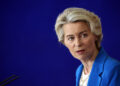
    Pointing the finger at the ECB is the European Parliament’s Think Tank, in a study on climate and monetary policy that does not smile at ECB President Christine Lagarde, who made more eco-friendliness a key point of her mandate.

    Too bad that, according to the paper, “a central bank is not well placed to judge whether financing a brown enterprise (a corporate bond issue or a bank loan) would enable the continuation of high-emission activities or investment in emission reductions.” So flaunting that it would only support through lending activities in line with the goals of the European Green Deal would turn out to be just pure propaganda, as “greening the corporate sector purchase program (CSPP) represents much ado about very little.” To be able to understand what kind of activity one wants to pursue and to what extent it is eco-friendly requires “a detailed analysis of the overall financial structure and investment planning of the enterprise in question,” without which “the impact of greening on actual emissions is likely to be extremely small if not zero.”
    So far, the ECB’s action appears to come more from the gut than the brain. From a practical point of view, stopping financing polluting companies in favor of greener economic actors is not a viable option. The European Parliament’s Think Tank merely emphasizes the need for focus on transition and to accompany today’s ‘brown’ emitters  toward the low-emission ‘green’ model. Something that the ECB does not seem to have understood if a precise transition is needed in this regard. The premise is that in the EU, “a small number of high-emitting sectors dominate the emissions market as a whole.” These so-called ‘brown’ sectors — called this way precisely because of their high emissions intensity — “are the ones that most need capital to finance expensive investments to reduce emissions.” Therefore, it points out, “making access to capital more difficult for brown sectors could harm mitigation efforts.” Here, then, is the error in approach.

    At any rate, according to the experts, the European Central Bank’s sustainability choices have little to do with monetary policy and risk undermining the institution’s independence. On the one hand, according to the study, “it is understandable that the ECB feels under pressure from the public and some NGOs to appear ‘green'” and attentive to the issue of sustainability. But, first and foremost, “providing cheaper access to finance for green businesses or sectors represents a use of public resources that has little to do with monetary policy.” Moreover, “the environmental benefits of caving in to this political pressure are likely to be negligible relative to the dangers to its independence.”

    English version by the Translation Service of Withub
    Tags: bceclimaemissionseuropean central bankeurozoneinvestmentssustainability

    Related Posts

    No Content Available
    map visualization

    Mercosur reshapes Italy’s alliances in Europe: PD with FdI and FI, League with M5S

    by Emanuele Bonini emanuelebonini
    16 January 2026

    The plenary session of the European Parliament has the free trade agreement with South American countries as the main item...

    Defence: Commission approves first SAFE disbursements to eight Member States

    by Emanuele Bonini emanuelebonini
    16 January 2026

    The Council has been asked to authorise disbursement for Belgium, Bulgaria, Cyprus, Croatia, Denmark, Portugal, Romania, and Spain. Von der...

    Migrazione frontiere pushback

    EU, decline in asylum applications continues, down 28 per cent in October compared to 2024

    by Enrico Pascarella
    15 January 2026

    The countries that received the most requests in October were Spain and Italy, but with lower figures than in the...

    Air Canada flights show as cancelled at Pearson International Airport as flight attendants go on strike in Toronto on Saturday, August 16, 2025. Photo by Sammy Kogan/CP/ABACAPRESS.COM

    Flight cancelled, airlines must also reimburse commission costs

    by Ezio Baldari @eziobaldari
    15 January 2026

    This has been established by the Court of Justice of the European Union. When purchasing from a travel agency or...

    • Director’s Point of View
    • Letters to the Editor
    • Opinions
    • About us
    • Contacts
    • Privacy Policy
    • Cookie policy

    Eunews is a registered newspaper
    Press Register of the Court of Turin n° 27


    Copyright © 2025 - WITHUB S.p.a., Via Rubens 19 - 20148 Milan
    VAT number: 10067080969 - ROC registration number n.30628
    Fully paid-up share capital 50.000,00€


    No Result
    View All Result
    • it ITA
    • en ENG
    • Politics
    • Newsletter
    • World politics
    • Business
    • General News
    • Defence & Security
    • Net & Tech
    • Agrifood
    • Altre sezioni
      • European Agenda
      • Culture
      • Diritti
      • Energy
      • Green Economy
      • Gallery
      • Finance & Insurance
      • Industry & Markets
      • Letters to the Editor
      • Media
      • Mobility & Logistics
      • News
      • Opinions
      • Sports
    • Director's Point of View
    • L’Europa come non l’avete mai ascoltata
    • Draghi Report
    • Eventi
    • Eunews Newsletter

    No Result
    View All Result
    • it ITA
    • en ENG
    • Politics
    • Newsletter
    • World politics
    • Business
    • General News
    • Defence & Security
    • Net & Tech
    • Agrifood
    • Altre sezioni
      • European Agenda
      • Culture
      • Diritti
      • Energy
      • Green Economy
      • Gallery
      • Finance & Insurance
      • Industry & Markets
      • Letters to the Editor
      • Media
      • Mobility & Logistics
      • News
      • Opinions
      • Sports
    • Director's Point of View
    • L’Europa come non l’avete mai ascoltata
    • Draghi Report
    • Eventi
    • Eunews Newsletter

    Attention