- Europe, like you've never read before -
Wednesday, 29 April 2026
No Result
View All Result
  • it ITA
  • en ENG
Eunews
  • Politics
  • World
  • Business
  • News
  • Defence
  • Health
  • Agrifood
  • Other sections
    • Culture
    • Diritti
    • Energy
    • Green Economy
    • Finance & Insurance
    • Industry & Markets
    • Media
    • Mobility & Logistics
    • Net & Tech
    • Sports
  • Newsletter
  • European 2024
    Eunews
    • Politics
    • World
    • Business
    • News
    • Defence
    • Health
    • Agrifood
    • Other sections
      • Culture
      • Diritti
      • Energy
      • Green Economy
      • Finance & Insurance
      • Industry & Markets
      • Media
      • Mobility & Logistics
      • Net & Tech
      • Sports
    No Result
    View All Result
    Eunews
    No Result
    View All Result

    Home » Director's Point of View » The poisoned fruits of dictatorships. And why one must know how to choose

    The poisoned fruits of dictatorships. And why one must know how to choose

    Lorenzo Robustelli</a> <a class="social twitter" href="https://twitter.com/@LRobustelli" target="_blank">@LRobustelli</a> by Lorenzo Robustelli @LRobustelli
    16 February 2024
    in Director's Point of View
    Navalny

    Alexei Navalny

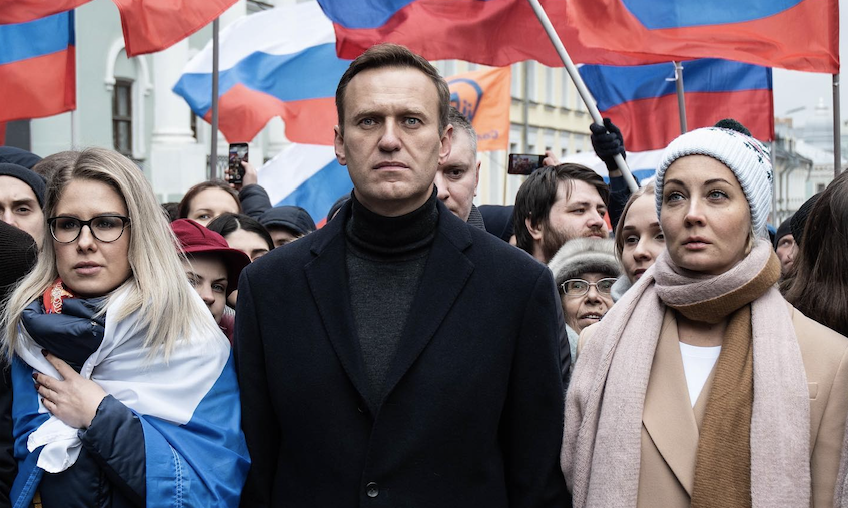
    Today Aleksej Navalny, perhaps the most famous opponent of Vladimir Putin, has died in a remote Russian prison. Many others fled abroad. Or were assassinated. Or died in “obscure circumstances.”

    He was young, 47 years old, and was, apparently (there is video footage from yesterday of him during a hearing), in a condition of non-terminal health and even appeared to be doing well. But these are video images, who knows. Russian authorities provide their own explanation for the death, but it is not worth reporting, as it is impossible to verify.

    What I am interested in discussing now is one of the many poisoned fruits of dictatorships, those conducted “well” like Putin’s. After learning the news of Navalny’s death in our newsroom, there was a brief discussion of the nature of the current Russian state, but we also began some sort of “ranking” of states considered undemocratic. There was at that point some hint of division, but it ended there, at the moment with no aftermath. Perhaps we all realized that a ranking in this area is not the most interesting thing to work on.

    The crux of the matter, however, is that the actions of a “well-run” (I use quotation marks for obvious ethical reasons) dictatorship abroad manage to produce, by a thousand methods, effects that are likely to be disruptive. They manage to create—the Putin regime is a master at this—an endless trickle of “yes … but.” The public debate, in newspapers, on television, in Italy as in other countries, is full of these confrontations, particularly among progressive commentators or militants. It is not interesting now to analyze the various “but”. What is of interest is the risk of confusion among decent people of honest democratic sentiments.

    To this, we who live in countries that have a thousand faults, even serious, even very serious and scandalous, unacceptable faults, must respond by keeping in mind that democracy is a value in itself and that those who do not respect it are still condemnable. Those who deny democracy by the force of one, some, or many are on the wrong side. Period. There is no “yes … but” in these cases, otherwise we lose control of what happens.

    I don’t know how many “yes… but” people will be able to distinguish between the invasion of Ukraine and the death of Navalny, who, whatever the case, was in jail only because he was an opponent of Putin and had a certain following, and in jail, he was made to die. I think few will say that, all in all, Navalny was a provocateur, that, all in all, he himself had created the conditions for being imprisoned.

    He may not have been a nice man, he may have had many questionable positions himself, he was certainly a strong nationalist. But none of that matters: he was a man who opposed the president of his country and— for that alone—was sentenced to 19 years in prison. Where he later died long before the term and very close to the presidential election. On one side stand democracies, where normally free elections take place; on the other side stand other things. This does not affect analysis, historical reasoning, or even economic relations. But this must always be clear: which side one is on, in order to be free to analyze without being subjected to the influences, wise and devious, that the most skilful dictators know how to push through.


    English version by the Translation Service of Withub
    Tags: dictatorshipsnavalny

    Related Posts

    navalnaya
    Politics

    Yulia Navalnaya to EU Parliament: “No need for diplomatic notes, Putin is a bloody mobster”

    28 February 2024
    World politics

    Russian opponent Alexei Navalny died in prison. EU condemns Kremlin “solely responsible”

    16 February 2024
    map visualization
    Trasporti case energia

    High energy costs, new EU shield for transport and households: Parliament votes to curb CO₂ prices

    by Annachiara Magenta annacmag
    29 April 2026

    MEPs approved their negotiating position on the new Emissions Trading System (ETS2) by 433 votes to 120, with 91 abstentions....

    GAS AUMENTI SOLDI ECONOMIA  CARO ENERGIA METANO GRAFICO FORNELLI BOLLETTA

    EU relaxes state aid rules for agriculture, fisheries and transport as energy prices soar

    by Emanuele Bonini emanuelebonini
    29 April 2026

    Until 31 December 2026, Member States will be able to cover up to 70 percent of the increase in energy...

    SOurce: Imagoeconomica PACCHI USA EUROPA BANDIERA SPEDIZIONE COMMERCIO DAZI LOGGISTICA SCATOLE EUROPEA STATUNITENSE GENERATE AI IA

    EU trade reform: Generalised System of Preferences approved, but clashes erupt over repatriation and rice

    by Caterina Mazzantini
    29 April 2026

    Whilst Lange (S&D) hails Europe as a "reliable and long-standing partner", Guarda (Greens) condemns the "neo-colonial" nature of the agreement...

    LA PRESIDENTE DEL CONSIGLIO GIORGIA MELONI

    EU approves ninth NRRP tranche for Italy. Meloni: “We have moved to a culture of reform”

    by Emanuele Bonini emanuelebonini
    29 April 2026

    The European Commission has recognised the work carried out in the fields of employment, justice, and education: a further 12.8...

    • Director’s Point of View
    • Opinions
    • About us
    • Contacts
    • Privacy Policy
    • Cookie policy

    Eunews is a registered newspaper
    Press Register of the Court of Turin n° 27


    Copyright © 2025 - WITHUB S.p.a., Via Rubens 19 - 20148 Milan
    VAT number: 10067080969 - ROC registration number n.30628
    Fully paid-up share capital 50.000,00€


    No Result
    View All Result
    • it ITA
    • en ENG
    • Politics
    • Newsletter
    • World politics
    • Business
    • General News
    • Defence & Security
    • Health
    • Agrifood
    • Altre sezioni
      • Culture
      • Diritti
      • Energy
      • Green Economy
      • Gallery
      • Finance & Insurance
      • Industry & Markets
      • Media
      • Mobility & Logistics
      • Net & Tech
      • News
      • Opinions
      • Sports
    • Director’s Point of View
    • Draghi Report
    • Eunews Newsletter

    No Result
    View All Result
    • it ITA
    • en ENG
    • Politics
    • Newsletter
    • World politics
    • Business
    • General News
    • Defence & Security
    • Health
    • Agrifood
    • Altre sezioni
      • Culture
      • Diritti
      • Energy
      • Green Economy
      • Gallery
      • Finance & Insurance
      • Industry & Markets
      • Media
      • Mobility & Logistics
      • Net & Tech
      • News
      • Opinions
      • Sports
    • Director’s Point of View
    • Draghi Report
    • Eunews Newsletter

    Attention