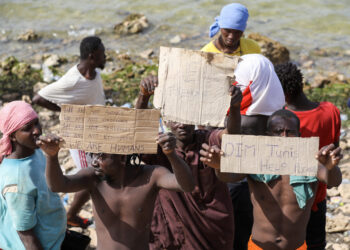
Brussels – A year of investigations across North Africa to gather evidence of pushbacks, mass arrests, and displacement of people based on skin colour. But most of all, how European Union funds—paid by all taxpayers in the 27 member countries—directed to countries such as Tunisia, Morocco, and Mauritania for “migration management” go to finance precisely these human rights violations, despite the fact that Brussels has always denied and continues to this day to deny any knowledge of these operations by its North African partners.
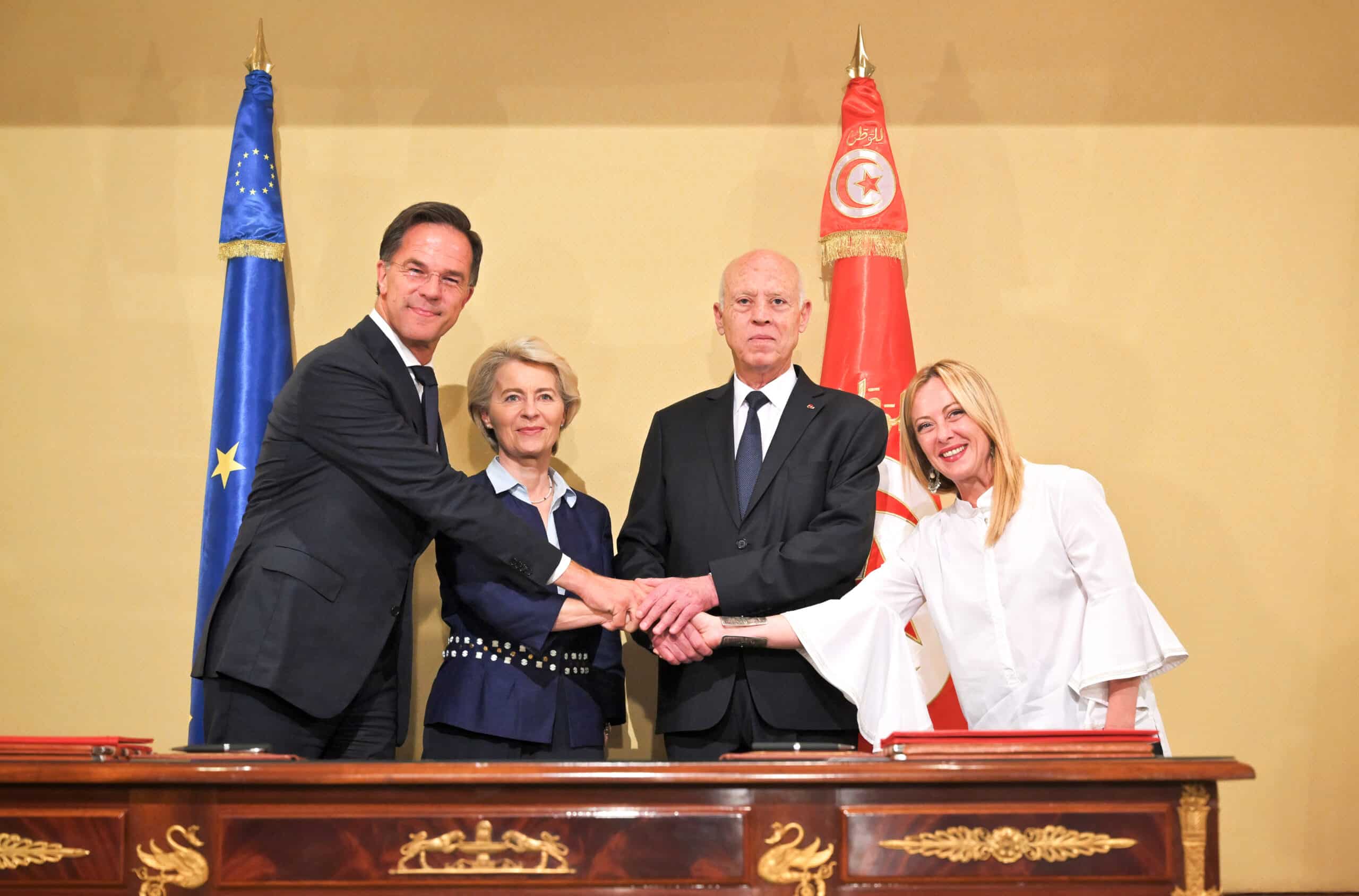
Bringing to the surface one of the most significant migration and asylum scandals in recent years for the European Union is the international investigation Desert Dumps, coordinated by the investigative journalism platform Lighthouse Report and co-authored by eight media outlets (Washington Post, Enass, Der Spiegel, El Pais, ARD, Inkyfada, Le Monde and the Italian IrpiMedia). “Europe supports, finances, and is directly involved in clandestine operations in North African countries to dump tens of thousands of black people each year in the desert or in remote areas to prevent them from reaching the EU,” is the complaint about the “huge sums of money” bestowed on Morocco, Mauritania, and Tunisia for migration management, which in reality revealed nothing more than “the goal of reducing the number of people trying to reach Europe.” The reference is to agreements such as the one signed in July 2023 with Tunisia, in March of this year with Mauritania, or even the 2022 support package to Morocco (with a new agreement likely to be signed later this year).
As the journalistic investigation makes clear, the system of pushbacks (illegal rejections under international law) works the same way in all three North African countries: “People are rounded up in the streets, taken from their homes or intercepted at sea,” after which “they are detained, loaded onto buses, and left in the desert without food or water, at risk of kidnapping, extortion and sometimes death.” Still others “are taken to border areas where they are reportedly sold by authorities to human traffickers and gangs who torture them for ransom.” All are based on skin colour discrimination, including people “who had legal status and established livelihoods in these countries”. Demonstrating the escalation of verbal (and not only) violence in Tunisia, for example, last year, President Kaïs Saïed began evoking the conspiracy theory of “ethnic replacement” that migrant people arriving from sub-Saharan Africa are “changing the demographic composition” of the country.

Migrant people from sub-Saharan Africa abandoned in the desert by Tunisian authorities, July 16, 2023 (credits: Mahmud Turkia / Afp)
However, this is not the only sensitive point, at least not as far as the EU is concerned. “The EU publicly claims that it controls how this money is spent and does not contribute to human rights violations” against people who are being prevented from migrating, “but the reality is different.” The EU institutions have long “knowingly” funded and sometimes are “directly” involved in these pushbacks operated in North African partner countries to indirectly decrease the number of arrivals along the routes leading to the Union’s borders. It was the EU Commission Vice-President for European Lifestyle, Margaritis Schinas—the same one who branded critics of the new Migration and Asylum Pact as “Putin’s friends”—who recently declared that “no European money is funding these kinds of incidents.” The investigation coordinated by Lighthouse Report “shows that this is not true” since the system of covert operations put in place in North Africa “is run thanks to money, vehicles, equipment, intelligence, and security forces provided by the EU and member countries.”
It is, in other words, the “most comprehensive attempt to document Europe’s knowledge of and involvement in anti-migrant and racially motivated operations in North Africa,” thanks to videos, satellite images, documents, confidential sources, and the testimonies of more than 50 survivors of the “desert dumps.” Among the many pieces of evidence reported by the string of international news outlets is an EU Commission document dating back to 2019 that highlights that even then, it was known that Morocco was “abandoning thousands of sub-Saharan refugees and asylum seekers, including children and pregnant women, in remote areas.” Despite this, they were sent Fiat vans and Toyota cars, “identical to those seen in the footage of the arrests” of migrant people. In Mauritania, “Spain works side by side with local police to arrest and round up black people, before transporting them to detention centres” and dumping them in the Mali desert, “an active war zone where groups linked to al-Qaeda are fighting.” Moreover, Madrid itself, “through its development agency FIIAPP, is financing with EU funds two new detention centres that will serve the same purpose.” In “desert dumps” in Tunisia, Europe-funded vehicles have been detected and “security forces in charge have received EU-funded training# for a total of at least 14 verified incidents “in which Tunisian authorities have expelled groups of sub-Saharan Africans, usually near the Libyan or Algerian border.”

(credits: Sameer Al-Doumy / Afp)
In the face of this year-long work and the robustness of the testimonies and documentation reported by Lighthouse Reports and the eight international media outlets, the European Commission found itself dumbfounded and unable to respond on the substance of the issue. “We know that the migration situation poses big challenges in some partner countries, and we remain committed to cooperation,” Ana Pisonero, the spokeswoman responsible for Neighborhood Policy, responded today (May 21) to pressing questions from the Brussels press. Without ever getting to the heart of the inquiry—namely, that the EU executive appears to have long been aware of abuses in North African countries and how taxpayer funds from the twenty-seven countries are being spent—the spokeswoman merely reiterated that “the EU expects partners to respect the fundamental rights of migrants, including the principle of nonrefoulement.”
English version by the Translation Service of Withub