




Brussels – Now, the EU accession process for Ukraine and Moldova has entered the formal phase of negotiations, and from there, it can only move forward (the timing, however, remains to be seen). As scheduled after the green light for negotiating frameworks by the Council of the EU, the first intergovernmental conferences with the governments of Kiev and Chișinău were staged in Luxembourg today (June 25), marking the official start of the final stage of the road to future EU membership for the two candidate countries.
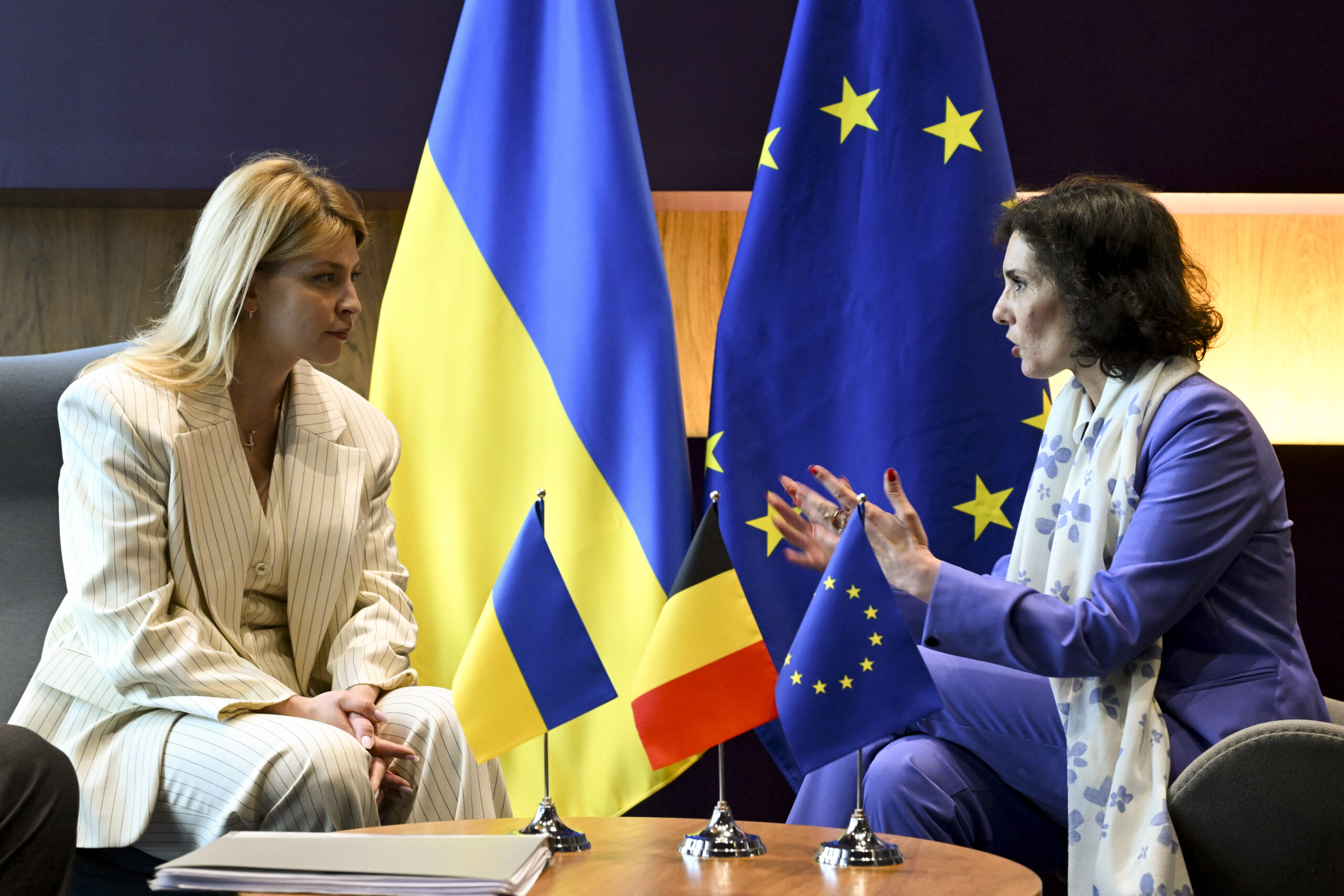
“The negotiations that we open today will be rigorous and challenging; with determination and commitment, we are confident that they can bring them to a successful conclusion,” was assured by Belgian Foreign Minister and rotating chair of the EU Council, Hadja Lahbib, opening the two intergovernmental conferences before the handover to Hungary starting next Monday (July 1). Accompanied by the European Commissioner for Neighborhood Policy and Enlargement, Olivér Várhelyi, the Belgian minister welcomed first the Ukrainian delegation led by the Vice-Premier for European and Euro-Atlantic Integration, Olha Stefanishyna, and then the Moldovan delegation headed by the Prime Minister, Dorin Recean. “This is a historic day,” Lahbib stressed at the two meetings, making it clear that “the path to get to this point has been challenging, and the determination to undertake the necessary reforms has been very impressive,” particularly in the case of Ukraine.

At this point, the EU Commission will need to continue assessing the state of preparedness of Ukraine and Moldova for the opening of negotiations in specific areas, identifying the issues that are “most likely” to emerge in the negotiations, “starting with the area of fundamentals which, in accordance with the negotiating frameworks, will be opened first,” the Council specifies. “This is excellent news for Ukrainian and Moldovan citizens and for the entire European Union; the road ahead will be challenging but full of opportunities,” is the enthusiastic wish of the chair of the EU executive, Ursula von der Leyen, echoed by the President of the European Council, Charles Michel: “We are witnessing a historic moment,” in which the two candidate countries “are embarking on a real transformation towards full EU membership.”
There is great satisfaction in Kyiv and Chișinău over the milestone reached today. “When we signed the application for EU membership on the fifth day of the total war, many people said it was nothing but a dream, but we turned this dream into reality,” claimed the success with a long post on X the Ukrainian president, Volodymyr Zelensky: “The determination worked, it did not disappoint Ukraine and all of Europe, and it shows that all Ukrainians together, all Europeans together, are capable of realising even the biggest dreams.” Also Moldova’s President, Maia Sandu, celebrated the formal start of EU accession negotiations: “Together, we are united for a future of peace and prosperity,” a future “within the same European family.”
How the EU accession process works
The EU enlargement process begins with a non-EU state submitting a formal application for membership to the rotating presidency of the Council of the European Union. Union membership first requires a successful examination of the Copenhagen criteria (established at the European Council in the Danish capital in 1993 and strengthened by the EU leaders meeting in Madrid two years later). These criteria are divided into three groups of basic requests that the Union addresses to the country that has applied for membership: rule of law and democratic institutions (including respect for human rights and the protection of minorities), stable market economy (ability to cope with market forces and competitive pressure), and fulfilment of its obligations (effectively implementing the body of EU law and meeting the objectives of political, economic and monetary union).
Having obtained the positive opinion of the Commission, it comes to the conferment of candidate country status with the approval of all members of the Union. This is followed by the Commission’s recommendation to the EU Council to open negotiations which, again, requires the unanimous go-ahead of the member countries: this allows the negotiating chapters (varying in number) to be opened, the purpose of which is to prepare the candidate, particularly on the implementation of the necessary judicial, administrative and economic reforms. When the negotiations are completed, and EU enlargement is possible in terms of absorption capacity, this leads to the signing of the Accession Treaty (with terms and conditions for accession, including any safeguard clauses and transitional provisions), which must first be approved unanimously by the European Parliament and the Council.
Beyond Ukraine and Moldova. Where does EU enlargement stand
The upheaval in EU enlargement began four days after the Russian armed aggression when, in the midst of the war, Ukraine applied for “immediate” membership in the Union, with the application signed on February 28, 2022, by President Zelensky. Demonstrating the irreversibility of a process of rapprochement with Brussels as a clear reaction to the risk of seeing its independence from Moscow erased, three days later (March 3), Georgia and Moldova also decided to take the same path. The European Council of June 23, 2022, approved the line drawn by the Commission in its recommendation: Kyiv and Chișinău became the sixth and seventh candidates for EU membership, while Tbilisi was recognized as having a European perspective in the EU enlargement process. In the EU Enlargement Package 2023 the Commission recommended to the Council to open accession negotiations with Ukraine and Moldova and to grant Georgia candidate status. All requests were then accepted by the December EU leaders’ summit, and now only the formal start of negotiations and adoption of negotiating frameworks for the first two are awaited. 
Of the six Western Balkan countries
that have begun the long road to EU membership, four have already begun
accession negotiations (Albania, North Macedonia, Montenegro, and
Serbia), one has received candidate status (Bosnia and Herzegovina), and
the last has formally applied for and is awaiting the response
(Kosovo). For Albania and North Macedonia, negotiations began in July 2022 after waiting eight and 17 years, respectively, while Montenegro and Serbia have been at this stage for 12 and 10 years, respectively. After six years of applying for EU membership, Bosnia and Herzegovina became a candidate on December 15, 2022, also to join the Union and at the European Council on March 21 received the endorsement to formally start accession negotiations. Kosovo is in the most complicated position since the formal request was sent in late 2022: since its unilateral declaration of independence from Belgrade in 2008, five EU member states — Cyprus, Greece, Romania, Spain, and Slovakia—continue not to recognize it as a sovereign state.
Negotiations for Turkey‘s accession to the European Union, on the other hand, were launched in 2005, but have been frozen now since 2018 due to backward steps on democracy, rule of law, fundamental rights, and independence of the judiciary. In the chapter on Turkey in the latest annual Enlargement Package presented in October 2023, it was put in black and white that “the country has not reversed the negative trend away from the European Union and has pursued accession-related reforms to a limited extent.” At the NATO summit in Vilnius in late June 2023, Turkey’s president, Recep Tayyip Erdoğan, tried to force his hand, threatening that he would only bind Sweden’s membership in the Atlantic Alliance when Brussels opens Turkey’s path back to the European Union. The blackmail failed, but the dossier on Ankara was addressed at a strategic report special meeting in Brussels.
Find more insights on EU enlargement in the newsletter BarBalkans hosted by Eunews
English version by the Translation Service of Withub





![La video riunione dell'Eurogruppo [27 marzo 2026. Foto: European Council]](https://www.eunews.it/wp-content/uploads/2026/03/eurogruppo-260327-120x86.jpg)
