Brussels – The European Court of Accounts fails the management of EU funds for Africa: Over five billion euros have financed projects poorly focused on priorities, often with overstated results, and, above all, without effective guarantees against risks of human rights violations.
Central to the report is an analysis of the Emergency Trust Fund for Africa (EUTF), established by the European Commission in 2015 and expiring in 2025, through which Brussels has intervened with hundreds of projects in Maghreb countries, the Sahel and the Horn of Africa. The EU fund aimed to address the root causes of instability, irregular migration and humanitarian crises on the African continent. In its place, the EU has already implemented the new Neighborhood, Development Cooperation and International Cooperation Instrument – Global Europe (NDICI), with similar priorities.
In 2018, the Luxembourg-based court recommended that the EU use EUTF in a more targeted way but found that “special funding to address migration remains spread over too wide a range of actions in the areas of development, humanitarian aid, and security.” Flexibility is good, but staying focused on priorities. That’s why the ECA urges Brussels to “focus its interventions more on specific geographic areas and specific beneficiaries chosen on the basis of evidence.”
Closely linked to this is monitoring results, which is essential for predicting the effects of interventions and thus allocating resources to the most appropriate programs. However, “results are overestimated due to an insufficiently accurate system.” The projects examined by the Court’s auditors addressed some needs, but not the most urgent ones. The analysis goes deeper: “The indicators used to monitor results do not show whether the projects are sustainable or have contributed to addressing the root causes of instability, irregular migration, and displacement.” The implication is that the Commission is still unable to indicate the most effective approaches.
“Fragmented support with little focus on strategic priorities fails to make an impact,” commented Bettina Jakobsen, ECA member responsible for the report. Jakobsen states, “Although the EUTF has helped keep migration at the top of the political and development agenda, we must reiterate our criticism, as little has changed.”
The Court found some emblematic examples of unsustainable, difficult-to-implement, or unprioritized activities. These include the renovation of a section of waterfront in Benghazi and the Roman theatre in Sabratha, Libya. Most striking is the provision of sports and kitchen equipment for educational institutions with urgent basic infrastructure needs. “One school not connected to the electricity grid received a blender for food preparation and preservation training,” the court reported.
From the EU, little attention to the risks of human rights violations
Then, there is the crucial issue of the lack of adequate measures to identify risks of human rights violations in EU-funded projects. “They are not carefully addressed,” is the accusation coming from Luxembourg. The general conditions of all funding agreements stipulate that action is suspended if the EU identifies a human rights violation. However, “there are no formal procedures” for reporting and assessing alleged violations. Nor are there “practical guidelines” to clarify in what situations EU support can be suspended.
According to the report, the Commission has “taken the first steps” in monitoring the impact of EUTF activities on human rights. External monitoring reports introduced in Libya are noted among the new methods developed. However, this mechanism has not yet been implemented in other countries where human rights may be at risk, countries where “the Commission, project implementers, and other contractors have encountered similar obstacles to those encountered by the auditors, for example, in gaining access to detention centres for migrants and other places that require official authorization.”
The Court points Brussels to homework for ensuring the “do no harm” principle and not stumbling into embarrassing and serious incidents of human rights violations. For example, “systematically” assess the level of risk at the design stage and translate proposed mitigation measures into specific activities or implementation indicators if a project presents significant risks. Or drafting and disseminating precise internal procedures for reporting and following up on human rights complaints.
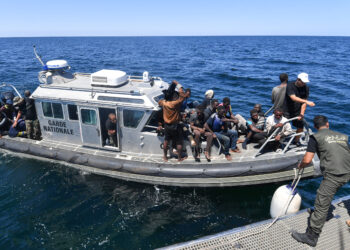
The Court’s findings and recommendations “can contribute to any future development action,” the report concludes. Particularly to those undertaken through NDICI-Global Europe, the new Neighborhood and International Cooperation Fund. The one with which, to put it bluntly, the EU is funding Tunisian security forces to detain migrants on their home soil.
English version by the Translation Service of Withub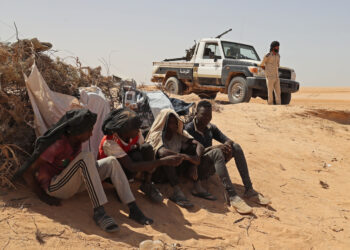

![Da sinistra: il presidente del Consiglio europeo, Antonio Costa; il presidente dell'Ucraina, Volodymir Zelensky: la presidente della Commissione europea, Ursula von der Leyen [Bruxelles, 18 giugno 2024. Foto: European Council]](https://www.eunews.it/wp-content/uploads/2026/06/euco_ua260618-120x86.jpg)
![[foto: Saverio De Giglio/imagoeconomica]](https://www.eunews.it/wp-content/uploads/2026/10/cpt-120x86.png)