



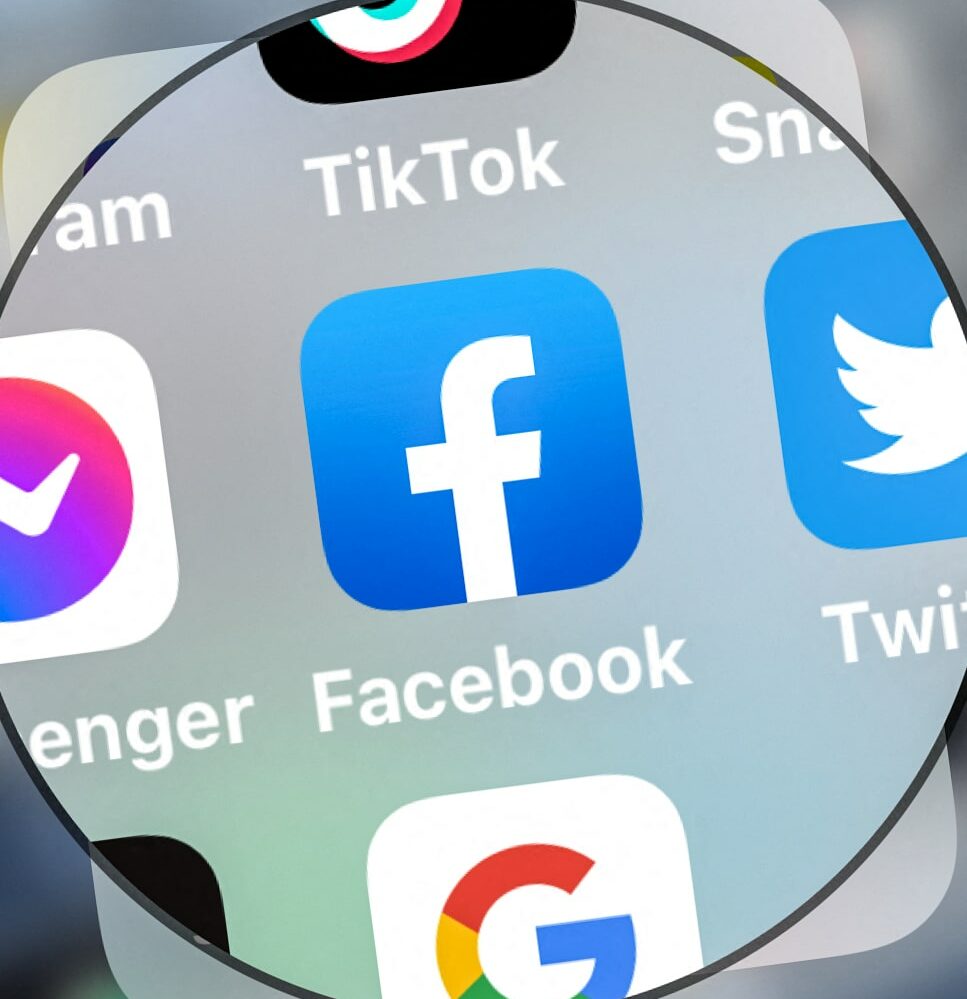
Brussels –There is no scientific evidence to prove that social media, including Facebook, Instagram, and TikTok, is detrimental to the mental well-being of young people. Researchers from the universities of Antwerp and Ghent reached this conclusion after conducting studies that ultimately led nowhere. The researchers examined some 40 recent publications on the effects of social media use among adolescents and found very mixed results. In light of these conflicting findings, it was not possible to establish a clear causal relationship between social media use and mental well-being. In short, there is insufficient scientific evidence to prove the harmfulness of using the popular platforms.
The fact that it has not been proven to harm the mental well-being of young people does not mean that being on the Internet is good for them. “Social media is too often assumed to have only a negative effect, when that effect is usually very limited or even nonexistent“, Ernst Koster, a clinical psychologist at the University of Ghent and lead author of the study, told the Flemish Belgian press. “That’s why we’ve also made recommendations on how research can be improved in the future.”
Studies and recommendations will certainly also be helpful to the European Commission, which has turned the spotlight on social media and its impact on adolescents’ mental health. There are fears in Brussels that the algorithms developed by social media platforms like Instagram, TikTok, and Facebook may produce behavioral addictions and create “rabbit hole” effects, meaning a detachment from reality.
The team of university researchers suggests that social media may not be inherently bad, but it could amplify personal issues. For example, “when your self-image is less positive, if you’re frequently confronted with images of your friends on vacation at that very moment, that can certainly contribute to your feeling less positive,” Koster explains.
English version by the Translation Service of Withub





![La video riunione dell'Eurogruppo [27 marzo 2026. Foto: European Council]](https://www.eunews.it/wp-content/uploads/2026/03/eurogruppo-260327-120x86.jpg)
