Brussels – European politicians are reacting to the agreement reached with the White House on tariffs. While waiting for the joint document to be translated into a legal text, there are those who see the glass half full and those who point the finger at the shortcomings of the solution negotiated in months of intense talks on both sides of the Atlantic.
Comments have not been long in coming on the US-EU joint statement published today, almost a month after the agreement in principle reached in Scotland between Donald Trump and Ursula von der Leyen. The 19-point text “ensures the best possible conditions for EU companies and consumers,” assures the EU chief executive, who has to draw water to his own mill and sell a highly asymmetrical deal as a great success.
A success, he argues, that makes the twelve-star club “the only partner (in Washington, ed) in the world with an all-encompassing tariff ceiling.” Brussels, he says, even obtained the “exclusive guarantee of a limit on tariffs for the pharmaceutical and semiconductor sectors,” a 15 per cent cap “for the vast majority of products, including cars and medicines” as well as “zero-for-zero’ tariffs on products such as aircraft, cork, and generic drugs”, and finally a “joint commitment to further reduce tariffs.” All while safeguarding “the competitive position of exporters” and protecting “millions of jobs.”
Today’s EU-US Joint Statement secures the best possible terms for EU companies and consumers:
➡️ the EU is the only partner worldwide with an all-inclusive tariff ceiling
➡️ exclusive guarantee on tariff limit for pharmaceutical and semiconductors sectors
➡️ all-inclusive 15%…– Ursula von der Leyen (@vonderleyen)
August 21, 2025
The President of the European Council António Costa echoed her, albeit in less triumphalist tones: according to the former Portuguese Prime Minister, the agreement, finally put down on paper, “guarantees predictability and stability for transatlantic economic ties and European businesses,” but the fact remains that the Union “must continue to deepen and expand its global trade partnerships.”
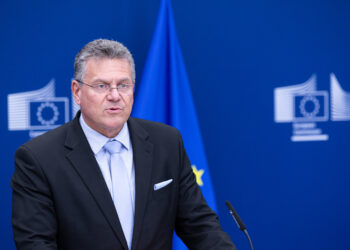
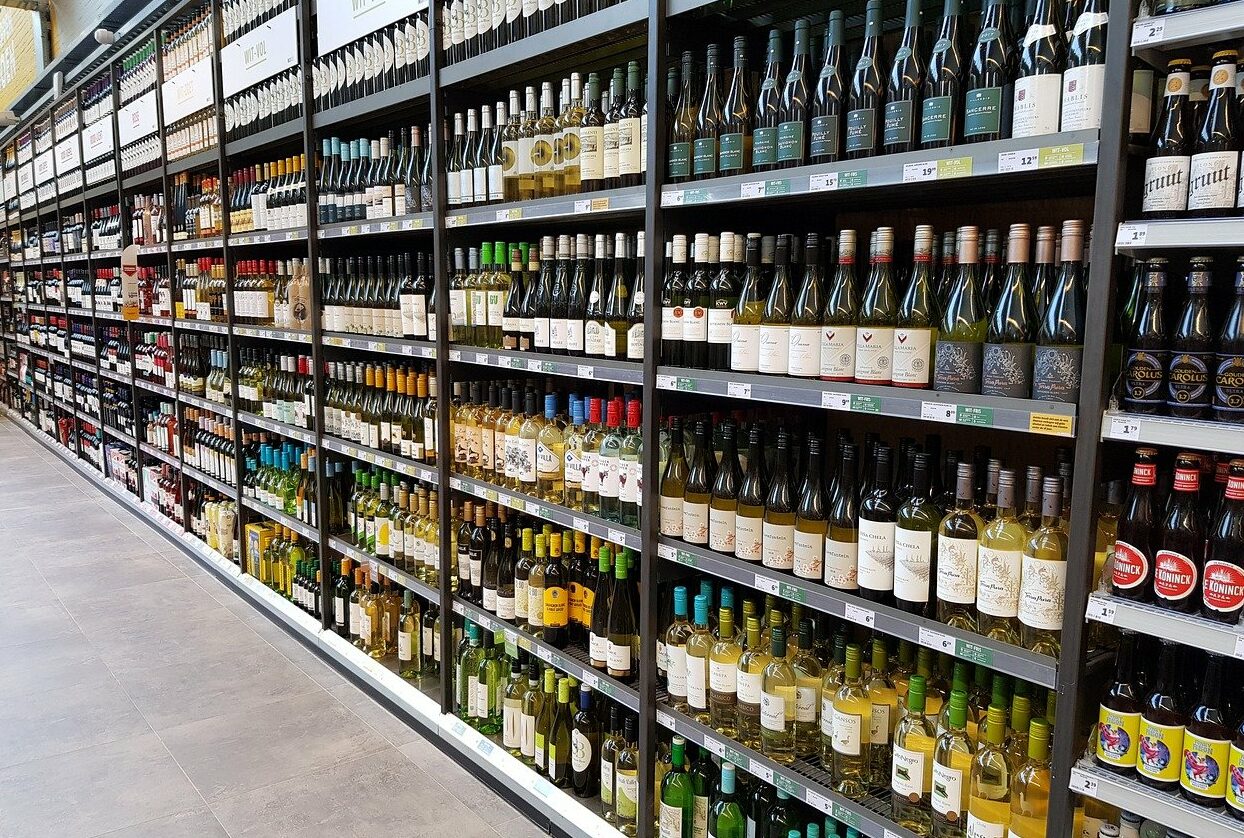
It falls to Maroš Šefčovič, Trade Commissioner, the unpleasant task of presenting the concrete results of months of negotiations at a press conference and defending what the Berlaymont portrays as a victory. “For us, particularly important sectors are wine, spirits, and beer,” he admitted in front of reporters. Unfortunately, “we did not manage” to include them “among those in the level of the most favoured nation, but the doors are not closed,” he explains, “because both sides agreed to evaluate other sectors in the future.”
Kick the can down the road, then, and in the meantime, put on a brave face and make the best of a bad situation. It could have been worse. After all, Šefčovič points out, the EU’s “regulatory autonomy” has not been affected, as it has rigorously kept parallel issues such as the digital regulations (DSA and DMA) out of the trade negotiations, resisting the “pressures” of the US administration.

An “important step” also according to the Italian Foreign Minister Antonio Tajani, who claims that Italy has “always supported a constructive approach in the transatlantic dialogue” and points out that “this is not a point of arrival, but a first step towards a cooperation that will extend over time to new areas.”
But from the Belpaese also comes heavy criticism of both the agreement and the prime minister Giorgia Meloni, accused by the opposition of having surrendered to the White House’s diktat. While seeing the glass as half-full with respect to the “protection of the automotive sector” and the “guarantees to keep tariffs on sensitive sectors such as pharmaceuticals and wood within 15 per cent,” the PD MEP Brando Benifei points the finger at Palazzo Chigi.
“On the key sectors for Italy, the result is not at all positive: no exemption for the export of industrial products and not even for agricultural, fishery, and wine products, attacks the coordinator of the Socialists in the parliamentary committee on international trade (INTA) in Strasbourg, while the Americans demand zeroing and significant reductions in tariffs for these sectors.”
“Germany gets a result on its first priority, automotive exports, while Italy, on industrial products and agriculture, exposes itself to significant damage: was our government asleep while these points were being negotiated?” he asks. And promises to help rebalance the situation in the hemicycle (the EU Parliament will have to ratify the agreement, when it will be translated into a legal text): “We will engage the European Parliament to obtain improvements and reductions to these tariffs, knowing unfortunately that we cannot count on the Italian government,” he declares.

“Today’s communiqué marks a defeat for European exports, in the name of an inexplicable subservience to the Trump administration and a grievous damage for the Italian economy,” lamented his party colleague Dario Nardella, promising to fight “so that the agreement changes substantially and does not turn into an unconditional surrender to the US.” Dem MEP Camilla Laureti also spoke of a “pantomime” and “debacle”, both for Europe and for Made in Italy.
There’s also some discontent coming out of Paris. “France will work to obtain further exemptions,” especially on wines and spirits, announced the French holder of Foreign Trade, Laurent Saint-Martin, claiming that “the story is not over yet.”
However, his Irish counterpart, Deputy Prime Minister Simon Harris, is relieved and welcomes the “important protection for Irish exporters who could have been subject to much higher tariffs.” The framework agreement presented today, he said, “offers a first step towards negotiating a more comprehensive and formal agreement with the US,” and his government will now consider “what other exemptions can be made in areas of interest” to domestic exports.
English version by the Translation Service of Withub