



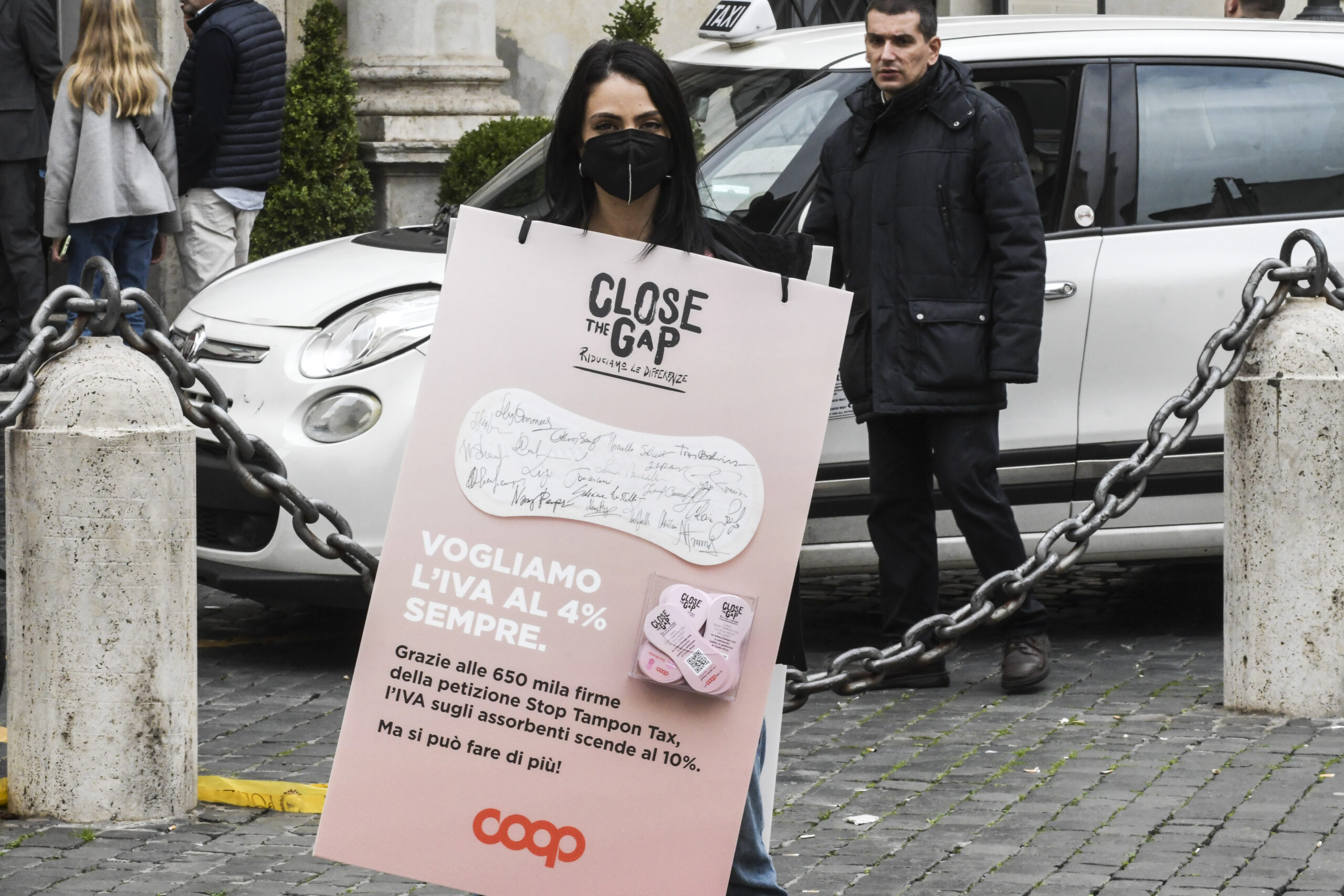
Brussels – The European Union is now sounding the alarm of “menstrual poverty,” an issue linked to economic hardship, which, until now, had gone largely unnoticed. The European Parliament is now appealing for a change of mentality. The call is transversal and brings everyone together, right and left, men and women. Over 30 MEPs from various parties, including the Popular (EPP), Socialists (S&D), Liberals (RE), Greens, and Radical Left (The Left), signed a question to turn the spotlight on a widespread problem.
Menstrual poverty is defined as insufficient access to menstrual products and facilities. It affects an estimated 10 percent of the EU population, but these are just estimates. “The lack of a standardised EU-wide dataset on the prevalence of menstrual poverty is a significant problem,” denounce the signatories of the question, including Italy’s Marco Tarquinio (PD/S&D). “The absence of standardised data collection at the EU level negatively affects effective policy responses,” insist the MEPs.
https://www.eunews.it/2021/12/07/riforma-dell-iva/
The European Commission is not standing idly by. After all, explains the Commissioner for Crisis Management and Humanitarian Aid, Hadja Lahbib, on behalf of the College, “Period poverty is first and foremost a gendered aspect of poverty” more generally. Currently, over a fifth of the EU population lives at risk of poverty or social exclusion, with women at greater risk than men. “The inability of women
and girls to afford and access menstrual products, sanitation facilities, and information could
make them miss school or work and negatively impact their health,” Lahbib admits, aware of the need to take action.
Something has already been done, she recalls. There are initiatives such as the Council recommendation on adequate minimum income ensuring active inclusion, which are “addressing the challenge of poverty.” Countering poverty in general also counters menstrual poverty: this is the assumption behind the strategy. The EU anti-poverty strategy itself, Lahbib continues, should aim “at helping people’s access to the essential protections and services, along
with addressing the root causes of poverty, addressing the multidimensional phenomenon of
poverty and relating to gender equality challenges.”
However, the European Commissioner assures, “the ambition is to have a systemic
approach, looking at how all public policies can impact poverty.” That is why “a public consultation was launched” in July. However, she further assures, “concrete measures and actions to pursue the
objectives of the Roadmap for Women’s Rights will be set out in the next Gender Equality
Strategy 2026-2030 in view of promoting the highest standards and protecting women’s
physical and mental health and well-being.”




![La video riunione dell'Eurogruppo [27 marzo 2026. Foto: European Council]](https://www.eunews.it/wp-content/uploads/2026/03/eurogruppo-260327-120x86.jpg)
