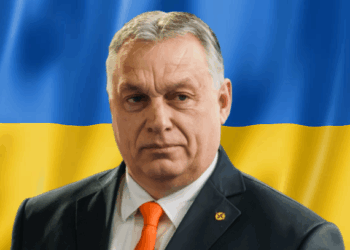
Brussels – All EU chancelleries will have their eyes fixed on the Czech Republic next 3 and 4 October, to follow with bated breath the parliamentary elections that could bring back into power Andrej Babiš, the populist and eurosceptic leader who winks at Viktor Orbán and could put quite a few sticks in the wheels of EU foreign policy, especially on the Ukrainian dossier.
On Friday and Saturday, Czech voters will be called to the polls to elect the Chamber of Deputies, the 200-member lower house of the Prague legislature (where the absolute majority threshold is set at 101), for another four-year term. The outgoing legislature, the ninth, was formed in October 2021 and saw the formation of a centre-right coalition government between the Spolu (‘Together’) tripartite alliance—led by Premier Petr Fiala, ally of Giorgia Meloni in the European Conservatives and Reformists (ECR)—and the liberal party of Mayors and Independents (STAN).
However, polls suggest the comeback of Andrej Babiš, a 71-year-old billionaire who, at the head of the right-wing populist party ANO (an acronym for “Action of Dissatisfied Citizens”), has already ruled the central European country from 2017 to 2021. Babiš, nicknamed “the Czech Trump” for his political affinity with the US president, describes himself as a fervent patriot and harshly criticises European aid to Ukraine against Russian aggression (including the so-called “Czech initiative”, with which Fiala has secured over 2.5 million artillery shells for Kyiv in the past year) as well as the Green deal and the Migration policies of Brussels.

In the European Parliament in Strasbourg, ANO shares the benches with Fidesz (the party of Hungarian Prime Minister Viktor Orbán) in the Patriots for Europe (PfE), a radical right-wing group that also hosts, among others, Matteo Salvini‘s Lega and Marine Le Pen’s Rassemblement National. The strongman from Budapest renewed just today (1 October) from Copenhagen—where he is attending the double summit (Informal European Council, today, and European Political Community, tomorrow) taking place in the Danish capital on high alert for fear of drone attacks from the sky—his own endorsement for his sovereignist colleague.
According to the projections, ANO is hovering around 30 per cent of the vote, trailing the Fiala alliance, which is close to 20 per cent, by a good ten points. Babiš’s party had also come first in the 2024 European elections, with over 26 per cent of the vote.
The main themes of the election campaign have been the economic ones, with the cost of living, inflation, and energy prices topping the list of topics favoured by political forces. Contrary to ANO’s typically populist recipes, Spolu proposes to continue on the austerity path already taken in recent years (during which Prague’s public deficit fell from 5 to 2 GDP points, while at the same time discontent with the government increased) and to strengthen the armed forces to protect the country from Russian aggression.
However, according to the surveys, no party will obtain an absolute majority of seats in the hemicycle on its own. In the aftermath of the vote, therefore, a chapter of intense negotiations for the formation of a new coalition executive will open, regardless of the poll results.
A possible configuration could see ANO allying with smaller parties, such as the ultra-right-wing Freedom and Direct Democracy (SPD, polling at over 12 per cent), the radical and pro-Russian left-wing front Stačilo (‘Enough’), or the newly formed Motorists’ Party (Auto), polling between 5 and 7 per cent. These would, in any case, be numerically unstable combinations, the geometry of which would probably vary.

Alternatively, Spolu could try again for a three-way coalition with STAN and the Pirates, another centrist and pro-European party that left the government last year. These two formations are credited with 11 and 9 per cent of the vote, respectively, so a new alliance between them (if the polls are confirmed) might have a better chance of gaining the confidence of the House.
Whatever actors are involved in the future negotiations, however, a central role will be played by the President of the Republic, Petr Pavel, an independent elected in 2023. The head of state recently stated that he would refuse to accept the appointment of ministers who support the country’s exit from the EU or NATO (a cross-party claim on both the left and right), nor would he accept like-minded parliamentarians in key positions related to security or foreign policy.
Indeed, there is more than just a government at stake. Babiš’s return to power could have significant implications for Prague’s international positioning, potentially leading to a geopolitical realignment that moves it further away from Brussels and closer to Moscow. Led by a coalition with strong national-populist traction, the Czech Republic could join Hungary and Slovakia in systematically obstructing support for Ukrainian resistance and blocking Kyiv’s path to membership in the European Union.
English version by the Translation Service of Withub