![La presidente della Commissione europea Ursula von der Leyen e il presidente francese Emmanuel Macron in Montenegro [Foto: EC - Audiovisual Service]](https://www.eunews.it/wp-content/uploads/2026/06/P-069862_00-12_02-HIGH-766933.jpg)
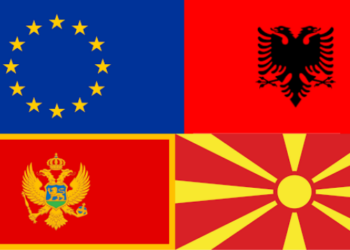
Brussels – Gradual integration by sector and a possible seat at the European Union table prior to formal accession. These are the most concrete proposals emerging from statements by European leaders upon their arrival at the summit in Tivat, Montenegro, where the Member States met today (5 June) with six Western Balkan countries (Serbia, Montenegro, Albania, Bosnia and Herzegovina, North Macedonia, and Kosovo). The region has long awaited its entry into the Union: the European perspective was promised at the Thessaloniki Summit in 2003. “The European Union must demonstrate that it is capable of enlarging and that it wants to do so,” argues German Chancellor Friedrich Merz, for whom “the fact that we have not welcomed any new members in the last thirteen years shows that there are shortcomings on the EU’s side too, and we want to overcome them today.”
The renewed push for enlargement comes at a crucial geopolitical moment, with Russian pressure mounting at the EU’s borders: Brussels also views the Western Balkans as a strategic outpost. Energy, security and migration routes all pass through these regions.
The proposal for gradual integration comes from Germany and France, reviving and relaunching a twelve-star argument already present in the political debate. According to the vision of Paris and Berlin, the aim would be a mechanism whereby “candidate countries that complete reforms in a given sector can already participate in EU formats on that subject, without waiting for full membership,” explained French President Emmanuel Macron.
The President of the European Commission, Ursula von der Leyen, also weighed in on this issue. When asked whether she was prepared to offer the candidate countries a seat at the table prior to formal accession, she replied that this was “a very interesting proposal,” to be discussed during the summit, and it cannot be ruled out that gradual integration may also be discussed at the summit of heads of state and government in mid-June. The process remains merit-based, but the emphasis is shifting towards speed. “Merit-based does not mean slow,” von der Leyen clarified, opening up the possibility of accelerating gradual integration even before full accession.
English version by the Translation Service of Withub