- Europe, like you've never read before -
Sunday, 13 September 2026
No Result
View All Result
  • it ITA
  • en ENG
Eunews
  • Politics
  • World
  • Business
  • News
  • Defence
  • Health
  • Agrifood
  • Other sections
    • Culture
    • Rights
    • Energy
    • Green Economy
    • Finance & Insurance
    • Industry & Markets
    • Media
    • Mobility & Logistics
    • Net & Tech
    • Sports
  • European 2024
    Eunews
    • Politics
    • World
    • Business
    • News
    • Defence
    • Health
    • Agrifood
    • Other sections
      • Culture
      • Rights
      • Energy
      • Green Economy
      • Finance & Insurance
      • Industry & Markets
      • Media
      • Mobility & Logistics
      • Net & Tech
      • Sports
    No Result
    View All Result
    Eunews
    No Result
    View All Result

    Home » Business » No more Russian gas starting in 2028, approval from member states—except Hungary and Slovakia

    No more Russian gas starting in 2028, approval from member states—except Hungary and Slovakia

    The position of the EU Parliament still remains to be determined. The Hungarian minister: "The real impact of this regulation is that our supply will be killed." From Rome concerns about price growth

    Enrico Pascarella by Enrico Pascarella
    20 October 2025
    in Business
    gas russo

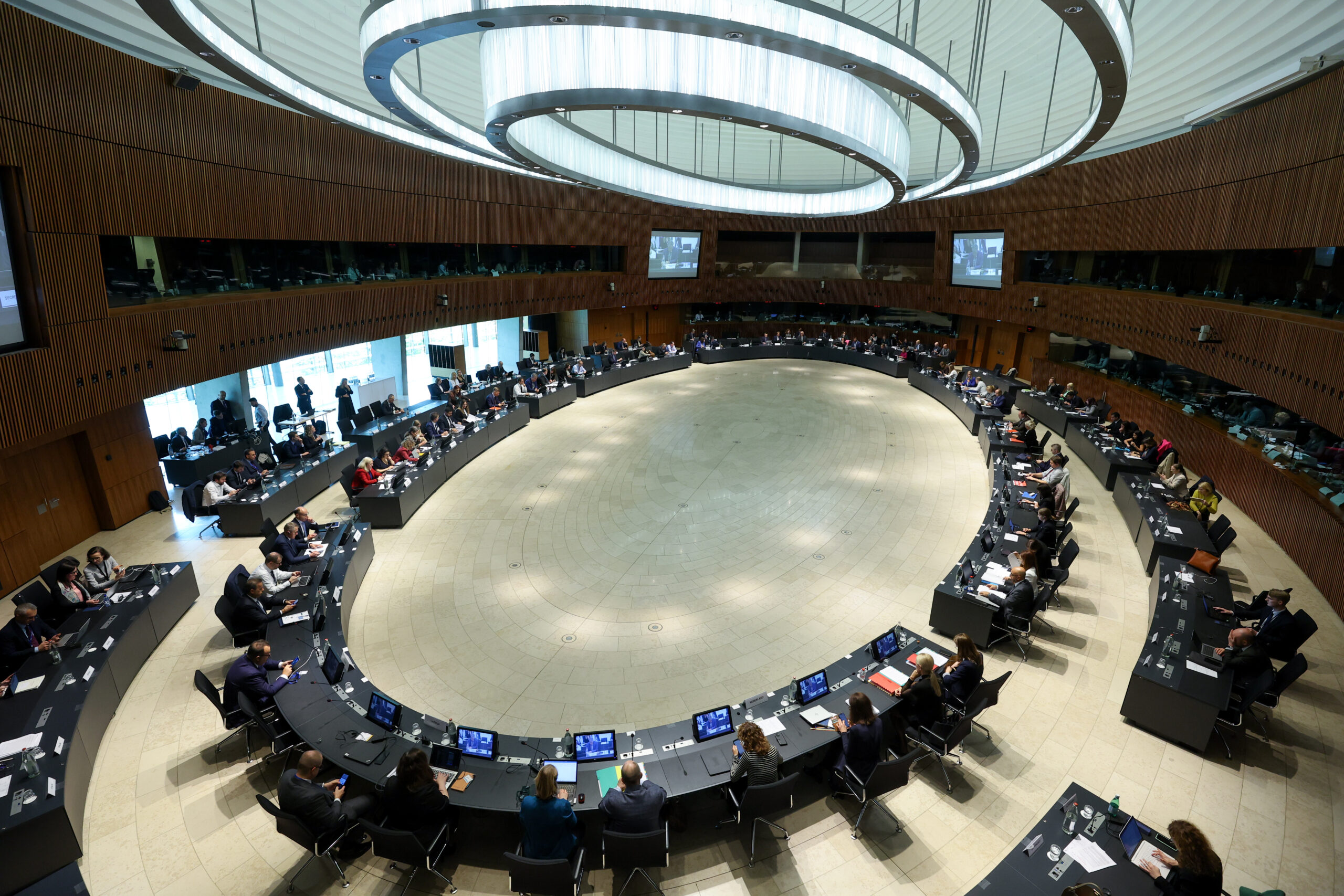
    Tavola rotonda dei ministri dell'energia europei (Diritti: Unione Europea)

    Powered by powered by evolution group

    Brussels – The EU Energy Council today, 20 October, approved its position on the regulation that envisages the definitive elimination of Russian gas supplies. The set of rules was renamed by the Danish Climate Minister, Lars Aagaard, the “Freedom Package”, because it moves European chancelleries away from energy dependence on Moscow. The process of independence desired by the institutions began after the Russian invasion of Ukraine and has now reached a decisive turning point. 

    The text adopted by the ministers of the 27, specifies that, for contracts that include Russian gas and LNG, the final date will be 1 January 2028. On that day, the European Union will be able to say that it is truly autonomous from Moscow’s energy, which currently accounts for around 13 percent of the total gas consumed in the EU.

     The decision passed by a large majority, the unhappy ones being the “usual suspects”: Slovakia and Hungary. However, the two votes against had no effect, as the resolution did not require unanimity.

    Hungarian and Slovakian opposition

    The two landlocked countries have long struggled to maintain existing Russian supplies. This is both for economic reasons (the convenience of Russian gas) and for an ideological affinity with Moscow. The Hungarian Minister of Foreign Affairs and Trade,
    Péter Szijjártó
    , who was present in Luxembourg for the vote, commented with a mantra already repeated elsewhere: “For us, energy supply has nothing to do with politics. The real impact of this regulation is that our supply will be killed. I am not talking about price increases. I am talking about the security of supply for our families.” 

    Responding to the Hungarian position was the Polish counterpart, Miłosz Motyka, who spoke of European solidarity: “It has become clear that these countries will receive specific support. We will support them in terms of supplies.” This does not seem to be enough for the chancelleries in Budapest and Bratislava.
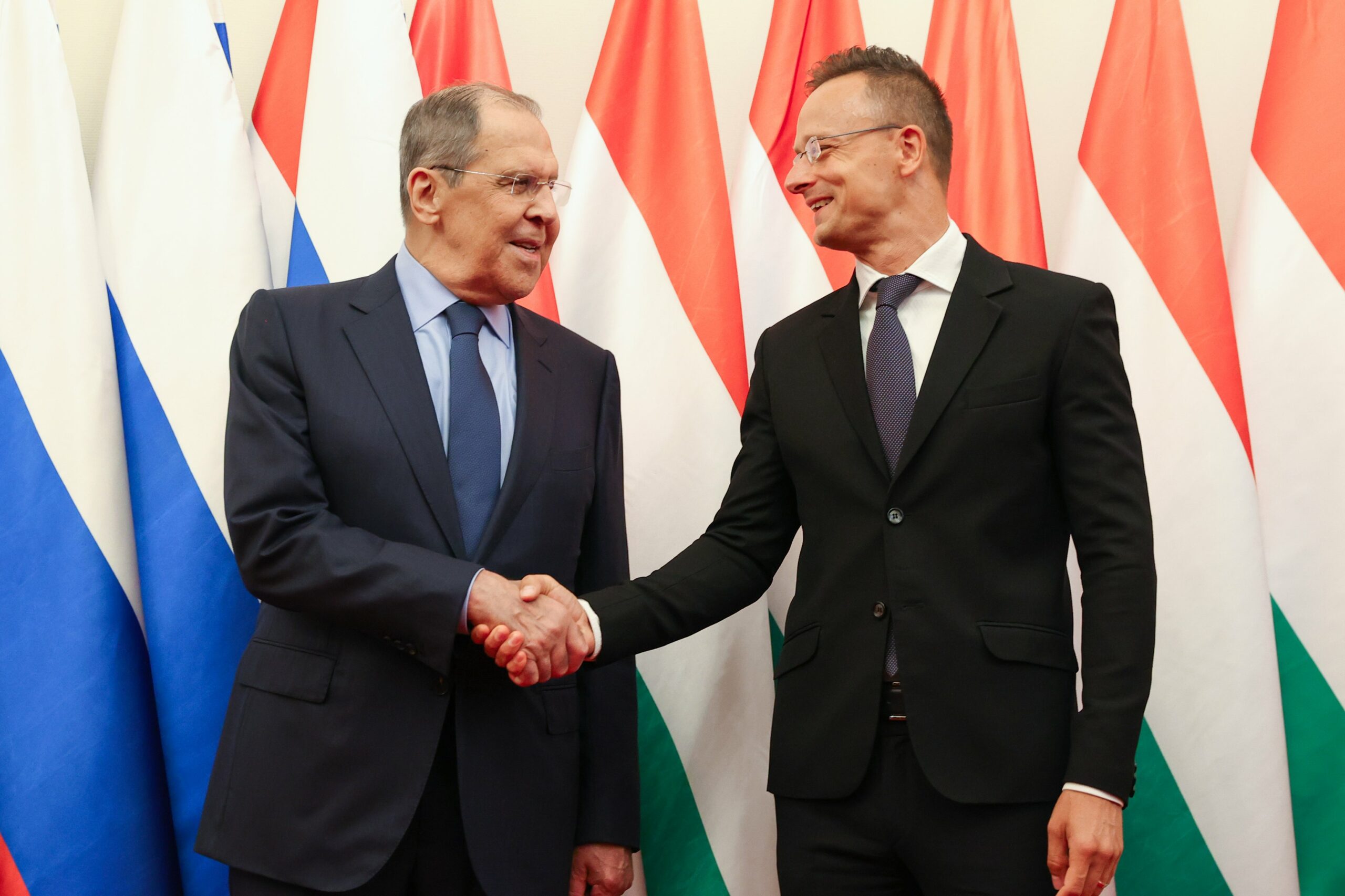
    Budapest, Russian Foreign Minister Sergey Lavrov meets with Hungarian Foreign Minister Peter Szijjarto (24 August 2025)

    Starting in 2028, no more Russian gas

    The decision taken by the European ministers follows almost entirely the directions of the EU executive body. The rules stipulate that imports of Russian gas will be banned from 1 January 2026. From then on, a transition period will begin, during which short-term contracts will be allowed to continue until 17 June 2026, and long-term contracts until 1 January 2028. It should be recalled that the Parliamentary Committees on Industry, Research, and Energy and that on International Trade had approved last week an even tougher negotiating document with an earlier expiry date of 1 January 2027. 

    The Council made small exceptions for existing short-term contracts, but only if volumes and prices are reduced from the current ones. Furthermore, the capitals pledge to pay more attention to triangulations of Russian hydrocarbons transiting through other countries. Importers will have to inform the relevant authorities at least one month before the gas enters the EU, providing documents on the country of production.

    EU energy ministers reached an agreement to gradually phase out remaining natural gas imports from Russia with a full ban in place by 1 January 2028.

    The final text will now be discussed with the European Parliament.

    → https://t.co/2ileL85McL#TTE

    — EU Council (@EUCouncil)
    October 20, 2025 

    The Commission rejoices

    For the EU Commission, the success in the Council is clear. In the press point before the meeting, the Commissioner for Energy and Housing, Dan Jorgensen, reeled off the victory numbers: “In 2022, 50 per cent of our coal came from Russia. Now it is 0 per cent. About 27 per cent of our oil needs came from Moscow, now we are at 3 per cent. Before the reductions, 45 per cent of our gas supply was Russian. Today we are close to 13 per cent.” 

    Numbers that do not give rise to ambiguous interpretations. The success of the Community initiatives has, however, been paid for by some countries with a increase in energy prices. From Rome, a note from the Ministry made it known that “the Commission should carry out continuous monitoring and careful verification of the impact on energy prices.” However, the path mapped out by the EU is increasingly clear. The goal, also recalled today by Jorgensen, is to “achieve energy independence and not indirectly finance the Ukrainian conflict.”

    Before the regulation enters into force, approval by the European Parliament is awaited, which recently adopted its position in parliamentary committee. Then the trialogues between the co-legislators—Commission, EU Council, and Parliament—will begin. Some details still need to be ironed out, but the political will of the states (minus two) seems increasingly clear.

    English version by the Translation Service of Withub
    Tags: council of the’european uniondan jorgensenenergy councilrussian gas

    Eunews Newsletter

    Related Posts

    gas russo
    Business

    “Not a molecule of Russian gas any more.” EU Parliament to bring forward import ban by one year

    16 October 2025
    gas russo ucraina
    World politics

    Russian gas, some still want it. Orban’s minister at Moscow Energy Week

    15 October 2025
    European Commission President Ursula Von der Leyen looks on during a bilateral meeting with US President Donald Trump on the sidelines of the United Nations General Assembly in New York City on September 23, 2025. (Photo by Brendan SMIALOWSKI / AFP)
    Politics

    Von der Leyen, “fruitful” talks with Trump. On the Russian gas stop: “He is right, we need to speed things up”

    24 September 2025
    map visualization
    Laboratorio. Crediti: Julia Koblitz via Unsplash

    EU: more than 20,000 applications for the “Marie Skodovskaya Curie” research programme

    by Iolanda Cuomo
    11 September 2026

    Brussels – It appears that researchers from all over the world are keen to continue their careers in Europe. This...

    Il seminario "Humanitarian Echoes" sugli aiuti umanitari si è svolto con la partecipazione di Jacques Delors, ex presidente della Commissione europea, ed Emma Bonino, membro della Commissione responsabile per la pesca, la politica dei consumatori e l'Ufficio umanitario della Comunità europea (ECHO). Tra gli altri partecipanti, figure di spicco attive a livello internazionale nel settore degli aiuti umanitari, in particolare Catherine Bertini, direttrice esecutiva del WFP (Programma alimentare mondiale), e Sergio Vieira de Mello, assistente dell'Alto Commissario delle Nazioni Unite per i rifugiati (UNHCR) responsabile degli affari umanitari e coordinatore dei soccorsi d'emergenza.

    Amid expressions of grief and fond memories, the European Parliament bids farewell to Emma Bonino

    by Iolanda Cuomo
    11 September 2026

    European Parliament President Metsola: "The Europe for which she fought will miss her"

    Sessione plenaria del Parlamento europeo a Strasburgo di luglio 2026. Crediti: Parlamento europeo

    State of the Union address, Ceuta, the wildfires and external interference: the topics on the agenda at the European Parliament’s plenary session

    by Iolanda Cuomo
    11 September 2026

    Von der Leyen will outline the priorities for the coming year. A spokesperson for the European People’s Party said: “Given...

    India

    EU-India: the Commission sends the proposal for the signing of the free trade agreement to the Council

    by Redazione eunewsit
    11 September 2026

    Brussels – The European Commission today (11 September) presented its proposals to the Council for the signing and conclusion of...

    • Director’s Point of View
    • Opinions
    • About us
    • Contacts
    • Privacy Policy
    • Cookie policy

    Eunews is a registered newspaper
    Press Register of the Court of Turin n° 27

    Copyright © 2025 - WITHUB S.p.a., Via Savona 127/B, 20144 Milano
    VAT number: 10067080969 - ROC registration number n.30628
    Fully paid-up share capital 50.000,00€


    No Result
    View All Result
    • it ITA
    • en ENG
    • Politics
    • Newsletter
    • World politics
    • Business
    • General News
    • Defence & Security
    • Health
    • Agrifood
    • Altre sezioni
      • Culture
      • Rights
      • Energy
      • Green Economy
      • Gallery
      • Finance & Insurance
      • Industry & Markets
      • Media
      • Mobility & Logistics
      • Net & Tech
      • News
      • Opinions
      • Sports
    • Director’s Point of View
    • Draghi Report
    • Eunews Newsletter

    No Result
    View All Result
    • it ITA
    • en ENG
    • Politics
    • Newsletter
    • World politics
    • Business
    • General News
    • Defence & Security
    • Health
    • Agrifood
    • Altre sezioni
      • Culture
      • Rights
      • Energy
      • Green Economy
      • Gallery
      • Finance & Insurance
      • Industry & Markets
      • Media
      • Mobility & Logistics
      • Net & Tech
      • News
      • Opinions
      • Sports
    • Director’s Point of View
    • Draghi Report
    • Eunews Newsletter

    Attention