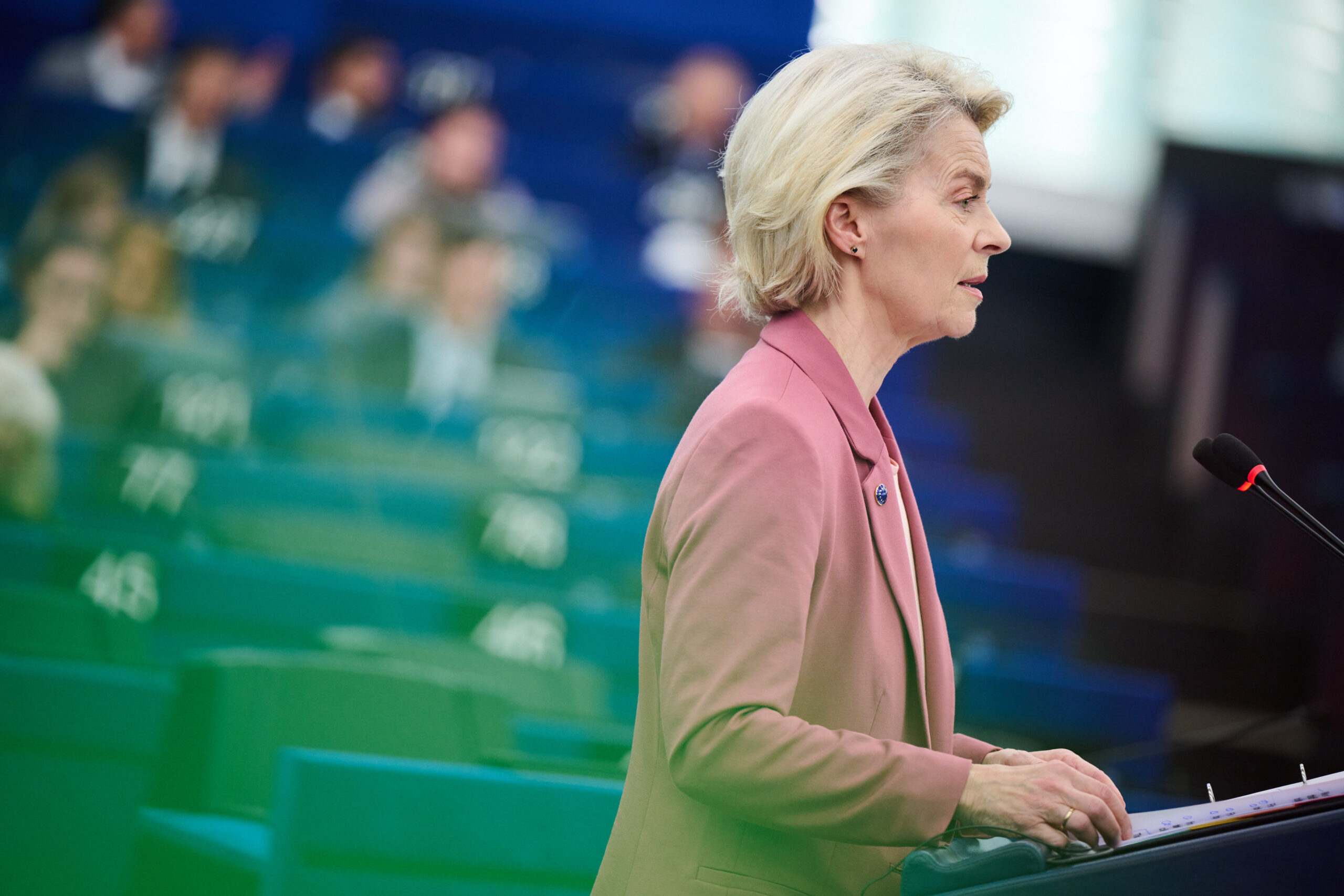
Brussels – New European summit, new migration-themed letter signed by Ursula von der Leyen. For the past three years, the president of the European Commission has taken on this politically hot potato, backed by the conservative axis forged with the chancelleries of the Twenty-Seven. The latest missive, dated 21 October, is fully in the groove traced in her second term at the Berlaymont: a security-based approach, accompanied by deportations given a veneer of legality to avoid harsh condemnation from human rights courts and international organisations.
In keeping with another, relatively recent but well-established tradition, the number one of the EU executive will participate in the now canonical lunch meeting on migration with some of the leaders (among others, Italian PM Giorgia Meloni, Danish PM Mette Frederiksen and compatriot Friedrich Merz) before the formal launch of the summit, scheduled for the day after tomorrow (23 October) in Brussels.
It matters little that irregular arrivals have decreased (by “23 per cent this year, following a drop of 37 per cent last year,” reads the
document sent to the heads of state and government): the fact is, von der Leyen argues, that “the pressures accumulated against Europe over the years have stressed the resources of the member states” and therefore one is not allowed to let one’s guard down.

The primary objective remains to speed up preparations for the full implementation of the Migration and Asylum Pact, which will enter into force in June 2026. At that point, says the head of the Commission, “we will have a fair system capable of protecting against abuse, which will enable us to address the challenges related to illegal migration.” Announcing the imminent launch of the “first annual migration management cycle” (which will certify which member states are under the greatest migratory pressure), she reiterates the need for “intensified efforts at the political and technical level” to press ahead with the roadmap.
Above all, the letter mentions that “the provision of effective support to Member States under pressure and the implementation of the solidarity mechanism must go hand in hand with responsibility measures“: a “symmetry” deemed crucial by von der Leyen. It is no coincidence, however, that old frictions between national governments remain precisely on this point, given the reluctance of many countries to fully overcome the Dublin system.
In Brussels, von der Leyen assures, work is being done with the aim of “efficiency and simplification of procedures, including the EU-wide recognition of repatriation decisions.” “Tangible results” are needed, and quickly, the president urges, to “more effectively guarantee the rapid, effective, and dignified repatriation of people who do not have the right to stay in the EU”. These efforts join those relating to the revision of the safe third country concept and the list of safe countries of origin, which von der Leyen hopes will “reduce the overall pressure on our asylum systems.”
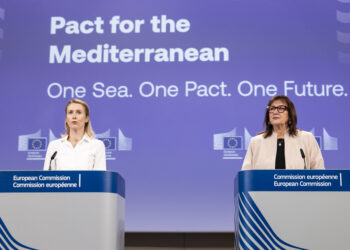
In parallel to the internal dimension, there is also the external one. The missive lists a long series of partnerships with non-EU countries, one of whose objectives is precisely that of managing migration flows. The most important multilateral partnership is the one that should result from the new Pact for the Mediterranean, concluded with a dozen States overlooking the Mare Nostrum basin and which should enter into force next month. Other multiple cooperation forums are those with partners from the Western Balkans, the African Union, and the Community of Latin American and Caribbean States (CELAC).
Finally, von der Leyen lists a slew of bilateral agreements that need to be deepened and improved or completed: from Mauritania to Turkey, from Senegal to Jordan, from Morocco to Syria, from Tunisia to Egypt and on to India. Passing through Libya, to which Brussels continues to provide assistance and funds despite the proven, grave human rights violations perpetrated by the self-styled “coastguard” (including the attack on a humanitarian rescue ship of the NGO Sea Watch, an episode on which the Berlaymont maintains an embarrassing silence). On the contrary, the EU leadership
have recently met with representatives of both administrations of the coastal country, de facto a failed state, including that of General Khalifa Haftar.
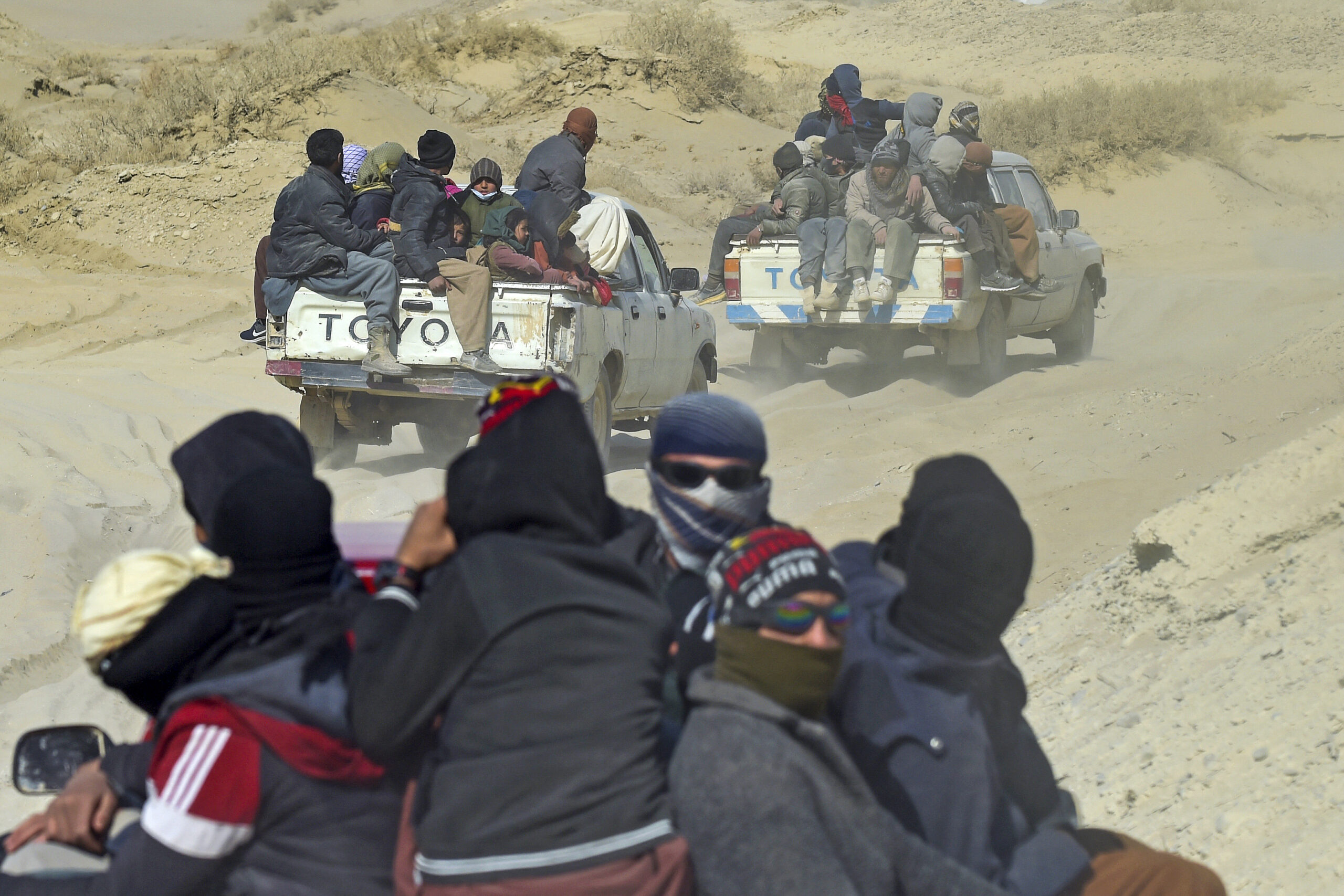
The latest addition in chronological order to this list is the Taliban’s Afghanistan, with whom the twelve-star executive is “working to ensure EU-wide coordination” to pave the way to the deportation of refugees fleeing the bloodthirsty regime that has returned to power after the Western withdrawal in 2021. Several member states are already in advanced stages of bilateral negotiations with Kabul. Just today, Austria sent a citizen of the Asian country back home, following the German example that has been standing for over a year.
English version by the Translation Service of Withub