Brussels – There is no peace in Sudan, where the conflict that has been going on for two and a half years is reaching a new peak in these hours. From El Fasher, the capital of the northern Darfur region, there are reports of summary killings and atrocities by the Rapid Support Forces (RSF), the paramilitary corps that opposes the regular army and has taken control of the city after 18 months of a wearisome siege. The Joint Forces—loyal to the capital Khartoum—have reported more than 2,000 executions of unarmed civilians in recent days.
In a communication, the UN Human Rights Office said it had received “numerous alarming reports” of crimes and violence committed by the RSF in El Fasher and the town of Bara in North Kordofan State in recent days. Already on Monday, Volker Türk, head of the UN Office, had sounded the alarm over the increasing risk of “ethnically motivated violations and atrocities” in El Fasher. In spring 2023, after conquering the town of Geneina in West Darfur, the RSF killed up to 15,000 civilians, mostly belonging to non-Arab groups.
The situation on the ground is confusing, the news difficult to verify, but several videos released by local activists in the city show dead people on the ground and gunfire against groups of unarmed civilians. Starlink satellite communications—the only functioning network—has been disrupted, leaving the city in a “total blackout,” according to the Sudanese Journalists’ Syndicate.
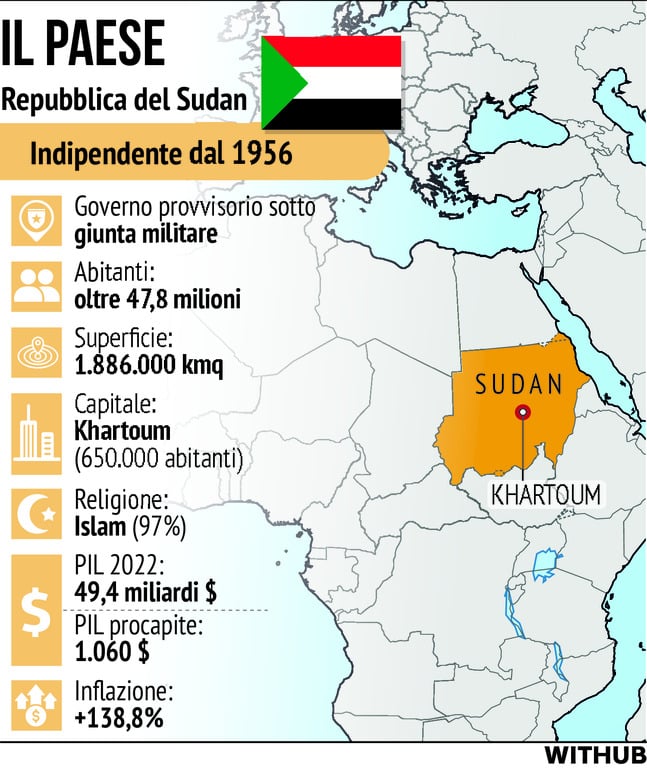
Among the reports received by the UNHCR, “summary executions of civilians attempting to flee, with indications of ethnic motivations for the killings,” “widespread sexual violence against women and girls by armed groups, along with reports of gruesome executions in El Fasher.” By Sunday, 26 October, the RSF had claimed to have overrun the main army base in the town and “extended control over the town of El Fasher.” The head of the Sudanese army, General Abdel Fattah al-Burhan, confirmed on Monday that government troops had withdrawn “to a safer place.”
In recent months, El Fasher had become one of the main fronts in the ongoing civil war between the military junta and the RSF, led by Mohamed Hamdan Dagalo. Since the beginning of the conflict, according to the UN, more than a million people have fled the city, and around 260,000 remain trapped inside, without humanitarian aid, squeezed by the siege and worn down by the fighting. As of Sunday, more than 26,000 had managed to escape, seeking refuge in the suburbs or towards Tawila, some 70 kilometres away.
The power struggle between the two branches of the army triggered one of the most serious humanitarian crises in recent history, in which more than 150,000 people were killed and over 14 million civilians were displaced. Both the army in the capital and the RSF are accused of war crimes for deliberately targeting civilians and blocking humanitarian aid. As early as October 2023, the European Union had instituted a regime of sanctions dedicated to the Sudanese crisis, listing individuals and entities from both sides in the war.
The European Commissioner for Crisis Management, Hadja Lahbib, wrote in X that “the nightmare in El Fasher is reaching its peak. Civilians are being killed. Families are forced to flee the violence of the RSF (Rapid Support Forces). We remind the parties to the conflict of their obligation to respect international humanitarian law. Civilians must be protected and given safe passage.”
This morning, a spokesperson for the European Commission expressed “serious concern about the escalation of hostilities in El Fasher,” recalling that “for more than 18 months, civilians have been subjected to a siege imposed by the Rapid Support Forces, which has led to chronic shortages of food, water, and medical assistance, while they are exposed to constant shelling.”.The European Commission, which has mobilised more than €300 million for the humanitarian emergency in Sudan over the past two years, has called on “all parties to the conflict to de-escalate the situation, in accordance with the UN Security Council’s Resolution 2736,” which in June 2024 called for a halt to the siege of El Fasher and a cessation of fighting, as well as calling on both sides to respect international humanitarian law.
On the other hand, the EU itself over the years has been accused by several investigations and testimonies of having indirectly enriched the coffers of the RSF: through the so-called Khartoum Process, the pact that in 2014 committed the African state to combat illegal migration in the direction of Europe in exchange for development funding, the EU allegedly paid tens of millions of euros precisely to the militias, which at the time made migration management a business with which to finance themselves and reinforce their military expenditure.
The capture of the last major army-controlled city in Darfur now gives the paramilitary RSF group control over all five capitals of the Darfur states and could mark a significant turning point in the war. The regular army is essentially excluded from about a third of the Sudanese territory.
English version by the Translation Service of Withub


![Il ministro dei Trasporti, Matteo Salvini [Bruxelles, 5 dicembre 2024. Foto: Emanuele Bonini per Eunews]](https://www.eunews.it/wp-content/uploads/2024/12/salvini241205-120x86.jpeg)