



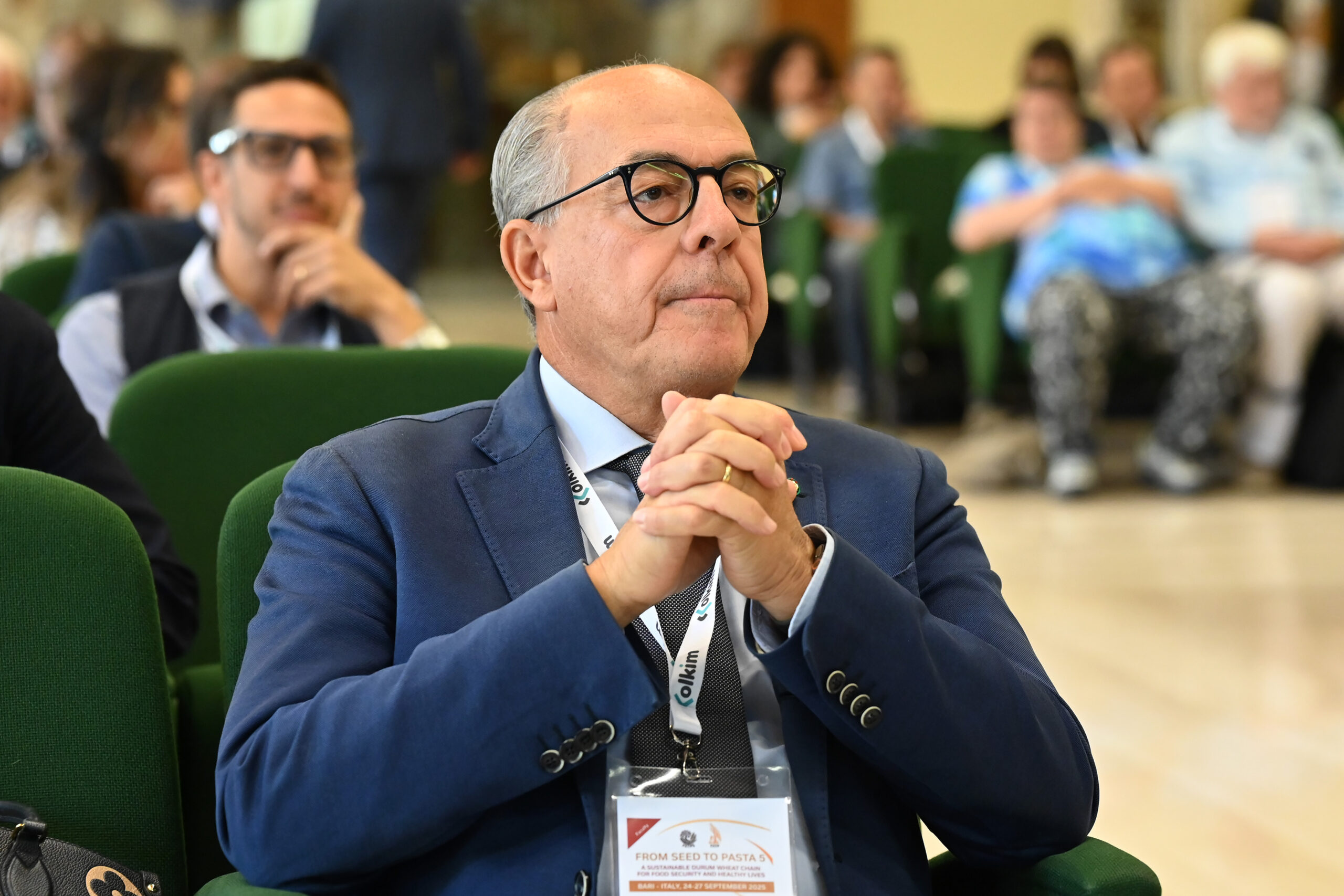
Brussels – “As it stands, it is impossible to negotiate.” Straight to the point, Paolo De Castro, currently President of Nomisma, and a recent (and long) past as a MEP working on the Common Agricultural Policy. When he looks at the EU’s new multi-year budget proposal, the European Commission (MFF 2028-2034) presented, he sees precisely in the idea of merging agriculture and cohesion into a single fund the real obstacle on which, in his opinion, the EU has to backtrack if it wants to provide the Union with a new budget. “That is the only obstacle,” he says in an interview with Eunews. “If you remove the single fund, then you can manage to close the negotiations by 2027, without any problems.”
Eunews: What does the idea of the single fund mean for agriculture?
Paolo De Castro: “For those who wish to have more Europe, giving Member States the power to allocate resources is a step backward, not a step forward. Moreover, the Common Agricultural Policy (CAP, ed.) would compete with the regions, the European Social Fund, and the fisheries sector. One cannot see the benefit for the Member States. Putting agriculture and cohesion together was not desirable.
E: European Parliament, regions, and Member States: practically everyone has criticized the budget proposal. Is it reasonable and feasible to withdraw the proposal and submit a new one?
PDC: “The breaking point is this single fund. This Commission did not listen to the European Parliament. In the face of a plenary vote on a resolution calling for no single fund, the Commission introduced it. This surprised me.”
E: How do you judge this action of Ursula von der Leyen? By doing so, she went against even her party’s directions, the EPP….
PDC: “I don’t want to go out on a limb, but it really struck me. What happened between von de Leyen and the European Parliament is a very serious breach. It is not possible to avoid listening to 720 directly elected MEPs in all member states. At the very least, she should have sat down and negotiated.”
E: The Commission seems to have met the farmers’ demands with the youth proposals and the entry of young people into the sector. Do you like these proposals? Do they help the industry? Again, could they have come sooner?
PDC: “The two CAP reforms already put the focus on young people. I am in favor of increasing the envelopes and Commissioner Hansen’s proposals, but this cannot be a substitute for income-generating farms. To convince farmers to farm and stay, you need strong, competitive farms; you cannot live on European rents. So initiatives are useful, but it is necessary to strengthen the entrepreneurial fabric.”
E: Since this Commission is now focusing on simplification, can simplification in agriculture help?
PDC: “Yes, absolutely. That’s one of the problems created in the name of sustainability: excessive bureaucracy. In the end, we had so many rules and administrative procedures that many people gave up applying for CAP funds.”
E: Are you saying that agriculture has paid the price for the Green Deal sustainability ambitions?
PDC: “That’s right. I was an MEP until the last parliamentary term, and we spent much of it working to reduce this excess of environmental regulation. I’m thinking of the Nature Restoration Regulation, the Industrial Emissions Directive, or the rules on plant-protection products. In the end, we managed to push back almost all of these initiatives. In the last parliamentary term, it seemed that every day in the Commission, they woke up and tried to make life more complicated for farmers. This new legislature, on the other hand, seems to me to have started on a better footing.”
E: Back to the multi-annual budget, is the single fund really the only real obstacle? In the Council, there are already those who have said ‘no’ to joint debt ideas….
PDC: “There are those who push for the creation of Eurobonds, which is what Draghi proposed and also what [ECB President Christine] Lagarde has spoken in favor of. It should be noted that if we were to issue debt securities, they would have a positive effect on the euro in response to US tariffs. We would make up for the tariff hit.”
E: Regarding tariffs, is it right to ratify the trade agreement with Mercosur, given the context?
PDC: “Europe cannot afford not to negotiate, especially today. However, free trade agreements must not create market distortions for our producers. If the EU raises the bar on quality and sustainability standards, non-European producers who export here must also abide by the same rules; otherwise, we disadvantage our companies and take our consumers for a ride.”
English version by the Translation Service of Withub
![da sinistra: i ministri delle Finanze di Germania, Svezia e Finlandia, Lars Klingbeil, Elisabeth Svantesson e Riikka Purra. I tre Paesi hanno di fatto affossato la proposta di MFF 2028-2034 [Lussemburgo, 10 ottobre 2025. Foto: European Council]](https://www.eunews.it/wp-content/uploads/2025/10/ecofin-DE_SE_FI-350x250.jpg)
![Il vicepresidente esecutivo della Commsisione europea, Raffaele Fitto, in commissione Sviluppo delle regioni del Parlamento europeo [Bruxelles, 17 luglio 2025]](https://www.eunews.it/wp-content/uploads/2025/07/fitto-regi2-350x250.png)





![[foto: Guillaume Baviere/WikimediaCommons]](https://www.eunews.it/wp-content/uploads/2026/01/Cuba_Che-120x86.jpg)
