Brussels – For some time now, water has been at the centre, on the one hand, of many conflicts in different parts of the world and, on the other, of new migratory movements directly linked to the effects of climate change. The European Economic and Social Committee (EESC) adopted an opinion on the subject on 18 September. Co-rapporteur Milena Angelova (representing the employers’ group within the EESC, from Bulgaria) explained its main points to Eunews.
First of all, what are we to understand by these expressions? Angelova describes blue diplomacy as “a set of actions that promote water cooperation, so that water is used as a tool for peace and stability rather than as a weapon.” “The efficient and sustainable use of water should become a central component of EU diplomacy,” she reiterates, in order to “reduce the pressure on water resources, mitigate the effects of climate change-related drought, and ensure the availability of water resources for future generations.”
The EESC representative calls for “the use of politics to reduce tensions over water and the use of water to reduce political tensions, while respecting the principles of international law.” The issue, she emphasises, is as relevant inside as outside the Union’s borders. It is a question of promoting practices of sustainable agriculture, or responsible trade policy, both in the Member States and at the level of partnerships with third countries (e.g., along the Mediterranean basin, especially with regard to the so-called water-energy-food-ecosystem nexus, known by the acronym WEFE).
Angelova suggests “integrating legally binding frameworks that establish clear rights and responsibilities for shared water resources, while aligning national policies within targeted basin-level strategies.” Especially, but not only, river basins. There are already cases of coordinated river management, where “joint authorities” and “multi-stakeholder governance mechanisms” foster co-responsibility and reduce “hydro-political” tensions.
In concrete terms, this involves sharing data, setting up predictive notification processes, introducing consultations for the creation of water infrastructure, as well as sharing investments to “mitigate the risks of unilateral actions that could aggravate the current water stress.” On the Old Continent, some good examples are the Danube—which crosses 10 countries, including seven EU members—and the Rhine, which flows through six states, including four EU members.
On this front, Angelova explains, the twelve-star foreign policy “should promote diplomatic initiatives in support of climate resilient water agreements at the basin level and cooperative water resource sharing mechanisms, with the ultimate goal of reducing tensions between riparian states and promoting peace.” The focus, she specifies, should be on “safeguarding the human right to water and sanitation and the constant protection of water resources and water infrastructure,” even in times of war.
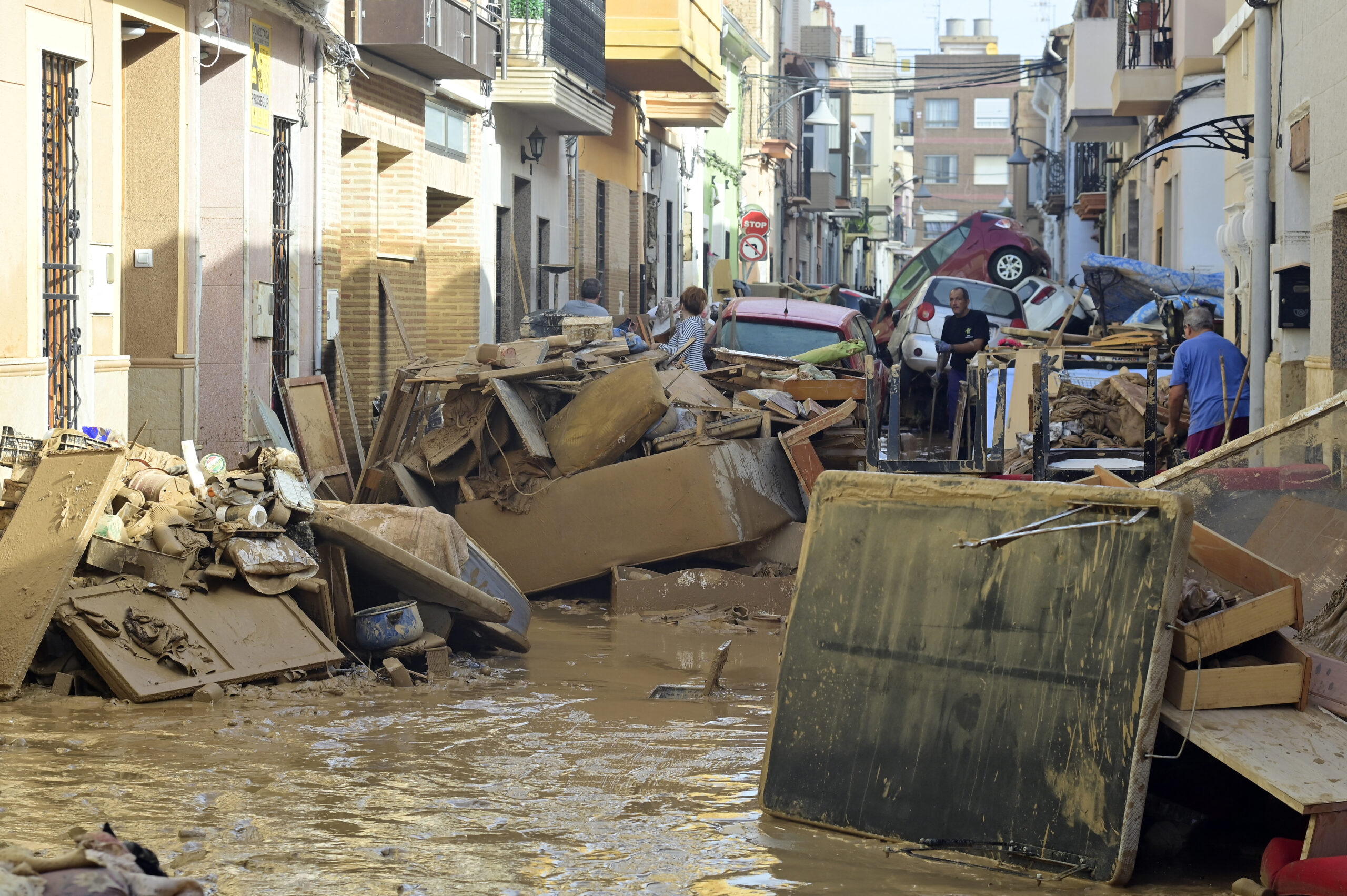
Where? Especially where “climate change is accelerating global water crises, exacerbating droughts, floods, and water scarcity,” the co-rapporteur reflects, pointing to a number of hotspots, especially in the so-called “global south” (sub-Saharan Africa, South America, Central Asia, North Africa, and the Middle East, above all). “Water scarcity and mismanagement of resources have become key drivers of displacement, particularly in regions heavily dependent on agriculture and fisheries, and where desertification complicates access to potable water,” she concludes.
Such dynamics only “increase migration pressure” on various levels. Firstly, domestically, from the suburbs to urban centres. Then to other countries: neighbouring countries, firstly, and then to the “north of the world.” This includes Europe, which is becoming increasingly “fortified” and, at this point in history, cannot—or does not want to—devote itself to welcoming human beings who seek to reach it with dignity, preferring instead to expel them.
This is, Angelova points out, “a reality already underway that could soon reach unprecedented proportions if effective policy measures are not taken quickly.”
Among the causes of the recent waves of migration from Afghanistan and Pakistan to the EU, for example, is the abrupt desertification underway in these countries. Similarly, she continues, the gradual depletion of critical watersheds such as Lake Chad in the Sahel and the Aral in Central Asia, and of rivers such as the Nile and the Congo, is “causing environmental catastrophes of historic dimensions that could destabilise regional diplomatic relations and spark conflicts and further waves of migration.” Some estimates, she tells us, speak of 1.2 billion climate-displaced people by 2050.
This inextricably links the water-climate sphere to the broader security sphere. “The EU’s Common Foreign and Security Policy (CFSP) and the Global Gateway Strategy should explicitly integrate blue diplomacy as a pillar of their activities,” Angelova urges. For instance, in the conclusion of strategic partnerships with third countries (especially where cross-border river basins represent potential hotbeds of conflict), in the new Pact for the Mediterranean, but also in the use of instruments such as the European Peace Facility (EPF), or in the definition of trade agreements.

Is there any awareness of this in Brussels? The co-rapporteur tries to see the glass half full. “The EU is already one of the biggest global donors for water-related projects, and with blue diplomacy, one can further align development assistance with the geostrategic goals” of the Twenty-Seven, she argues. Concretely, there is a need to “focus funding on the most fragile regions” and “increase investment in integrated water resources management,” prioritising water resilience in regions where water scarcity drives humanitarian crises, migration, and conflict.
Moreover, the EESC representative recalls, the EU plays a leadership role in multilateral environmental governance and can therefore engage in “active global diplomacy on water” in fora such as the United Nations, the G20, and the World Trade Organisation (WTO). The Union should promote “a global water resilience initiative,” she continues, setting high standards on the issue to treat it “with the same ambition with which it tackles decarbonisation, as water is an issue that goes beyond just the environment and climate.”
Water “justice” must be the North Star for the EU, she adds, and the water resilience strategy “must be cross-cutting and also include industrial policies, agriculture, consumer policy, energy, health, and, of course, external and development policies.” All right, but with what resources? The Committee, Angelova declares, “reiterates its call for water as a strategic priority in the next multiannual financial framework” (MFF) for the period 2028–2034, currently under discussion between the Commission and co-legislators (the Council and the European Parliament).
There is hope, she notes, for the next EU budget. Commissioner Jessika Roswall (responsible for the Environment, Water Resilience and a Competitive Circular Economy) is touring the Member States to gather their “most urgent needs,” which will be addressed at the first Water Resilience Forum scheduled for 8 December in Brussels. All this, according to Angelova, will play a role in the discussions on the new MFF. Above all, she concludes, water resilience should be one of the pillars of the infamous Competitiveness Fund, which should be dedicated to security in its broadest sense.
English version by the Translation Service of Withub




![[Copyright: European Union]](https://www.eunews.it/wp-content/uploads/2026/10/euco-261015-120x86.png)