Brussels – Cohesion and agriculture “remain at the heart of this budget.” That is the pledge, reiterated today (November 12) before the European Parliament, with which Ursula von der Leyen brought back into line the political groups that support her and that—until just a few days ago—seemed ready to raise barricades in defense of the Cohesion Funds and the Common Agricultural Policy. The unease remains mainly within the Socialist ranks, but the crisis has been averted.
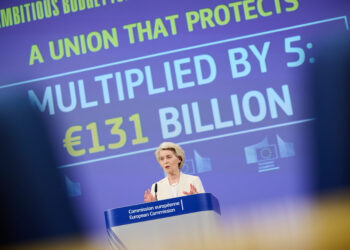
At the debate in the hemicycle, the president of the European Commission came on the strength of the concessions announced earlier this week to the two co-legislators to ensure the continuity of the two pillars of the Union, which are likely to be merged into one large fund, together with all other expenditure programmes, in the upcoming multiannual financial framework. “The resources for both are preserved,” von der Leyen assured, rattling off the numbers given in the proposal: “A minimum of EUR 218 billion for less developed regions. A minimum of EUR 294 billion for farmers’ income support. A minimum of EUR 2 billion for our fishermen and fisherwomen. Three times more funding to address extreme weather and other emergencies. A 43 percent target for climate and environmental goals. A 14 percent target for social investment in the plans.” And so on, until reaching the almost two trillion proposed for the 2028-2034 budget.
In short, “the structure of the budget changes, but our values remain the same,” insisted the EU leader. The regions “will continue to exchange directly with the Commission” – through a “regional control” that will have to ensure that local realities are at the heart of national plans – and the establishment of a “minimum envelope for income support” for farmers and a “rural target” for funding rural areas will ensure that the CAP continues to “rest on solid foundations.”
Then there is – and this is the point that has caused the most discontent in the European Parliament – the question of the risk of excessive centralisation of expenditure guidance and control functions in the hands of the Commission. Von der Leyen said that “Parliament and Council – as budgetary authority – will decide together on priorities and their budgetary allocations for the year ahead. And when severe crises hit, the European Parliament will be immediately involved through the new crisis mechanism.”
After raising their voices for weeks, the political groups of the pro-European majority toned down their rhetoric. Starting with the European People’s Party, of which von der Leyen herself is a member, group leader Manfred Weber acknowledged that the budget proposal contains “many of the priorities” of the EPP, and warned that the issue of budget control “is close to the heart” of the group. “Steps have been taken in the right direction,” Weber concluded.
Liberals and Greens – whose specific weight in the numbers does not allow them to put their foot down – reiterated their red lines on regions, agriculture, and governance, but without attacking the Commission. “If I am asked whether I am fully satisfied, the answer is no. However, for me it is a first step,” admitted the leader of the Greens, Terry Reintke. Unease remained among the Socialists: the S&D are, on closer inspection, the only group with the “honour and burden” of being able to take the clash almost to the breaking point. For the group leader, Iratxe Garcia Perez, the proposal remains “insufficient.” On the contrary, the changes suggested by von der Leyen to obtain parliamentary endorsement are “a mere cosmetic change.” Garcia Perez also issued a warning to the capitals: “You cannot do more with less. If the member states do not want to increase their contributions and at the same time demand new priorities, there are not many alternatives.”
Despite the Socialists’ stubbornness, von der Leyen’s “makeover” may have been enough. After all, as the president of the European Commission acknowledged, “this is only the start of the process,” and “negotiations will be long and difficult.” For now, the crisis has been averted, or at least postponed.
English version by the Translation Service of Withub