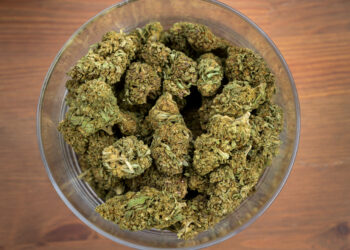
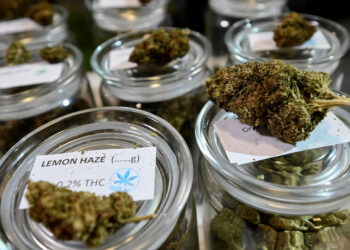
Brussels – The Council of State has referred to the Court of Justice of the European Union the decision on the compatibility with EU law of the Italian ban on the marketing of hemp inflorescences. The judges in Luxembourg will thus be able to put an end to the long period of uncertainty for a sector that employs around 15 thousand people and generates an annual turnover of €500 million, triggered by the approval of the security decree strongly supported by Giorgia Meloni’s government.
The Council of State—called upon by the government, which challenged the ruling of the Lazio Regional Administrative Court on the decree by which the government had equated oral compositions based on the non-active cannabinoid (CBD) with narcotic substances—decided to refer the dispute over the amendment to the security bill, which effectively bans the production and trade of hemp inflorescences and the derivatives of hemp, to the EU Court.
In its order, the Council of State first underlines the principle that EU legislation, in defining the varieties that may be cultivated, “makes no distinction between the various parts of the plant.” The first question to be resolved is whether the EU rules preclude national legislation that prohibits the cultivation and use of leaves and inflorescences and their derivatives (CBD) from permitted varieties within the legal limits of THC (the active ingredient in cannabis) not exceeding 0.2 per cent.
Next, the question of “unjustified” restrictions to the European single market arises. The ban on the production of and trade in hemp inflorescence and derivatives inevitably entails import and export restrictions that cannot be justified on health or public order grounds, given the “extremely low” level of THC. For this reason—as has already been denounced by professionals, lawyers, and Italian and European political representatives—it could violate the principle of the free movement of goods enshrined in Articles 34 and 36 of the Treaty on the Functioning of the European Union (TFEU).
Comparison with other EU countries also matters. The production of cannabidiol “appears to be legal in other Member States,” notes the Council of State. The scenario indicated by the highest administrative authority is that of a possible disapplication of the incompatible national legislation: it is “possible” that thelaw 242/2016, the law on industrial hemp, amended by the Meloni government, “should be considered non-compliant with European standards and, as such, should be disapplied.”
According to Giacomo Bulleri, the lawyer who handled the appeal together with the law firm Legance, the ordinance “has comprehensively addressed the critical issues that have emerged over the last 10 years,” which “continue to create confusion around hemp.” These critical issues stem, according to Bulleri, from a “very simple” question, namely that “the hemp plant in its entirety (from certified low-THC varieties) is an agricultural product and therefore the narcotics law cannot be applied.”
For Mattia Cusani, president of Canapa Sativa Italiana, who was the first to bring the critical issues concerning the Italian bans to the attention of the European institutions, we are facing “a decisive moment” after a long period of stalemate in which the European Commission has delayed the evaluation of the issue requested by trade associations and MEPs. “The Council of State highlights the Italian anomaly and asks the Court of Justice of the European Union whether it is really possible to target only the inflorescences when the EU does not distinguish between the parts of the plant and the THC content is minimal,” Cusani explained. For companies and shops, “this means a concrete prospect of legal certainty and protection of the supply chain, in accordance with European standards.”
English version by the Translation Service of Withub