![[foto: Emanuele Bonini]](https://www.eunews.it/wp-content/uploads/2025/11/WhatsApp-Image-2025-11-18-at-18.37.40-e1763487534522.jpeg)
Brussels – When talking about the Savings and Investment Union, insurance cannot be left out, as the insurance sector “can become a decisive partner in steering private investment to support growth, financial stability, and social protection.” This is the message brought to Brussels by Unipol, with the event entitled “The contribution of insurance to European competitiveness,” hosted by Vice-Presidents Pina Picierno (PD/S&D) and Antonella Sberna (FdI/ECR) at the European Parliament. The group intends to play a leading role and to land in the capital of the European Union with a debate that follows in the wake of the Draghi report on competitiveness and the Letta report on the single market, demonstrating Unipol’s focus on the twelve-star agenda.
Insurance companies already do so much, Unipol recalls. By way of example, it is sufficient to recall that, globally, natural disasters generated economic losses of $318 billion in 2024. Of this amount, 137 billion, one-third of the total, was covered by insurance policies. This is still not much, but private insurance is already providing concrete support to restore the damage and ensure the continuity of work and business activities, thereby preventing the economic-productive fabric from coming to a halt. This is why insurance can do so much for the ambitious savings union project that the EU is working on with renewed impetus.
Insurance in the spotlight and increasingly at the centre of EU action
“This conference is intended to be a meeting point between the needs dictated by an arena that has become much more competitive and insurance,” emphasises Stefano Genovese, Head of Public and Institutional Affairs at Unipol, who is convinced that in the new context, “there is a role for insurance, which is very important.”
This is what Raffaele Fitto, the European Commission’s executive vice-president in charge of Cohesion and Reform, is convinced of above all: the Unipol conference is one “that is consistent with the commission’s agenda and the competitiveness compass,” he emphasises in the video message sent for the occasion. The insurance sector, he argues, can indeed help “unlock European savings and channel them into productive and competitive investments.”
Appreciation also came from Antonella Sberna: “We are members of the Parliament, we cannot know every single subject in detail. It is precisely moments like these that give rise to tools for presenting requests.” Pina Picierno (PD/S&D) already has some requests and shares them publicly: “We must offer certainties and reliable prospects, because these are essential aspects for the mobilisation of private capital.” An appeal also shared by Vincenzo Celeste, Italy’s permanent representative to the European Union, who insists on the need to “enhance this sector,” given that “insurance invests and stabilises.” Therefore, he adds, “we need to link household savings into strategic priorities, and here intermediaries can play a unique role, but we need clear rules.”
Unipol’s commitment in the context of more Europe
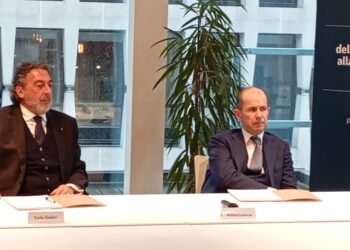
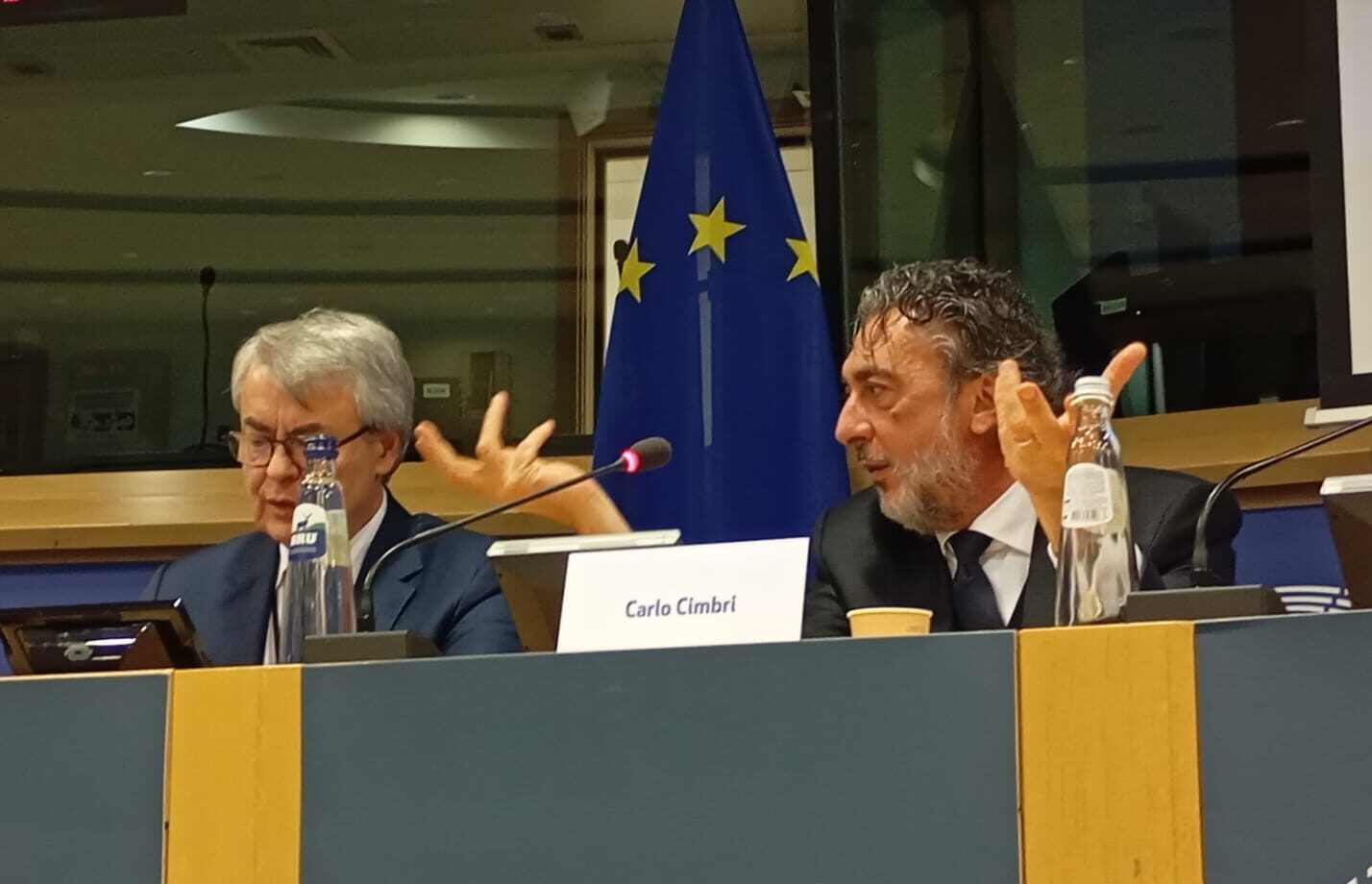
In Unipol’s all-new mission to the EU capital, focused on a leading role, the group’s chairman, Carlo Cimbri, calls on the representatives of the EU institutions to close the “big European building site.” “The competitive strength of individual states will be insufficient” in the new global context, he laments. “To be able to compete,” he emphasises, “the single market is THE issue, not an issue. It concerns the whole development of the EU economy.” At a political, national, and EU level, “there is a lot of talk about PNRRs, NGEUs, future PNRRs in a different form, but in our opinion, if we don’t create the prerequisites, we will never have a great market and a great economy. One prerequisite for this is the creation of a capital market. There are too many barriers, which drive away investment.” So, he concludes, “I believe there is no other way than a stronger Europe, but it has to be built.”
On this road ahead, we need a system tailored to the sector, Matteo Laterza, CEO of Unipol, emphasises. Meanwhile, there is a need for simplification, because, he recalls, “in 2012 the sector had to respond to 12 directives, today to 70,” almost six times more. “Overregulation is an issue that needs to be addressed,” he suggests. Moreover, he reminds, “insured economic systems guarantee the economic recovery of insured entities,” and therefore, the insurance environment should be fostered. “In the end, we call for regulation that puts insurance in a position to respond to this leading role efficiently.”
The support of the European Commission
The European Commission reassures that it intends to go ahead with an insurance-friendly agenda. “The integration of financial markets is not a luxury but a necessity if we do not want to remain irrelevant on the global stage,” says Ugo Bassi, director of banking insurance and financial crime at the Directorate General for Finance of the European Commission (DG FISMA). “The importance of the insurance sector in this challenge is important,” he acknowledges. “The role is decisive because it is twofold: channelling people’s savings and continuing to invest in the real economy are two key objectives.”
The investment union “is not only a union of capital,” emphasises Lauro Panella, member of the cabinet of the Commissioner for Financial Services, Maria Albuquerque. “We need the market’s scale,” she points out. As he explains, “the Draghi report highlights that we lag behind in the technology sector because we have not financed risk, and the bigger you are, the better you manage risk.” Hence, the assurance of Brussels’ attention to the issue, which concerns the sector in which Unipol is part. “There are no developed financial markets without an insurance market.”
English version by the Translation Service of Withub