



![[foto: Rr Gimenez/Wikimedia Commons]](https://www.eunews.it/wp-content/uploads/2025/11/ue.png)
Brussels – On 19 December, EU leaders had given themselves a few weeks to get things right and untangle all the knots of the trade agreement with the Mercosur countries. During the Christmas holidays, the confrontation between Brussels and the European chancelleries—in particular Rome and Paris—continued: “There has been discussion, work, and progress,” Paula Pinho, the European Commission’s chief spokesperson, confirmed today (5 January). The optimism is evident, so much so that the aim is to allow Ursula von der Leyen to fly to Latin America in a week, on 12 January, to close a quarter-century-long negotiation definitively.
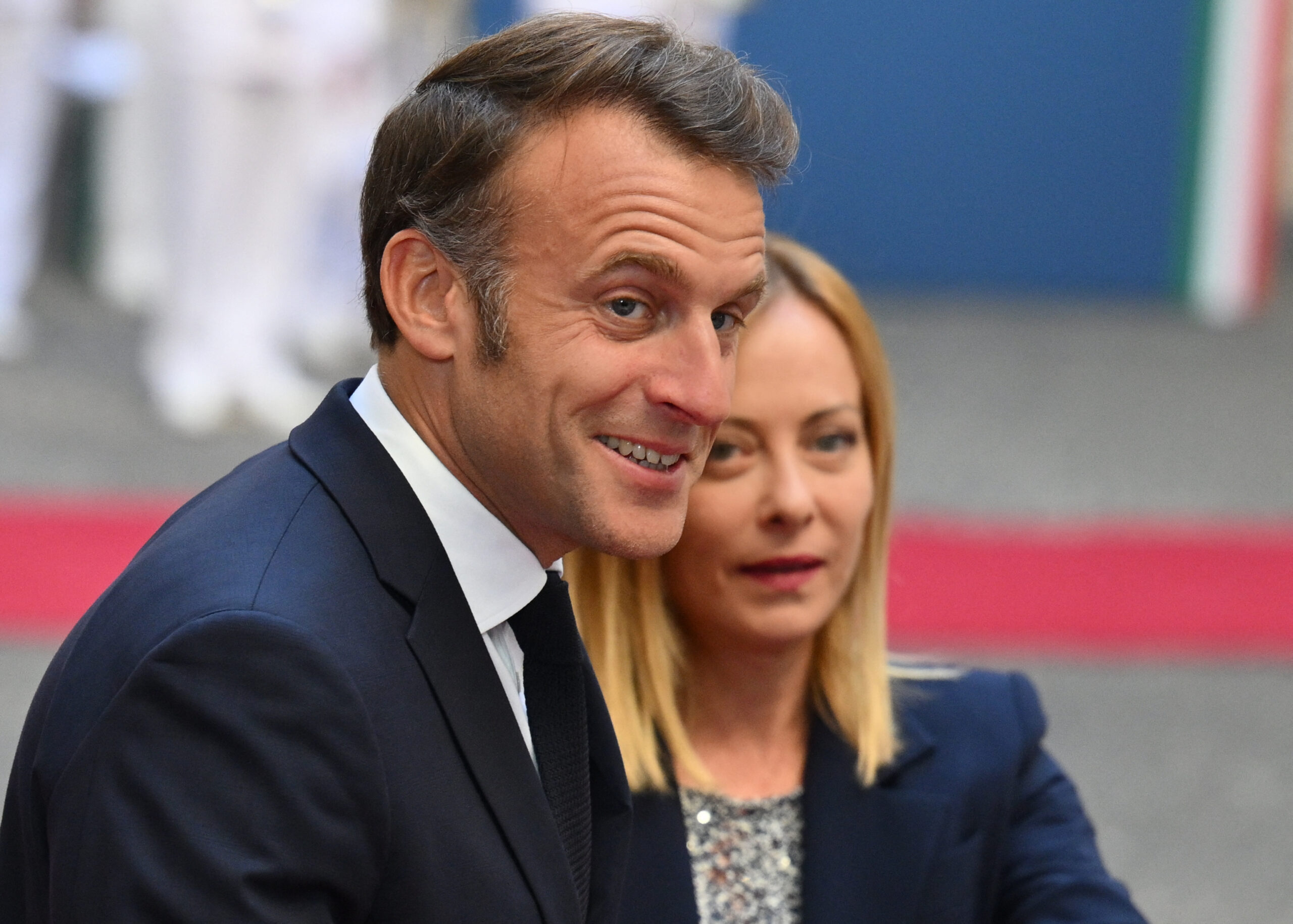
“I don’t have a date to confirm, no concrete date” for the EU leader’s trip to Paraguay, “but we can confirm that we are on the right track to be able to consider a signing, hopefully soon,” the spokeswoman said during the first briefing of the new year with the international press. After Giorgia Meloni and Emmanuel Macron’s “no” at the European summit in December, which led von der Leyen to cancel an already planned trip, all the cards now seem to be in place.
The feeling is that we are facing a real final rush: according to reports, on Wednesday, 7 January, the agriculture ministers of the member states will meet for an extraordinary Council in Brussels, to give the green light to the approval of the agreement by the ambassadors of the 27, scheduled for the COREPER meeting on Friday, 9 January.
In this way, von der Leyen could finally set course for Paraguay, the country that inherited the presidency of the South American bloc from Brazil, and affix her signature to the agreement reached in December 2024. An agreement that, besides opening the door to a market of over 700 million consumers, has an increasing geopolitical value for both sides, in the era of Trumpian trade tariffs against the European Union and Washington’s renewed interference in the American continent.
While France is still grumbling about the lack of a reciprocity clause in the agreement, and Prime Minister Sebastien Lecornu has announced that he intends to unilaterally suspend the import of products containing residues of banned substances into Europe, according to Bloomberg, Italy is now ready to support the free trade agreement. Sources quoted by Bloomberg claim that the Meloni government has made progress on guarantees for the agricultural sector and possible additional resources from the EU budget. To address the fears of the agricultural sector, the EU institutions gave the green light in record time to a regulation that will establish, once the agreement with Brazil, Argentina, Uruguay, and Paraguay enters into force, a kind of “emergency brake” on imports of sensitive products from Latin America.
English version by the Translation Service of Withub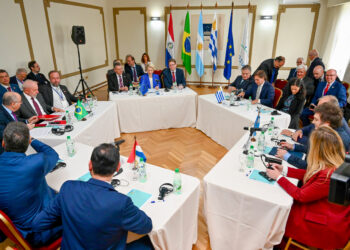

![[foto: Rr Gimenez/Wikimedia Commons]](https://www.eunews.it/wp-content/uploads/2025/11/ue-350x250.png)




![La video riunione dell'Eurogruppo [27 marzo 2026. Foto: European Council]](https://www.eunews.it/wp-content/uploads/2026/03/eurogruppo-260327-120x86.jpg)
