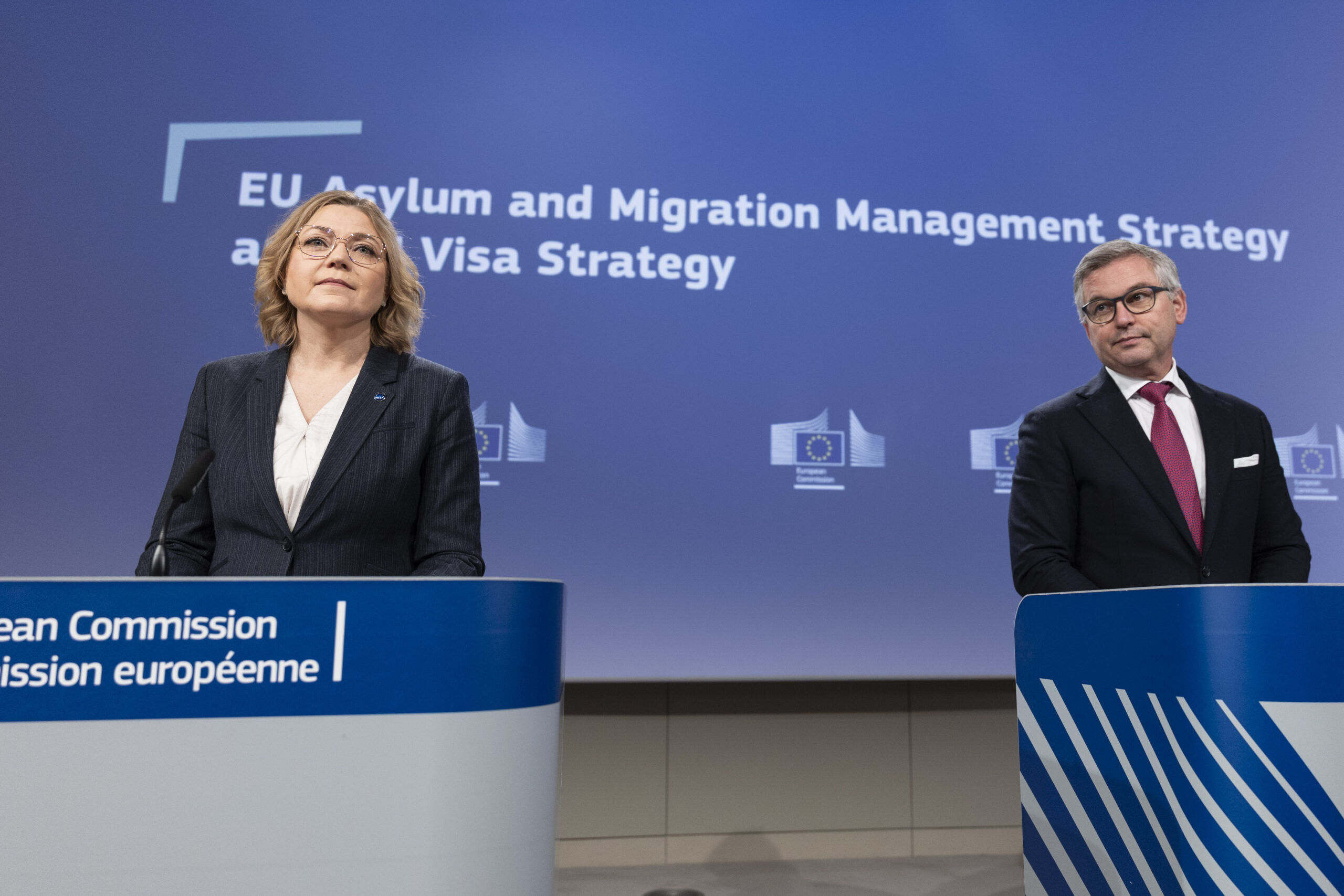
Brussels – The European Commission today (29 January) presented two “twin strategies”, which, according to Home Affairs Commissioner Magnus Brunner, represent a “new chapter” in the management of irregular migration. In the first, Brussels emphasises the concept of “migration diplomacy”. In the second, it indicates an immediate application: limiting visas for entry into the EU to citizens of countries that do not cooperate sufficiently on deterring departures and repatriations.
The first European strategy on asylum and migration management sets out the EU’s objectives for the next five years. It identifies concrete priorities, which the EU executive will turn into legislative proposals. The assumption is the principle that “Europe decides who enters the EU and under what circumstances.” To this end, the full implementation of the Pact on Migration and Asylum from June 2026 onwards is the “top priority”, emphasised Henna Virkkunen, Executive Vice-President of the European Commission, at a press conference with Brunner. And then there is the need to strengthen borders, expand Frontex’s role, and increase the effectiveness of returns by creating return hubs in third countries.
Among the priorities to be developed over the next five years is also the strengthening of “migration diplomacy”. An “assertive” diplomacy on migration that “promotes the interests and values of the EU.” A “paradigm shift” is needed, Virkkunen insisted. In essence, the approach towards countries of origin and transit on migration routes must change: no longer “if you detain migrants, we will guarantee you resources,” but “if you do not, you will pay the consequences.” The Commission, according to the strategy, “will step up its efforts to increase cooperation with international partners by using incentives and levers across all policy areas and sectors, such as visa policy, trade and financial support.”
Already in December, EU institutions had given the green light to a revision of the Generalised System of Preferences (GSP) regulation, the scheme through which 65 third countries can access the European single market on preferential terms. Trade preferences that “may be revoked if a beneficiary country does not cooperate on the readmission of its own citizens.” Similarly, the new EU visa strategy is a practical application of “migration diplomacy”.
“Our Member States issue more than 10 million visas every year, and more than 60 countries are exempt from visa requirements for the EU. This makes our visa policy a very important tool,” said Brunner. In order to “leverage visa policy to promote the EU’s strategic interests”, the Commission will propose this year—through a revision of the Visa Code—greater use of the mechanism that already allows the EU to take targeted visa measures in cases of non-cooperation on return and readmission and “the introduction of ad hoc measures to encourage cooperation on security and against illegal migration.” These measures range from suspending the issuance of multiple-entry visas, longer processing times or an increase in visa issuance fees.
English version by the Translation Service of Withub


![[foto: archivio]](https://www.eunews.it/wp-content/uploads/2018/01/lavoratori.jpeg)