



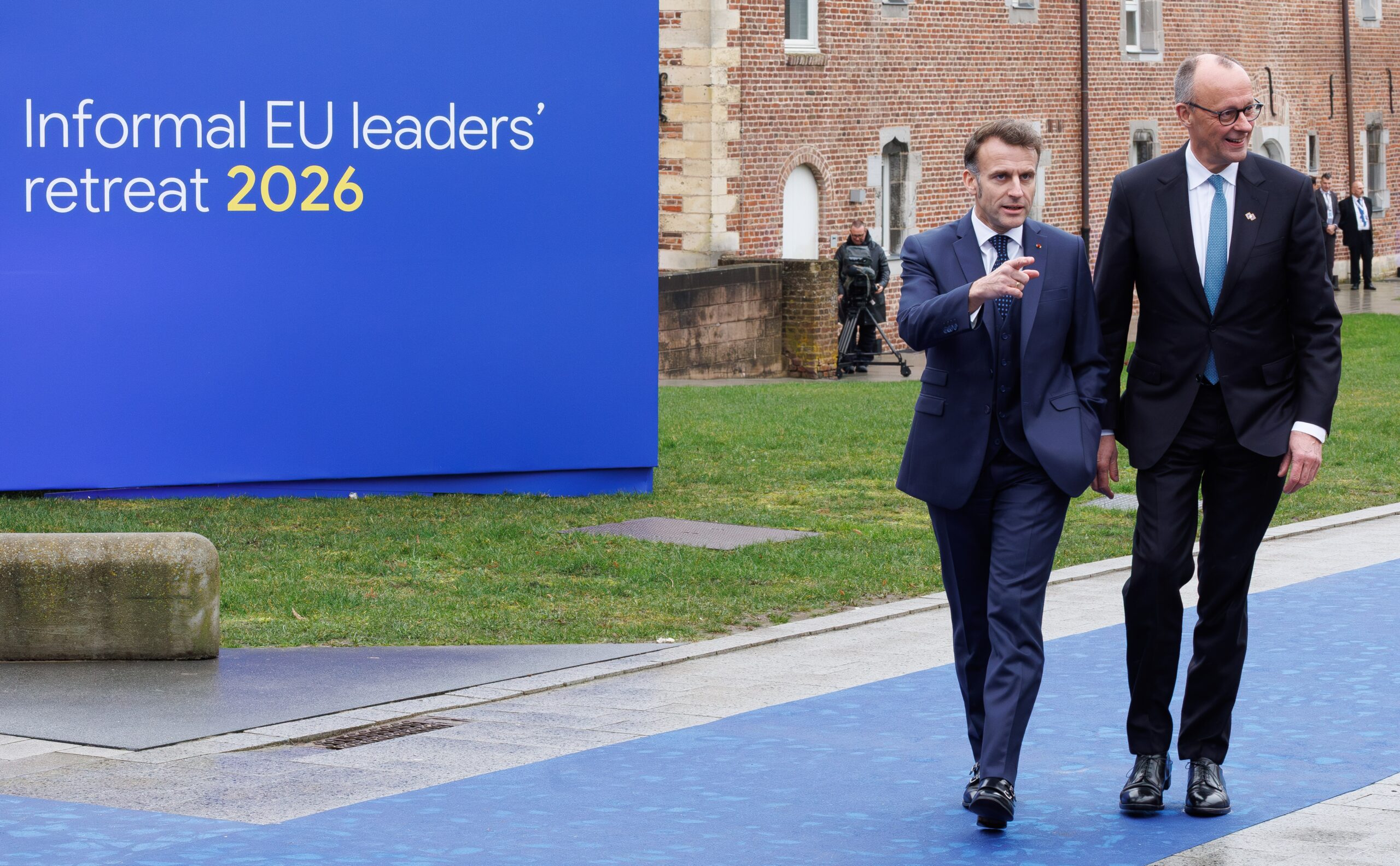
Brussels – The Franco-German axis, the historic driving force behind the European economy, is sending a strong political signal at the informal summit on competitiveness taking place today (12 February) at Alden Biesen Castle in Belgium. Friedrich Merz and Emmanuel Macron appeared together and issued a joint statement to the press, as if to dispel any doubts about the stability of relations between the EU’s two largest economies. “We almost always agree,” said the Chancellor. A few metres away, Giorgia Meloni also set the record straight: “We are strengthening our bilateral cooperation” with Berlin, “but this is not something that is done by excluding anyone else.”
The Élysée Palace can rest assured. Merz and Meloni have no plans to sideline Macron. The relationship between Berlin, Paris, and Rome is more of a triangle. With a weaker side, linking the Italian prime minister to the French president, and the other two pointing decisively towards Berlin, almost as if courting the chancellor to enjoy a privileged relationship with the continent’s leading power. In recent weeks, the convergence between Merz and Meloni has been evident: first Merz’s visit to Italy and then, on the eve of the summit, the joint document – also signed by Belgium – setting out the priorities for reviving European competitiveness. Conversely, tensions between the chancellor and Macron first flared over the trade agreement with Mercosur and then over the French president’s insistence on the ‘Buy European’ principle as the key to reviving industry.
This morning, the two held bilateral talks before the summit. Macron then took part in the informal meeting promoted by Italy, Germany, and Belgium to take stock of the situation before the proceedings, which were attended by the leaders of 19 Member States and the President of the European Commission, Ursula von der Leyen. Together, Merz and Macron then issued a statement to the press: “We want to make the European Union faster, make it better and, above all, we want to ensure a competitive industry in Europe,” began the German Chancellor, emphasising that he and Macron “almost always agree on these issues.”
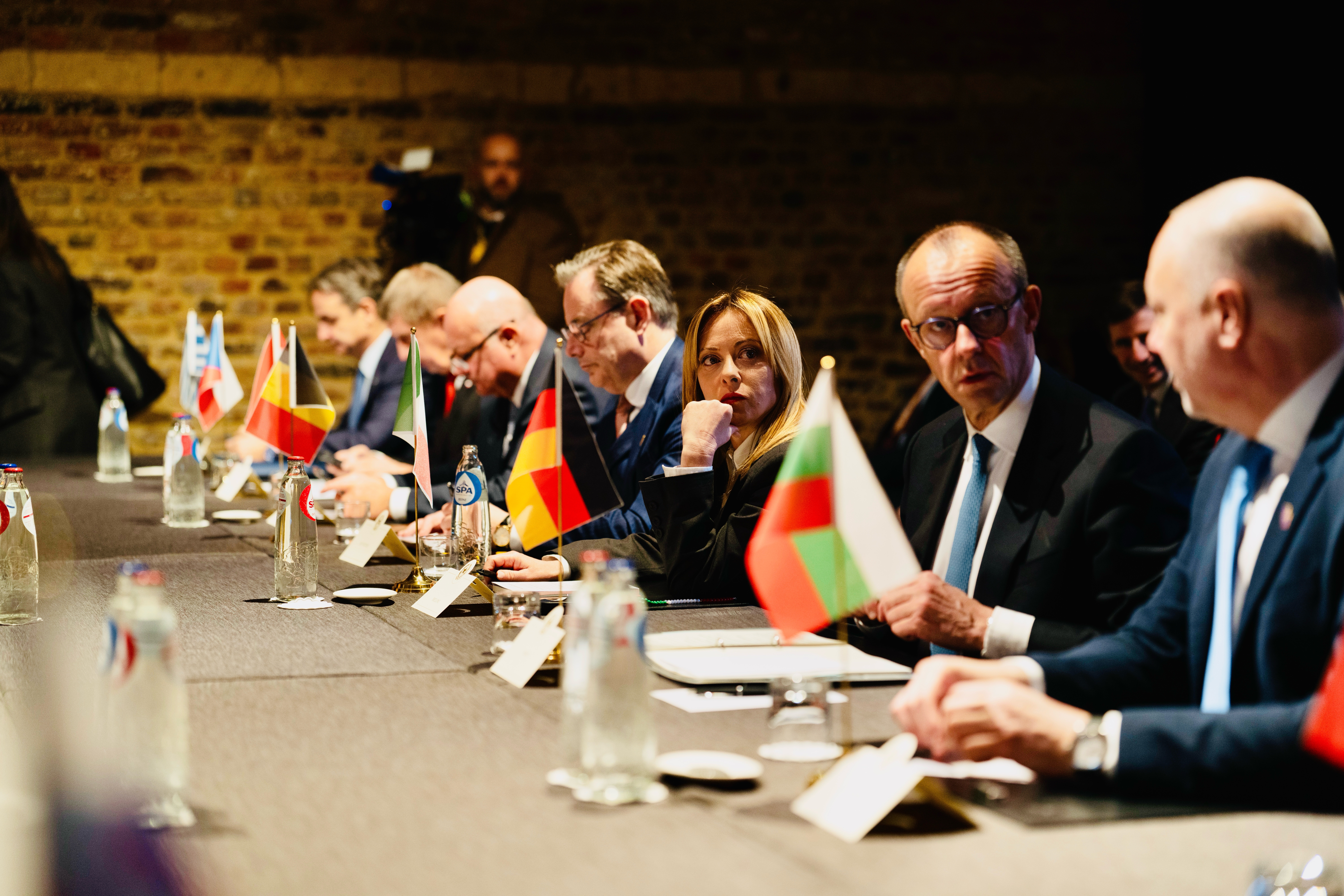
“I believe we share this sense of urgency, that our Europe must act,” Macron said, calling for “very concrete decisions by June.” On some issues, “if we don’t move forward as 27, we should give ourselves the right to proceed with enhanced cooperation in order to move faster,” he insisted. The priority is the “very short-term response, which consists of implementing everything we agree on, and which concerns the simplification and deepening of the single market, energy, and financial issues.” On the Capital Markets Union, “there is a very strong agreement between Germany and France,” Macron noted, though he is not giving up his flagship idea: “European preferences in certain critical sectors, particularly those at risk.”
In the Berlin–Rome–Paris triangle, Belgian Prime Minister Bart De Wever is trying to act as a bridge. Politically close to Giorgia Meloni, he has signed the Italian‑German memorandum of understanding. “The protection of the single market is a sensitive issue on which the German and French approaches do not coincide. But this has always been the case since the Second World War. In the European model, these two paths exist, and we must reconcile them, find compromises to move forward,” De Wever said. After all, Belgium “is always between the two (France and Germany, ed. note), we understand both, and are in an ideal position to find a compromise,” he added.
English version by the Translation Service of Withub

![Il castello di Alden Biesen, in Belgio, dove si riuniranno i leader dell'UE per il vertice informale dedicato a mercato unico e competitività [foto: European Council]](https://www.eunews.it/wp-content/uploads/2026/02/aldenbiesen-350x250.jpg)




![La video riunione dell'Eurogruppo [27 marzo 2026. Foto: European Council]](https://www.eunews.it/wp-content/uploads/2026/03/eurogruppo-260327-120x86.jpg)
