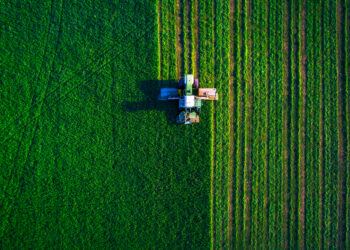
Brussels – Beef and lamb farms, which involve high greenhouse gas emissions, received 580 times more subsidies from the European Union’s Common Agricultural Policy (CAP) in 2020 than legume crops such as lentils and beans. In absolute terms, 8 billion euros went to sheep and cattle production, compared with 14 million for legumes. Similarly, the dairy sector received 554 times more CAP funds than nuts and seeds (16 billion compared with 29 million). This was revealed in a report entitled ‘The CAP at a crossroads – Reforming European CAP subsidies to support healthy and sustainable diets’, released today by Foodrise, a nonprofit organization active in the United Kingdom and the Netherlands, committed to a more sustainable and equitable agri-food system.
Overall, Foodrise’s calculations, covering the last year of the old CAP cycle (2014-2020), show that the EU allocated three times more funding to meat and dairy production than to plant-based foods and alternative proteins: the meat and dairy sectors together benefited from around 39 billion euros (77 percent of CAP funds and 23 percent of the entire EU budget for 2020), while fruit and vegetable producers received only 3.6 billion (10 times less) and cereal producers 2.4 billion (16 times less).
According to the non-profit organisation, the damage caused by such a choice in terms of environmental impact – in addition to that in terms of health – is objective because ” animal-based foods are estimated to cause between 81-86 percent of the embodied greenhouse gas emissions from EU food production, while only providing an estimated 32% of calories and 64% of protein consumed in the EU.” Furthermore, “on average, beef causes an estimated 21-62 times more emissions compared with pulses, per gram of protein – and pulses have benefits for fixing nitrogen in soils and health.” This situation could be attributed to the size of the farm for the allocation of funding. In this sense, animal production has an advantage: meat and dairy products require larger areas than crop production because, in addition to grazing land, farmers always use additional land to grow feed for their animals.
According to Martin Bowman, campaign manager at Foodrise, “It’s scandalous that such an unfair share of EU subsidies, worth billions of euros of EU taxpayers’ money, is being pumped into propping up high-emissions meat and dairy production and distorting European diets.” In his view, “plant-based foods should receive a fairer share of CAP subsidies, and the EU, in line with the recommendations of the recent strategic dialogue on the future of EU agriculture (launched by Commission President Ursula Von Der Leyen in early 2024 to facilitate dialogue between farmers, supermarkets, scientists, and environmental groups, ed.), should introduce a plant-based food action plan, create a fund for a just transition in the agri-food system, discontinue the use of EU funds for the promotion and marketing of meat and dairy products, and promote the adoption of plant-based diets in public institutions such as schools and hospitals.”
After all, there are numerous benefits to wider European adoption of what Foodrise defines as the Planetary Health Diet. These include a 61 percent reduction in emissions from agricultural activities, a 25 percent decrease in fertilizer use, higher wages for workers in the sector, reduced dependence on imports, fewer deaths from pollution, and the potential to prevent 10 to 39 percent of cancers. Furthermore, the report notes that the European market for plant-based products and alternative proteins is growing steadily and could reach 83.3 billion by 2030, creating more than 400,000 skilled jobs by 2040.
Despite this, according to Bowman, it remains difficult to look to the future with optimism. “The real risk is that, with crucial decisions on the next Multiannual Financial Framework (MFF) 2028-2034, meat and dairy products will continue to receive the lion’s share of funding, and the EU will continue to scale back environmental commitments under pressure from agro-industrial lobbies and the rise of the far right,” he explains.
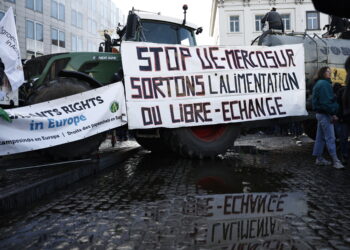
Words that sound like an appeal to the Commission, just as the Berlaymont Building finds itself managing pressure – often of the opposite kind – from European farmers on crucial issues such as new green policies for the primary sector, the contested configuration of CAP funds in the new MFF, and the trade agreement with Mercosur.
English version by the Translation Service of Withub


![[Copyright: European Union]](https://www.eunews.it/wp-content/uploads/2026/10/euco-261015-120x86.png)