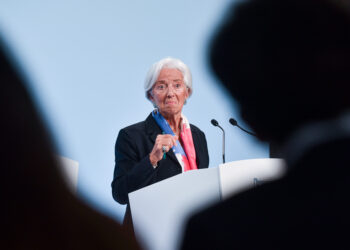

Brussels – “We are monitoring the global situation very closely to understand what the economic consequences might be.” These few, clear words were spoken by Christine Lagarde, President of the European Central Bank (ECB), who is concerned about the attacks by the United States and Israel on Iran and a war that is spreading across the Arabian Peninsula. The ongoing war in the region is causing oil prices to soar, reaching their highest levels since January 2025 and raising fears of higher electricity bills for households and businesses.

There is the spectre of repercussions for growth and, above all, inflation. It is precisely this second aspect that worries the ECB and its president, who are aware that the work done so far to reduce and stabilise prices after the outbreak of war in Ukraine and the resulting energy crisis could be undermined by new developments on the international stage. The unspoken fear is precisely a new energy shock that could trigger new inflationary spirals. These are the “economic consequences” Lagarde refers to when she talks about current events.
The ECB President speaks at a conference entitled “Closing the gender gap in financial literacy”, organised by the European Central Bank itself ahead of International Women’s Day. But Lagarde knows she cannot avoid the topic of the war in the Middle East, so she mentions it, touches on it briefly, and then moves on, because these events risk changing everything.
The ECB’s Governing Council will meet again in two weeks (18–19 March) to take monetary policy decisions. In February, an interest rate cut was ruled out due to uncertainties linked to conflicts. And now, the outbreak of war in Iran, with its new uncertainties, is unlikely to lead to a rate cut. At best, rates could once again be kept on hold at current levels (2 per cent for deposits with the central bank, 2.15 per cent for main refinancing operations, and 2.40 per cent for marginal refinancing operations).
English version by the Translation Service of Withub