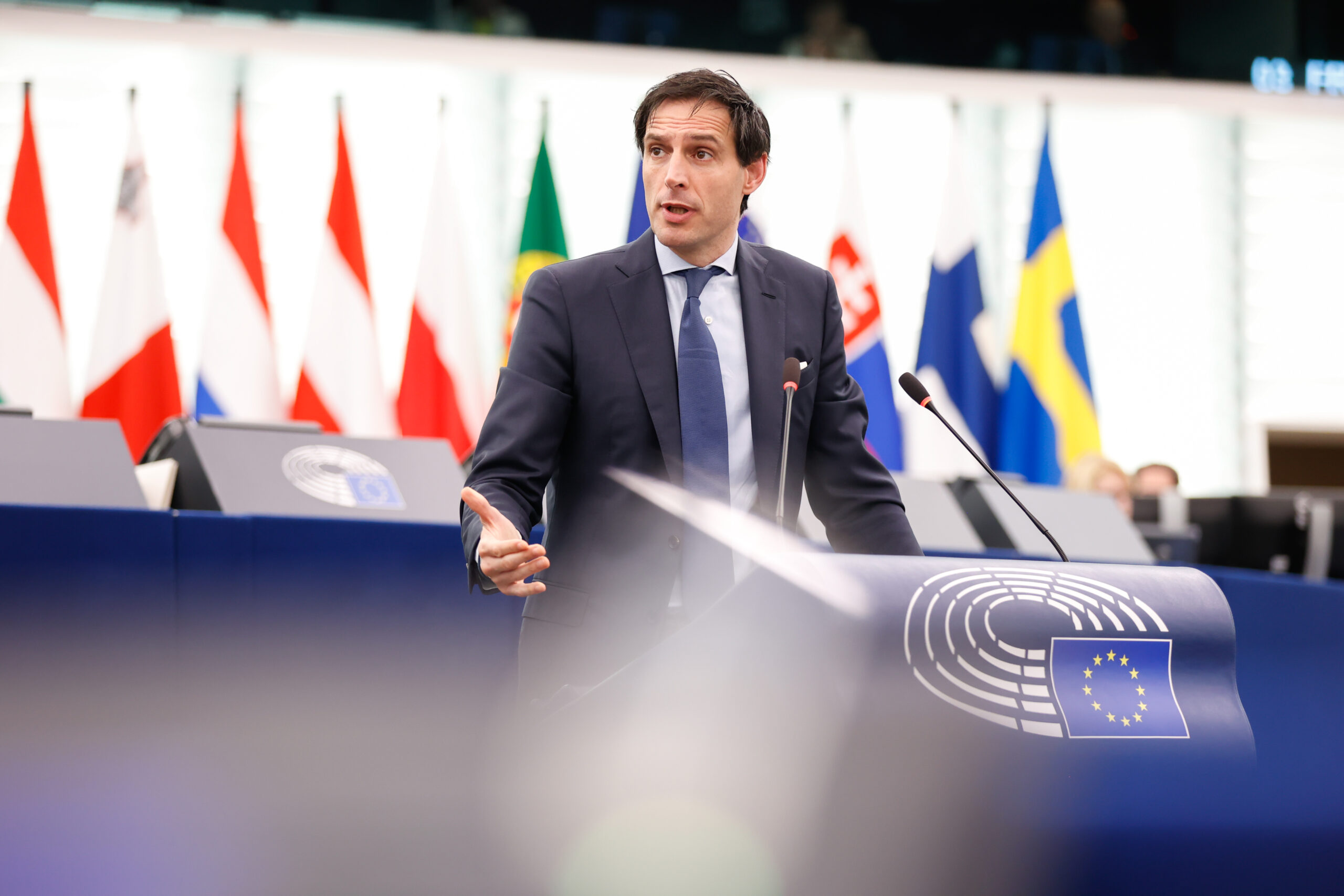
Brussels – Obesity figures in the European Union “are very worrying.” This was stated by Climate Commissioner Wopke Hoekstra, speaking in plenary in Strasbourg before MEPs on World Obesity Day. The data presented leaves no room for interpretation: “More than half of adults are overweight, while 30 per cent of the child population is overweight or obese,” he said. Hoekstra pointed out that “childhood obesity leads to chronic diseases, with very serious socio-economic consequences for society and our health systems” and that, in order to overcome these problems, it is necessary to “start with prevention,” moving towards “healthy lifestyles and habits from the outset, such as healthy eating and regular physical activity,” which play a “key role” in preventing obesity. To achieve this goal, “consumers must be persuaded to make the right choices by providing information on food products,” and “this work will continue with the development of tools and possible financial incentives for companies to make their products healthier,” Hoekstra explained to the European Parliament, acting on behalf of Health Commissioner Olivér Várhelyi.
Croatian MEP Tomislav Sokol, spokesperson for the European People’s Party (EPP) on the Committee on Public Health, took a similar line, insisting on the need for greater “consumer education and information.” For Sokol, the key lies in initiatives that raise awareness of what is being consumed: “clear food labelling enables citizens to make healthier and more informed food choices,” just as “the active promotion of balanced eating patterns” is essential. Only by following this path, he reiterated, will it be possible to “reduce the burden of obesity and build a healthier future for Europe.”
The context is outlined by the World Health Organisation in a report from early 2025, which states that “obesity affects people in all countries and is associated with 3.7 million deaths worldwide in 2024. Without decisive action, the number of people affected by obesity is expected to double by 2030.” To counter this trend, the Commission is already promoting programmes such as #BeActive and the cardiovascular disease prevention plan Safe Hearts.
The Five Star Movement MEP, Valentina Palmisano, spoke in the European Parliament, explaining that “it is not enough to talk about diets,” but that we must rather focus on “real food and emotional education” and that Member States must enter the process with a commitment to “supporting reliable resources and accessible services”. Furthermore, for Palmisano, the problem of obesity can also be traced back to a condition of “social and economic inequality”, because “it is no coincidence that it is mainly the most vulnerable groups who suffer from it.”
Finally, Forza Italia MEP Letizia Moratti reinforced the message, stating that non-communicable diseases are “responsible for 90 per cent of deaths in the European Union and 80 per cent of the healthcare burden in Member States, with obesity playing a central role among the main risk factors.” Moratti called for a structured European response to what she called a “health and economic emergency,” stressing that “the recognition of obesity as a chronic disease at the European level and the inclusion of the disease among the operational priorities of the European Plan for Cardiovascular Health must be a priority for European Union action.” Her proposal is to “promote a European Obesity Network, modelled on existing networks, to build a multi-level alliance between the European Union, Member States, and local actors”. All this against the backdrop of projections for 2035, which predict two billion people with obesity and an economic impact of almost €4 trillion.
English version by the Translation Service of Withub