



![[foto: European Council]](https://www.eunews.it/wp-content/uploads/2024/06/euco-strem.jpg)
Brussels – What to do or how to do it: even more than with the external events affecting it, the European Union is grappling with itself and its divisions. For there is no doubt that the war in Ukraine remains an existential threat for the EU as well (it is, first and foremost, a threat to the Ukrainian people, as we should remember), and there is no doubt that the war in Iran is also an existential threat, with its repercussions—particularly in the energy sector—which in turn affect competitiveness. But on all these issues—which the heads of state and government of the EU countries will discuss at Thursday’s summit (19 March)—the leaders appear confused and divided.
The main theme of the European summit should be competitiveness and the need to implement the commitments and ideas that the leaders themselves put forward at the informal retreat in February, which concluded with the European Commission’s agenda and is now due for approval by the EU-27. However, the conditional is a must, as the high cost of energy, which arises from the Israeli-American conflict over Iran, risks overturning the order of priorities to be addressed and presents itself as the main knot to be untangled for a Europe that risks making a fool of itself.
“The common view is that energy costs too much; now we need to work out how to reduce those costs,” explain well-informed sources. These words may seem obvious, but they conceal a problem that is uniquely European: namely, that of a Community project which, at a time like the present, suffers from a confederal structure designed for a federation that was never truly pursued. The result: taking action is practically impossible. The final price of electricity depends on several components (the cost itself, taxes, excise duties, distribution costs, and the ETS levy under the EU emissions trading scheme), “the weight of which also varies from country to country,” as the same European sources point out, and not by chance. Virtually every country has its own electricity bill, with different levels of taxes, excise duties, distribution costs and ETS charges. It is difficult to imagine a single, straightforward solution.
https://www.eunews.it/en/2026/03/09/iran-rising-energy-prices-worry-the-eu-again-issue-on-leaders-agenda/
“There are various ideas on how to tackle energy prices,” officials in Brussels acknowledge, and the question is what Europe can do about a shared but ultimately national problem. Relaxing state aid rules and the right to compensation for indirect costs are two options under consideration, on which leaders will have to give their views. And then there is the ETS, an issue expected to be the most discussed, partly because it is truly a European one. Italy would like to suspend it, but the majority of other EU members do not intend to call it into question because it is recognised as a mechanism that “plays a fundamental role in industrial strategies, and not just in relation to emissions.” It is therefore central to the competitiveness agenda.
As for competitiveness, it is unclear what the leaders will actually say: “The concrete decisions will be set out in the conclusions,” officials in Brussels assure us, without, however, giving any indication as to what those decisions might be. There is even less speculation regarding energy: here, it is acknowledged that there may be a risk of reaching no conclusions at all, and so vague formulations are used in an attempt to save face. What is certain is that “in the medium term, the development of renewables remains the best course of action,” especially in light of the war in Iran, as Brussels reiterates. A reference to this effect is therefore not ruled out. “But there is also the issue of networks,” and the call to complete the energy union. These are responses to medium-term problems, because when it comes to short-term issues, the EU risks getting lost amidst differing interests and systems.
The increasingly complex situation regarding Ukraine is complicating the already difficult debate on energy and competitiveness. There is a commitment to provide assistance to Kyiv, but this has stalled due to Hungary’s veto. On the €90-billion loan agreed in December, “there will be no discussion” because it is pointless to have one, European officials maintain. “Commitments have been made, and there should be no need to revisit them,” because, so the explanation goes, “the agreement does not change, it remains in place; it is not a matter of having to renegotiate it.” In other words, it is a matter of implementing it. But the funds are frozen and Hungary—which appears dissatisfied with Kyiv’s approval of technical and financial support from Brussels to restore the Druzhba pipeline to operation—must be persuaded to lift its veto. Yet it is unclear how to achieve this, and even when faced with a situation for which it already has a ready answer, the EU does not know how to put it into practice.
The approach to the conflict in Iran also remains to be defined. “The debate will be very practical,” officials in Brussels assure us. But the response—which has yet to be formulated—must also be practical. “We need a commitment to mitigating the conflict and its various consequences,” they explain. It is not just a matter of economic stability, with the risk of a new inflationary spiral and soaring energy prices, but also the the spectre of a food crisis and a new wave of migration. “We expect concrete coordination among the 27 on what can be done to reduce tensions and return to diplomacy, as well as respect for international law on both sides,” EU sources say. Another issue that the EU will have to find a solution to, one that does not yet exist.
English version by the Translation Service of Withub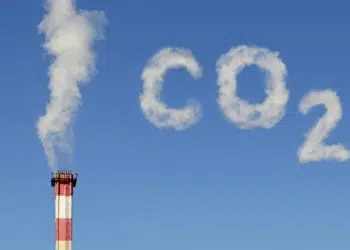
![[credits: Dietmar Rabich / Wikimedia Commons / “Münster, Stadtweinhaus, Beflaggung Ukraine und EU -- 2022 -- 0219” / CC BY-SA 4.0]](https://www.eunews.it/wp-content/uploads/2026/03/ue-ucraina-350x250.jpg)


![Il ministro dell'Ambiente e della transizione ecologica, Gilberto Pichetto Fratin [Bruxelles, 18 settembre 2025. Foto: European Council]](https://www.eunews.it/wp-content/uploads/2025/09/pichetto-250918-120x86.jpg)

![[foto: European Council]](https://www.eunews.it/wp-content/uploads/2024/06/euco-strem-120x86.jpg.webp)
