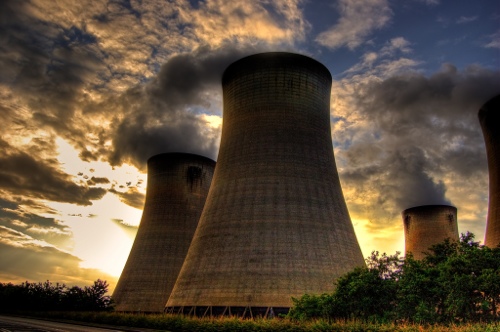
Brussels – Nuclear energy is once again firmly back at the centre of the European agenda: the EU has decided to invest €330 million in the development of fusion energy and nuclear technologies. This was announced by the European Commission today (19 March) in a press release. This progress will be made possible through the Euratom research and training programme, which complements the European Horizon Europe funding programme.
The Euratom Work Programme is an EU initiative dedicated to nuclear research and training, focusing on advances in fusion energy, improving nuclear safety, radiation protection, and waste management. The five-year plan aims, on the one hand, to strengthen Europe’s energy independence, competitiveness and technological leadership, and, on the other, to contribute to achieving climate neutrality by 2050.
Generating energy through fusion, however, remains a challenge that is still in its infancy: the long-term goal is to connect the first commercial fusion power plant to the grid, capable of supplying clean, safe and affordable energy to citizens and businesses. Specifically, the 2026–2027 work programme allocates €222 million to accelerate the transition of fusion from the laboratory to the electricity grid. Key measures include establishing a new European public-private partnership dedicated to fusion energy to develop commercially viable technologies and strengthen the European supply chain. In parallel, start-ups in the sector will be supported through the European Innovation Council’s instruments, fostering their growth and attracting private investment.
Alongside fusion, the programme also focuses on innovation, safety and talent development in nuclear fission, with investments totalling €108 million. Activities will focus on the safe management of radioactive waste, radiation protection, and materials innovation, as well as the long-term operational safety of existing power stations, small modular reactors (SMRs), advanced reactors, and nuclear fuels. A further strategic area concerns nuclear medicine: the programme will fund projects to strengthen Europe’s self-sufficiency in the production of isotopes, which are essential for developing new therapies.
Finally, Euratom aims to attract new talent to the nuclear sector, both from within and outside the EU, including through Marie Skłodowska-Curie fellowships, and to facilitate access to over 230 research infrastructures across Europe. Greater integration of Ukrainian researchers into the European Research Area is also planned. The European Commissioner for Startups, Research and Innovation, Ekaterina Zaharieva, emphasised that “developing nuclear technologies will be crucial to ensuring our energy independence,” and therefore it is essential to “accelerate fusion energy, with the ambition of being the first to bring fusion from the laboratory to the grid.”
English version by the Translation Service of Withub