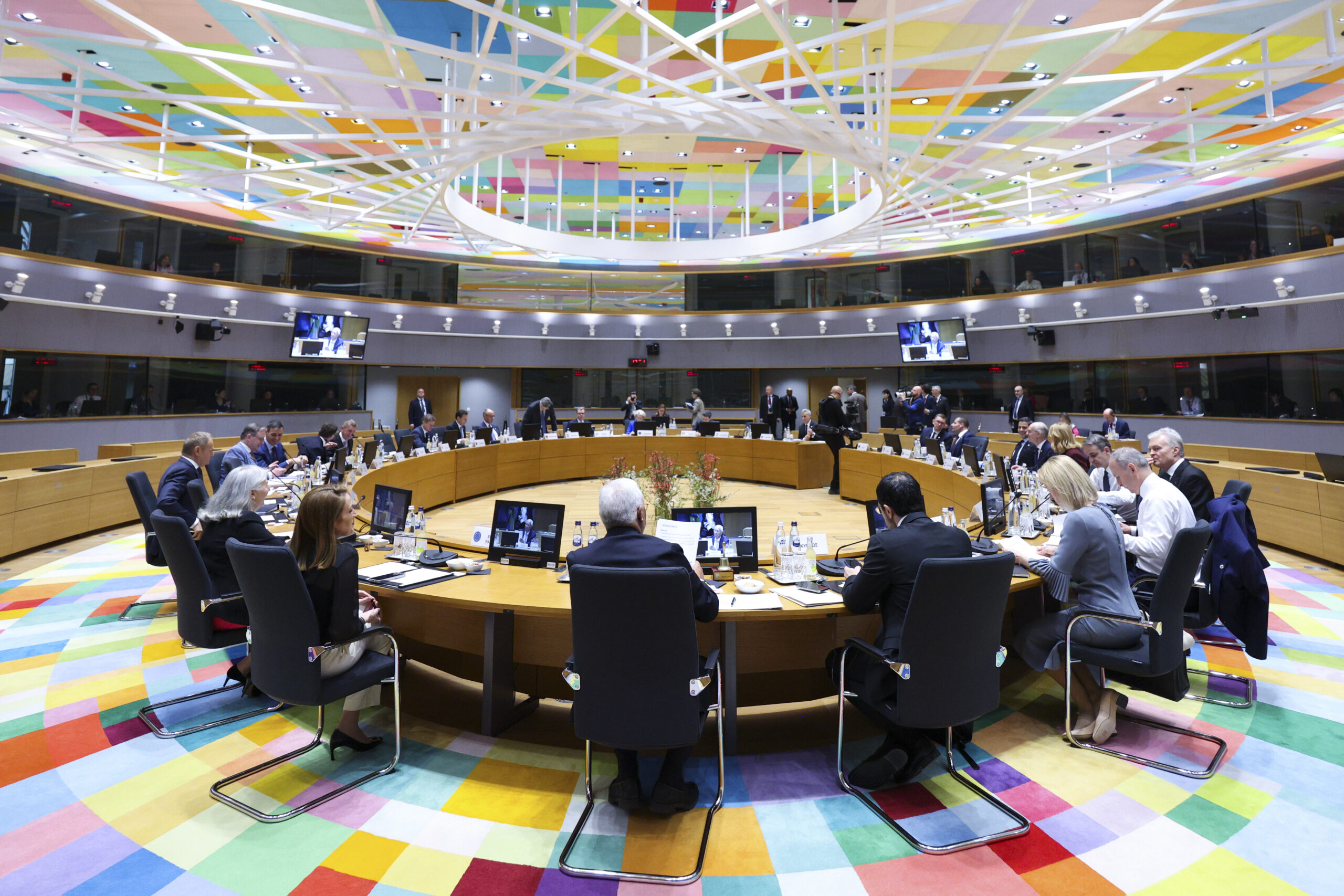
Brussels – European leaders are closing ranks over the crisis in the Middle East, and yesterday’s (19 March) conclusions of the European Council reveal an increasingly assertive stance: from aligning with the joint initiative of six countries (Germany, France, Italy, Japan, the Netherlands, and the United Kingdom) for “a moratorium on attacks on energy and water infrastructure“, which reveals a stance, at least in part, closer to the requests made by Donald Trump to involve allies in regional security, even if direct involvement in the war is currently ruled out. In the background remain the now perennial issues for the Union, such as the crisis in Gaza, but the political and strategic crux is becoming increasingly clear: to what extent is the EU prepared to support the United States and Israel in their confrontation with the Iranian regime?
What is happening in Iran
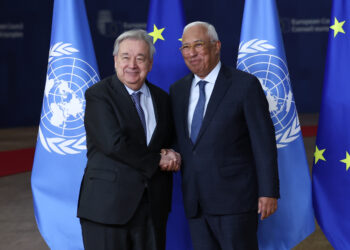
European leaders have taken a firm political stance in response to the escalation in Iran and the Middle East, describing the situation as “a direct threat to global security“. The EU has issued an urgent call for de-escalation, urging all parties to exercise the utmost restraint, protect civilians and respect international law, including the principles of the United Nations. “The Security Council has condemned these attacks and ordered them to be stopped, just as it has ordered the Strait of Hormuz to be opened,” confirmed UN Secretary-General Antonio Guterres on the sidelines of the European Council, where he had been invited to speak on multilateralism.
The Member States strongly condemned the military attacks attributed to Iran, urging Tehran to cease hostilities immediately and to respect the sovereignty of the states in the region, whilst reaffirming their support for the affected partners, including through “the strengthening of air defence and anti-drone capabilities.” At the same time, the need to ensure maritime security and freedom of navigation in the Strait of Hormuz was highlighted. The EU stated it was ready to increase its military presence and bolster existing naval missions, and to closely monitor the economic, energy, and migration repercussions of the conflict. “The situation in the Middle East is serious; it creates instability and risks beyond the region itself,” said European Commission President Ursula von der Leyen at a press conference on the sidelines of the summit. “This is why de-escalation and the protection of civilians and infrastructure are needed. So far, we have not yet seen any impact on migration flows from this crisis, but we must be prepared to avoid a situation like that of 2015,” with the war in Syria.
Special attention was paid to Member States neighbouring the region: “Cyprus has been one of the countries hardest hit by this crisis, and its security is that of the entire Union,” added von der Leyen. On the diplomatic front, European leaders reiterated their commitment to preventing Iran from acquiring nuclear weapons, calling on the country to cooperate fully with the International Atomic Energy Agency, and finally condemned the internal repression, calling for respect for the fundamental rights of the Iranian people.
Gaza/West Bank and Israel
Nothing new on the Middle East front. The European Council has continued to express “deep concern at the deteriorating situation in Gaza and the West Bank, including East Jerusalem,” reiterating its policy stance: the only possible path to lasting peace “can be based solely on the two-people, two-state solution”, in line with the resolutions of the United Nations, with Israel and Palestine called upon to coexist within secure and recognised borders. European leaders called for “the full implementation of the ceasefire and international provisions”, identifying as essential steps the “disarmament of Hamas, the withdrawal of Israeli forces from Gaza and the possible deployment of an international stabilisation force.”
At the same time, the European Union has stated that it is ready to “make a concrete contribution to the implementation of the comprehensive plan to end the conflict”, including through the “strengthening of field missions and the reopening of the Rafah crossing”. There was also strong condemnation of the humanitarian crisis in the Gaza Strip: the leaders urged Israel to “ensure full and unhindered access to aid and to respect international humanitarian law, insisting on the protection of civilians.”
On the political and economic front, the EU aims to support the strengthening of the Palestinian Authority and the future reconstruction of Gaza, whilst condemning “Israel’s unilateral actions in the occupied territories and the rise in settler violence”, and calling for possible new sanctions.
Lebanon
On the Lebanese front, the European Council expressed grave concern over “the escalation of hostilities and their devastating impact on the civilian population, including mass displacement, casualties, and a growing humanitarian crisis.” The European Union reiterated the urgent need for de-escalation, calling for respect for international law and committing to providing concrete support to Lebanon, including through “emergency aid and the strengthening of state institutions.” EU leaders also strongly condemned the actions of Hezbollah against Israel, calling on the group to “cease hostilities immediately, and supporting the decision of the Lebanese authorities to restrict its military activities, as part of a strengthening of the national armed forces.”
The Member States called on all parties to respect the ceasefire agreements and the resolutions of the United Nations, urging Israel to “avoid further escalation and respect Lebanese sovereignty.” Particular emphasis was placed on the role of the UNIFIL mission, which the Council considers essential to the stability of the region. The Council strongly condemned the attacks against UN personnel, describing them as a serious violation of international law and calling for thorough investigations. Overall, the EU’s determination to contain the conflict, protect civilians, and support Lebanon’s institutional stability in an increasingly fragile regional context is emerging.
English version by the Translation Service of Withub![[foto: imagoeconomica, rielaborazione Eunews]](https://www.eunews.it/wp-content/uploads/2025/03/inflazione-difesa-350x250.png)


![Da sinistra: il presidente del Consiglio europeo, Antonio Costa; il presidente dell'Ucraina, Volodymir Zelensky: la presidente della Commissione europea, Ursula von der Leyen [Bruxelles, 18 giugno 2024. Foto: European Council]](https://www.eunews.it/wp-content/uploads/2026/06/euco_ua260618-120x86.jpg)
![[foto: Saverio De Giglio/imagoeconomica]](https://www.eunews.it/wp-content/uploads/2026/10/cpt-120x86.png)