![[foto: imagoeconomica, rielaborazione Eunews]](https://www.eunews.it/wp-content/uploads/2025/03/inflazione-difesa.png)
Brussels – Inflation has settled around the 2 per cent target, longer-term inflation expectations remain firmly anchored, and the economy has shown good resilience over the last few quarters. In short, there is no reason to raise interest rates, which the European Central Bank’s Governing Council has decided to leave unchanged. However, the war in Iran and the Middle East is creating entirely new uncertainties that are difficult to quantify, and a loosening of monetary policy is not possible—not at present. Looking ahead, everything will depend on how the conflict unfolds and what its repercussions will be, which Frankfurt officials are already factoring into a general rise in inflation
compared with the December estimates.
ECB economists now estimate headline inflation at 2.6 per cent in 2026 (instead of 1.9 per cent), at 2.0 per cent in 2027 (instead of 1.8 per cent) and at 2.1 per cent in 2028 (instead of 2 per cent). For the current year alone, therefore, the war in Iran and its repercussions are adding over half a percentage point to inflation “due to the rise in energy prices caused by the war in the Middle East,” emphasises the President of the European Central Bank, Christine Lagarde, who adds that the actual decisions on interest rates will be taken from April onwards.
“The information that the Governing Council will receive in the coming period will enable it to assess the impact of the conflict on the inflation outlook and the risks associated with it,” and to act accordingly. For now, the interest rate on deposits with the central bank therefore remains at 2 per cent, the rate on main refinancing operations remains at 2.15 per cent, and the rate on marginal lending operations is confirmed at 2.40 per cent. Thus, the pause started in July continues, but it is not certain that it will last much longer.
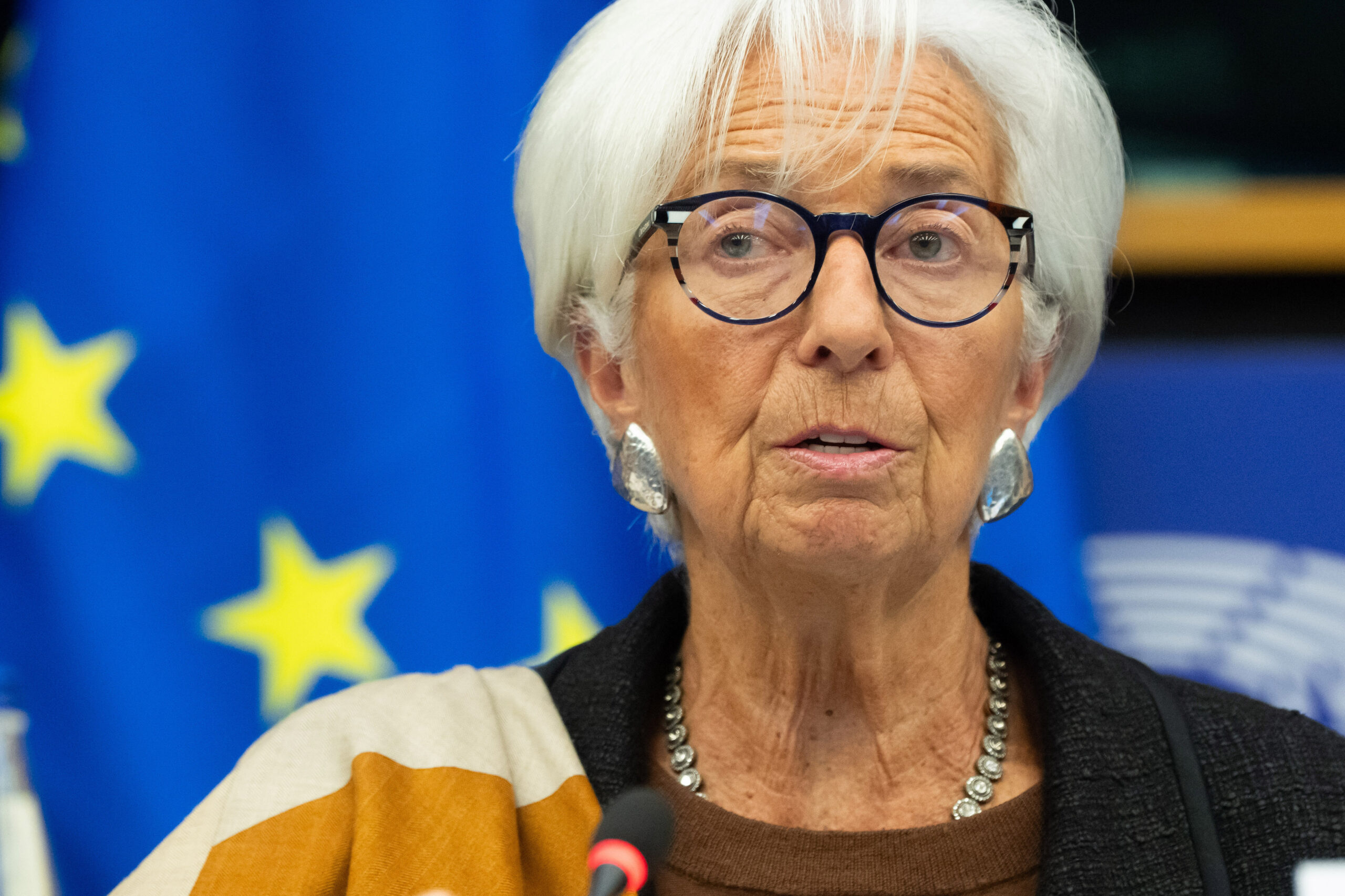
The war in the Middle East “has made the outlook significantly more uncertain, creating upside risks to inflation and downside risks to economic growth,” according to the ECB’s assessment. Lagarde acknowledges that “the conflict will have a significant impact on inflation in the short term through higher energy prices,” but the rest is uncertainty and anticipation: the medium-term implications “will depend on the intensity and duration of the war, as well as on how energy prices affect consumer prices and the economy.”
A halt to governments’ measures against rising energy prices
Given the situation, it is clear to Lagarde and the European Central Bank that there is “an urgent need to strengthen the euro area economy, whilst maintaining sound public finances.” This means keeping public spending under control, and therefore “any fiscal response to the energy price shock should be temporary, targeted and calibrated.” This is particularly true of Italy, the country with the second-highest public debt, where the Meloni government has just introduced a reduction in excise duties to curb rising fuel prices.
If spending is unavoidable, the best course of action remains renewable energy. “The current energy crisis highlights the imperative to further reduce dependence on fossil fuels,” argues Lagarde. In this regard, “the completion of the savings-investment union is essential to finance innovation and support the green and digital transitions.” A clear signal of clear and precise reforms, left to the responsibility of the Member States.
English version by the Translation Service of Withub




![[Copyright: European Union]](https://www.eunews.it/wp-content/uploads/2026/10/euco-261015-120x86.png)