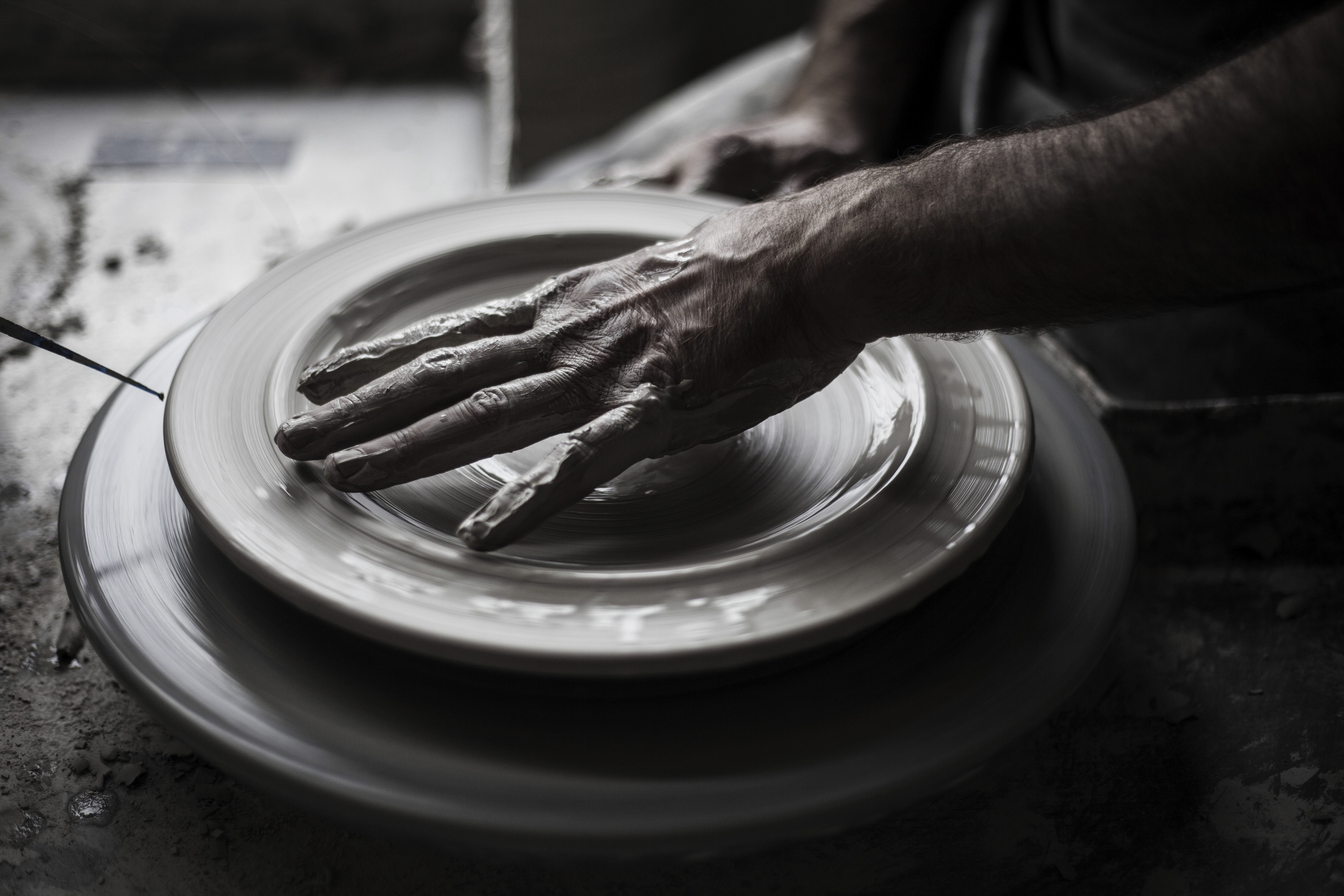
Brussels – No blanket suspension of the European Union’s Emissions Trading Scheme (ETS), but exemptions for the ceramics sector to help the industry avoid relocating its production. The call for this is widespread, not only across the political spectrum but also across regions. It has been launched by MEPs from the PD, Stefano Bonaccini, and from Forza Italia, Letizia Moratti, but also the Emilia-Romagna Region and the Valencian Community which, together with Confindustria Ceramica and ASCER (the Spanish Association of Wall and Floor Tile Manufacturers)—representing ceramic districts responsible for almost 80 per cent of European ceramic tile production—have issued a joint statement entitled “For the future of European ceramics: reforming EU policies and strengthening industrial research“. The document sets out a series of proposals addressed to the European institutions “to support the decarbonisation of the ceramics industry, whilst ensuring its global competitiveness.”
The former president of Emilia-Romagna recalls that the region he led for ten years (from November 2014 to July 2024, ed.) “has a ceramic production that accounts for 90 per cent of Italy’s total production and is among the leading sectors in Europe.” Furthermore, “it is a sector that has invested heavily over the last twenty years” in the transition and that “has even halved its CO2 emissions, unlike any other ceramic production sector in the world.” A result which, for the PD president, “is only right that it has come about” and that “it continues in the future” because “we must all contribute to reducing pollution that causes devastating climate change in order to achieve complete decarbonisation in the future.”
At the same time, however, “we said that at such a dramatic moment, given what is happening around the world, with old and new wars breaking out or taking turns, we need to lend a hand to this sector,” the ceramics sector, “which risks seeing part of its production relocated for reasons of economic sustainability to other parts of the world where those European fair rules do not exist.” The danger is twofold: “Losing jobs in Emilia-Romagna” and, by moving production outside the EU, “increasing CO2 emissions in countries where those rules do not exist and, therefore, things aren’t done the way they are here.” For this reason, “we are not in favour of suspending the ETS, we are instead in favour of exemptions granted to sectors such as the ceramics sector, which needs” support, partly because these are sectors that “have reached the maximum of what they could do” and “there is still no adequate technological innovation to help them further.”
Moratti, a representative of Forza Italia, echoed this view. “When the principles governing the ETS were established—essential for the decarbonisation process—the world was a very different place,” she observes. “Now, in an emergency which affects not only gas and oil prices, but also urea prices, the trade difficulties caused by the closure of the Strait of Hormuz,” and “difficulties that will persist even if, as we hope, the war were to end quickly, Europe must step in with emergency measures,” she states. Therefore, “our request in support of a sector that employs 120,000 people is suspending the ETS, freezing free allowances, establishing criteria for the definition of the tax payable that are specific to the ceramics sector, raising the threshold above which small and medium-sized enterprises must pay, so as not to relocate our ceramics sector.”
Ahead of the review of the ETS by the summer, these requests come from the sector and two representatives of key parties in the EU majority—the European People’s Party (EPP) and the Socialists and Democrats (S&D). “I hope that the Commission will give serious consideration to preventing such an important sector from relocating,” Moratti added. “Furthermore, this is a sector that accounts for 0.9 per cent of carbon emissions and, so, if it were to relocate, it would not only mean a loss of jobs in Italy and Europe, but, given that other countries do not have decarbonisation processes like ours, relocating would not contribute positively to the decarbonisation of the planet,” she concludes.
English version by the Translation Service of Withub![Ursula von der Leyen alla conferenza stampa a margine del Consiglio europeo, 19/03/26 [EU Council]](https://www.eunews.it/wp-content/uploads/2026/03/ae32e99f-a547-4e72-b056-4c748216a96e-350x250.jpg)