- Europe, like you've never read before -
Wednesday, 1 April 2026
No Result
View All Result
  • it ITA
  • en ENG
Eunews
  • Politics
  • World
  • Business
  • News
  • Defence
  • Health
  • Agrifood
  • Other sections
    • Culture
    • Diritti
    • Energy
    • Green Economy
    • Finance & Insurance
    • Industry & Markets
    • Media
    • Mobility & Logistics
    • Net & Tech
    • Sports
  • Newsletter
  • European 2024
    Eunews
    • Politics
    • World
    • Business
    • News
    • Defence
    • Health
    • Agrifood
    • Other sections
      • Culture
      • Diritti
      • Energy
      • Green Economy
      • Finance & Insurance
      • Industry & Markets
      • Media
      • Mobility & Logistics
      • Net & Tech
      • Sports
    No Result
    View All Result
    Eunews
    No Result
    View All Result

    Home » Business » European trade unions: “Teleworking as a solution to high energy prices? Not at the expense of workers”

    European trade unions: “Teleworking as a solution to high energy prices? Not at the expense of workers”

    Trade unions argue that the Commission must urgently finalise legislation to regulate remote working and guarantee workers’ right to disconnect

    Giulia Torbidoni by Giulia Torbidoni
    1 April 2026
    in Business
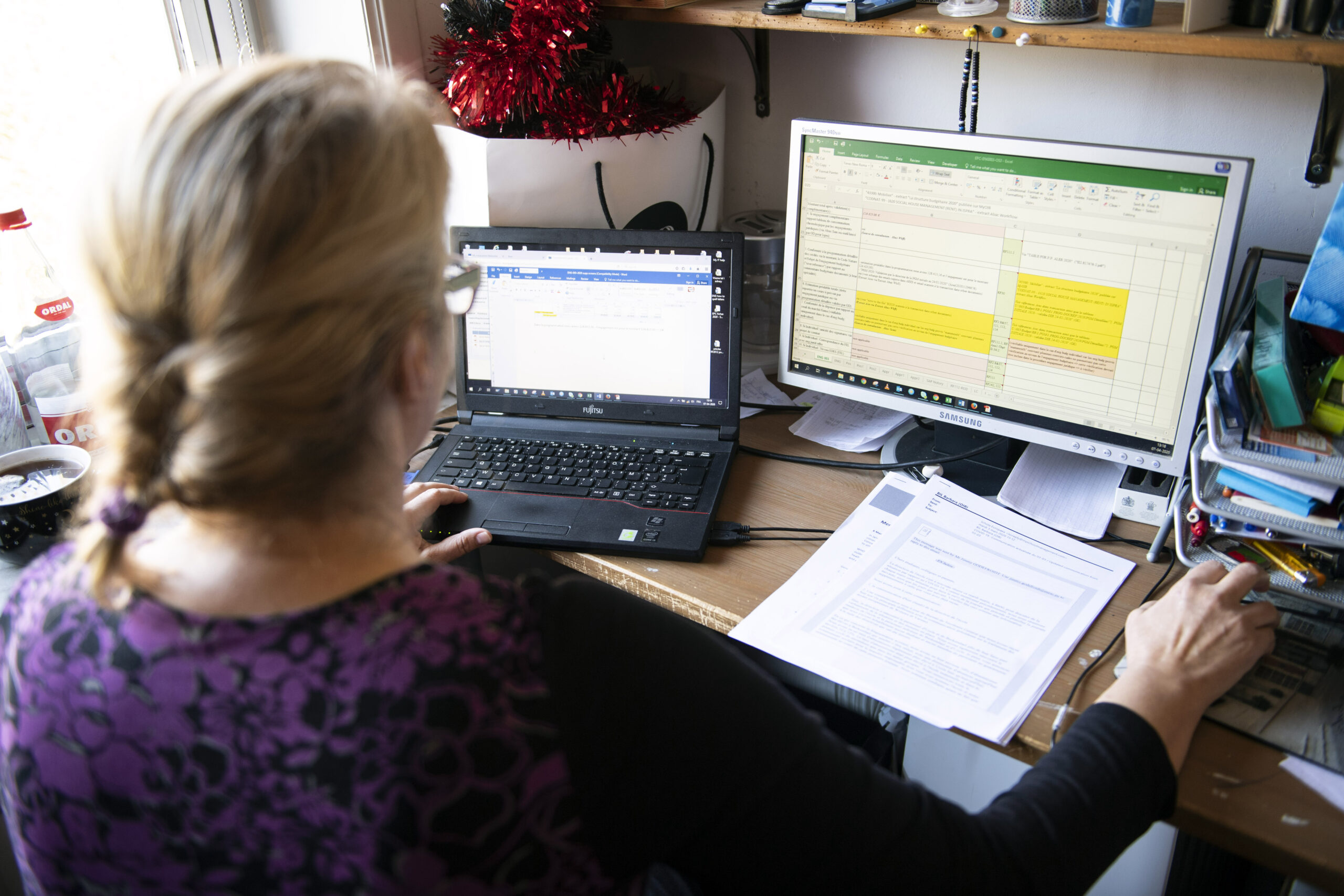
    Teleworking. Fonte: Imagoeconomia

    LAVORO DA CASA TELELAVORO TELE SMART WORKING PC COMPUTER POSTAZIONE OCCUPAZIONE FEMMINILE LAVORATRICE REMOTE REMOTO

    Brussels – Saving energy by working from home? Yes, but not at the expense of workers. For this reason, the European Union must urgently finalise legislation to regulate teleworking. The European Trade Union Confederation (ETUC) submits the memorandum to the Berlaymont Building in light of the energy crisis triggered by the US and Israel’s war on Iran, and the calls by the Energy Commissioner, Dan Jørgensen, taken up in the International Energy Agency’s plan , to save energy by working from home. “Although this call may help reduce energy consumption, it must not come at the expense of workers’ rights nor shift the costs onto those who are already bearing the brunt of rising energy prices,” warn the trade unions. They elaborate: “The Commission must now follow up on this appeal by urgently finalising legislation to regulate teleworking and guarantee workers’ right to disconnect, having launched the second phase of consultation last summer.” 

    Trade unions point out that, according to the Commission’s research, “those who work from home are exposed to greater risks to their mental and physical health due to the ‘risk of work intensification, overtime, increased availability, and work-life conflict.'” In particular, according to the latest European Working Conditions Survey, “those who regularly work from home are at least four times more likely to work during their free time than those who work at their employer’s premises, and women are significantly more exposed to this risk than men.” 

    In this context, the ETUC is calling for the forthcoming legislation on quality work to include provisions ensuring that workers’ right not to be contacted outside agreed working hours is upheld. It also calls for employers to be held responsible for all costs associated with teleworking, including electricity bills. Furthermore, according to European trade unions, teleworkers must be guaranteed the same rights as on-site workers, and steps must be taken to ensure that teleworking does not exacerbate the burden of unpaid care work on women or isolate vulnerable groups. It does not end there: the ETUC wants monitoring by employers to be limited to lawful and proportionate purposes, and for invasive tools to be banned for this reason too, whilst collective agreements and the GDPR, the EU’s privacy regulation, are fully respected.

    “The option to work from home can be beneficial for both workers and employers, especially in the current situation, but only if it is voluntary for workers and respects their rights,” states the ETUC General Secretary, Esther Lynch, who is convinced that “No worker should have to bear the costs of working from home” and that “it is right that governments and employers should commit to saving energy and controlling prices, but employers must cover all related expenses”. 

    The ETUC secretary refers to the experience of remote working during the Covid-19 pandemic and stresses that, “having once again urged everyone to work from home, the Commission now has a responsibility to ensure that the mistakes of the past are not repeated, by introducing common-sense rules for teleworking.” For this reason, she concludes, “any introduction or expansion of telework must be negotiated with the trade unions to safeguard workers’ rights and ensure fair conditions.”

    English version by the Translation Service of Withub
    Tags: commissioneesther lynchetucexpensive energyrightstelecommutingteleworkingueunionswork

    Related Posts

    No Content Available
    map visualization
    Ricerca di lavoro. Fonte: Carlo Carino via Imagoeconomica

    Unemployment remains steady at 5.9 per cent in the EU, while it rises to 6.2 per cent in the eurozone

    by Caterina Mazzantini
    1 April 2026

    Eurostat figures show a slight increase in the overall rate for Italy, to 5.3 per cent, with a more marked...

    Teleworking. Fonte: Imagoeconomia

    European trade unions: “Teleworking as a solution to high energy prices? Not at the expense of workers”

    by Giulia Torbidoni
    1 April 2026

    Trade unions argue that the Commission must urgently finalise legislation to regulate remote working and guarantee workers’ right to disconnect

    ue medio oriente

    The EU is prepared to take drastic measures to prevent a new migration crisis from the Middle East

    by Simone De La Feld @SimoneDeLaFeld1
    1 April 2026

    Two months after the Migration and Asylum Pact came into force, the EU has, within the space of a year,...

    Il commissario europeo per l'Economia, Valdis Dombrovskis, la presidente della Commissione Europea, Ursula von der Leyen, e la commissaria per l'Allargamento, Marta Kos, alla conferenza stampa sul prestito a supporto dell'Ucraina per il 2026 e il 2027
Photo: EC- Audiovisual Service

    The EU is pressing ahead with the €90 billion package for Kyiv and is finalising the details of how and when the funds will be disbursed, with a focus on drones

    by Giorgio Dell'Omodarme
    1 April 2026

    The proposal from the Berlaymont Building must now receive final approval from the EU Council, but the obstacle of the...

    • Director’s Point of View
    • Opinions
    • About us
    • Contacts
    • Privacy Policy
    • Cookie policy

    Eunews is a registered newspaper
    Press Register of the Court of Turin n° 27


    Copyright © 2025 - WITHUB S.p.a., Via Rubens 19 - 20148 Milan
    VAT number: 10067080969 - ROC registration number n.30628
    Fully paid-up share capital 50.000,00€


    No Result
    View All Result
    • it ITA
    • en ENG
    • Politics
    • Newsletter
    • World politics
    • Business
    • General News
    • Defence & Security
    • Health
    • Agrifood
    • Altre sezioni
      • European Agenda
      • Culture
      • Diritti
      • Energy
      • Green Economy
      • Gallery
      • Finance & Insurance
      • Industry & Markets
      • Media
      • Mobility & Logistics
      • Net & Tech
      • News
      • Opinions
      • Sports
    • Director’s Point of View
    • Draghi Report
    • Eunews Newsletter

    No Result
    View All Result
    • it ITA
    • en ENG
    • Politics
    • Newsletter
    • World politics
    • Business
    • General News
    • Defence & Security
    • Health
    • Agrifood
    • Altre sezioni
      • European Agenda
      • Culture
      • Diritti
      • Energy
      • Green Economy
      • Gallery
      • Finance & Insurance
      • Industry & Markets
      • Media
      • Mobility & Logistics
      • Net & Tech
      • News
      • Opinions
      • Sports
    • Director’s Point of View
    • Draghi Report
    • Eunews Newsletter

    Attention