- Europe, like you've never read before -
Tuesday, 12 May 2026
No Result
View All Result
  • it ITA
  • en ENG
Eunews
  • Politics
  • World
  • Business
  • News
  • Defence
  • Health
  • Agrifood
  • Other sections
    • Culture
    • Diritti
    • Energy
    • Green Economy
    • Finance & Insurance
    • Industry & Markets
    • Media
    • Mobility & Logistics
    • Net & Tech
    • Sports
  • Newsletter
  • European 2024
    Eunews
    • Politics
    • World
    • Business
    • News
    • Defence
    • Health
    • Agrifood
    • Other sections
      • Culture
      • Diritti
      • Energy
      • Green Economy
      • Finance & Insurance
      • Industry & Markets
      • Media
      • Mobility & Logistics
      • Net & Tech
      • Sports
    No Result
    View All Result
    Eunews
    No Result
    View All Result

    Home » Business » How young people are shaping EU policy, the EESC’s Youth Group work

    How young people are shaping EU policy, the EESC’s Youth Group work

    Nicoletta Merlo by Nicoletta Merlo
    1 April 2026
    in Business, Opinions, Politics
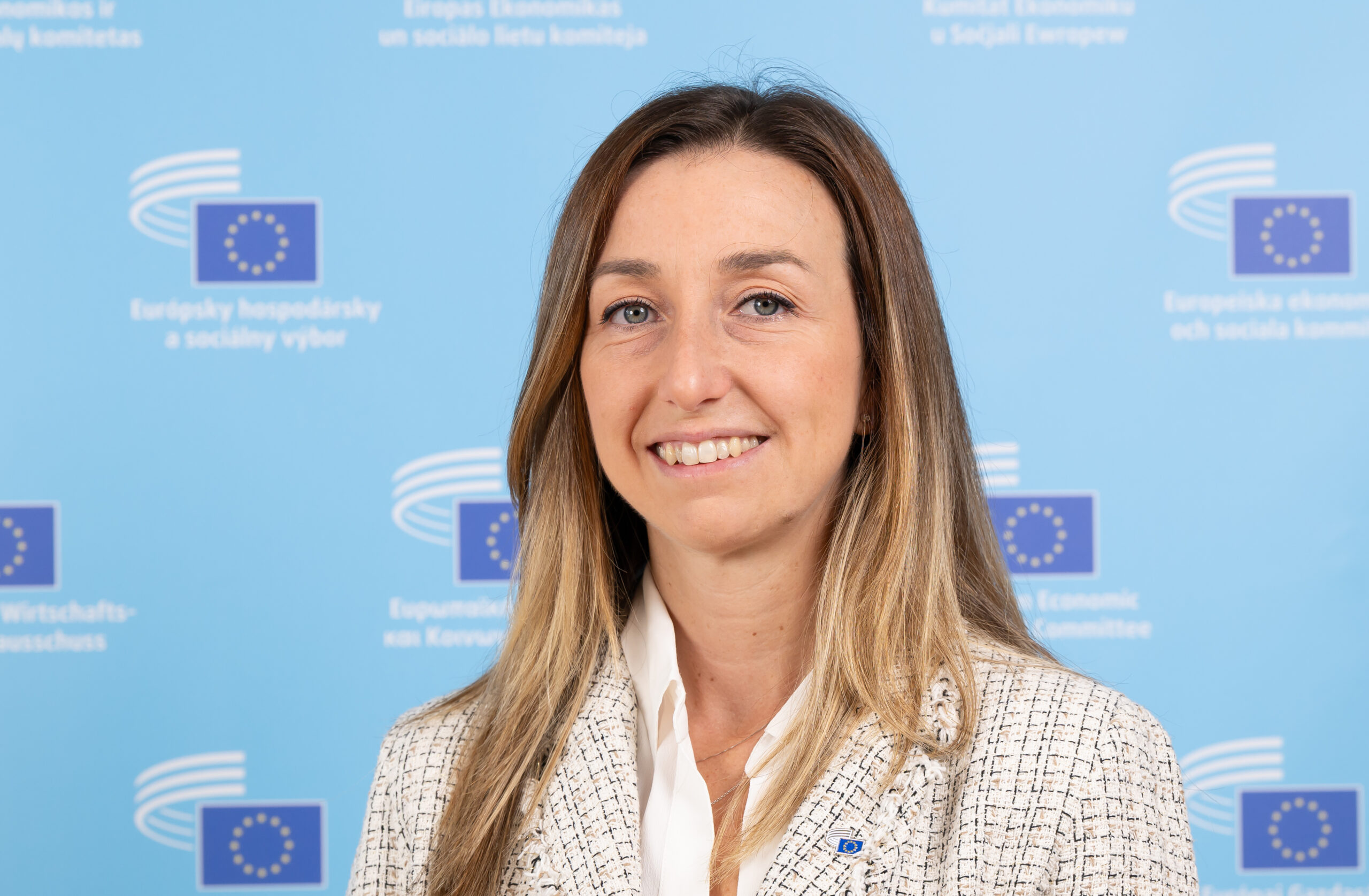
    Ms Nicoletta Merlo. Credits: EESC

    Ms Nicoletta Merlo. Credits: EESC

    Brussels is often seen as distant, an institutional maze where decisions are made far from the everyday realities of citizens. For many young Europeans, that distance feels even greater. Too often, they are spoken about, rather than spoken with.

    At the European Economic and Social Committee (EESC), we are working to change that. As the House of Organised Civil Society, we represent and connect directly with organisations across the Union. Through the EESC’s youth group, I have seen firsthand how young people can move from passive observers to active contributors. This is not about symbolic inclusion or ticking boxes. It is about recognising that the challenges Europe faces today, climate change, social inequality, mental health, affordable housing and quality jobs, are deeply intertwined with the lives and futures of younger generations.

    Yet participation must go beyond consultation. As I have said before, “youth participation can and must be a structural element of the decision-making process.” This means embedding young voices not at the margins, but at the core of policymaking. Co-creation with young people is at the heart of this approach. It is not enough to invite young people to the table after decisions have already been framed. True co-creation means involving them from the outset — in defining the problems, designing the solutions, and evaluating the outcomes. When young people are genuine co-authors of policy, rather than mere consultees, the results are not only more legitimate but more effective. Their proximity to the issues — be it precarious employment, unaffordable housing, or mental health struggles — provides an insight that no expert report can fully replicate.

    What makes the EESC Youth Test different is not only who is involved, but how we work. We prioritise dialogue over hierarchy, collaboration over formality. We create spaces where ideas can be tested, challenged and refined, where lived experience is valued alongside technical expertise. This approach does not always fit neatly within traditional institutional frameworks. But if Europe is to remain relevant and responsive, it must evolve. Listening to young people is not enough; institutions must be willing to adapt based on what they hear.

    There is, of course, a long way to go. Building meaningful participation takes time, trust and persistence. But the momentum is there. Across Europe, young people are ready to engage, not out of obligation, but out of a genuine desire to contribute. The question is no longer whether youth should have a voice in European policymaking. It is whether we are ready to truly listen and to act. Because the future of Europe is not something that concerns young people later. It is something we are already shaping, today.

    * Nicoletta Merlo is an Italian member of the European Economic and Social Committee, member of the Workers Group and President of the EESC’s Youth Group

    English version by the Translation Service of Withub
    Tags: eesceueurostatNicoletta MerloparticipationpolicyueunemploymentYoung People

    Related Posts

    13 March 2025, Brandenburg, Eisenhüttenstadt: Migrants leave the premises of Brandenburg's Central Immigration Office (ZABH) with luggage. Brandenburg is taking a new approach to speeding up the return of asylum seekers to Poland. A new so-called "Dublin Center" for the faster return of asylum seekers to other EU states is starting work. The aim is to speed up the organization of transfers to Poland. This involves so-called Dublin cases, i.e. people who have to go through their asylum procedure in another EU country. Photo: Patrick Pleul/dpa (Photo by PATRICK PLEUL / dpa Picture-Alliance via AFP)
    Diritti

    Returns of migrants from the EU to third countries have risen by 13 per cent

    31 March 2026
    Impinato Spazzatura Recycling Raccolta Differenziata. Fonte: Imagoeconomia via YouTube
    Green Economy

    In 2024, the amount of waste per European will rise to 517 kg, a 6 kg increase compared to 2023

    30 March 2026
    Diritti

    Almost 1.2 million new EU citizens in 2024, Italy ranking second for naturalisations

    27 March 2026
    Migrants labourers work in the fields in the village of Bella Farnia near the coastal city of Sabaudia, South of Rome on July 1, 2021. About 30,000 Indians, mainly Sikhs from Punjab state, live in the Pontine Marshes. A growing number of these labourers are taking drugs to cope with long hours, poor conditions and very low pay, according to interviews with workers, doctors, police and rights groups. (Photo by Filippo MONTEFORTE / AFP) / TO GO WITH AFP STORY BY ALVISE ARMELLINI
    Business

    Immigrant unemployment below 10 percent across OECD countries

    3 November 2025
    Giovani
    Business

    Young Europeans leave home at 26. Italy lags behind, independent at 30

    23 September 2025
    map visualization
    Riunione di alto livello della Coalizione internazionale per il ritorno dei bambini ucraini. Da sinistra a destra l’Alta rappresentante dell’Unione europea per la Politica estera e di sicurezza, Kaja Kallas, la commissaria all'allargamento, Marta Kos, il ministro degli Affari esteri ucraino, Andrii Sybiha e il ministro degli Affari esteri canadese, Anita Anand. Crediti: Consiglio Unione Europea.

    The EU Commission allocates €50 million to support the return of Ukrainian children abducted by Moscow

    by Iolanda Cuomo
    11 May 2026

    The EU, Canada, and Ukraine have met in Brussels to coordinate measures aimed at helping the government in Kyiv to...

    tassa sul carbonio emissioni ETS

    The EU Commission proposes new parameters for the ETS: 4 billion for industry

    by Annachiara Magenta annacmag
    11 May 2026

    Under the proposal, industries will continue to receive, on average, a free allocation equivalent to around 75 per cent of...

    Il ministro degli Esteri ucraino, Andriy Sybiha, con l'Alta rappresentante per la politica estera e di sicurezza dell'UE, Kaja Kallas [Bruxelles, 11 maggio 2026. Foto: European Council]

    Ukraine: the EU is considering its representative for the (distant) negotiations with Moscow. Kallas puts herself forward

    by Emanuele Bonini emanuelebonini
    11 May 2026

    Russia has put forward the name of former German Chancellor Gerhard Schröder for the peace talks, but foreign ministers are...

    hantavirus

    ECDC: “Further cases of hantavirus are possible in the coming weeks”

    by Valeria Schröter
    11 May 2026

    The European Commission: "According to the latest assessment by the World Health Organisation, the risk to the general European population...

    • Director’s Point of View
    • Opinions
    • About us
    • Contacts
    • Privacy Policy
    • Cookie policy

    Eunews is a registered newspaper
    Press Register of the Court of Turin n° 27


    Copyright © 2025 - WITHUB S.p.a., Via Rubens 19 - 20148 Milan
    VAT number: 10067080969 - ROC registration number n.30628
    Fully paid-up share capital 50.000,00€


    No Result
    View All Result
    • it ITA
    • en ENG
    • Politics
    • Newsletter
    • World politics
    • Business
    • General News
    • Defence & Security
    • Health
    • Agrifood
    • Altre sezioni
      • Culture
      • Diritti
      • Energy
      • Green Economy
      • Gallery
      • Finance & Insurance
      • Industry & Markets
      • Media
      • Mobility & Logistics
      • Net & Tech
      • News
      • Opinions
      • Sports
    • Director’s Point of View
    • Draghi Report
    • Eunews Newsletter

    No Result
    View All Result
    • it ITA
    • en ENG
    • Politics
    • Newsletter
    • World politics
    • Business
    • General News
    • Defence & Security
    • Health
    • Agrifood
    • Altre sezioni
      • Culture
      • Diritti
      • Energy
      • Green Economy
      • Gallery
      • Finance & Insurance
      • Industry & Markets
      • Media
      • Mobility & Logistics
      • Net & Tech
      • News
      • Opinions
      • Sports
    • Director’s Point of View
    • Draghi Report
    • Eunews Newsletter

    Attention