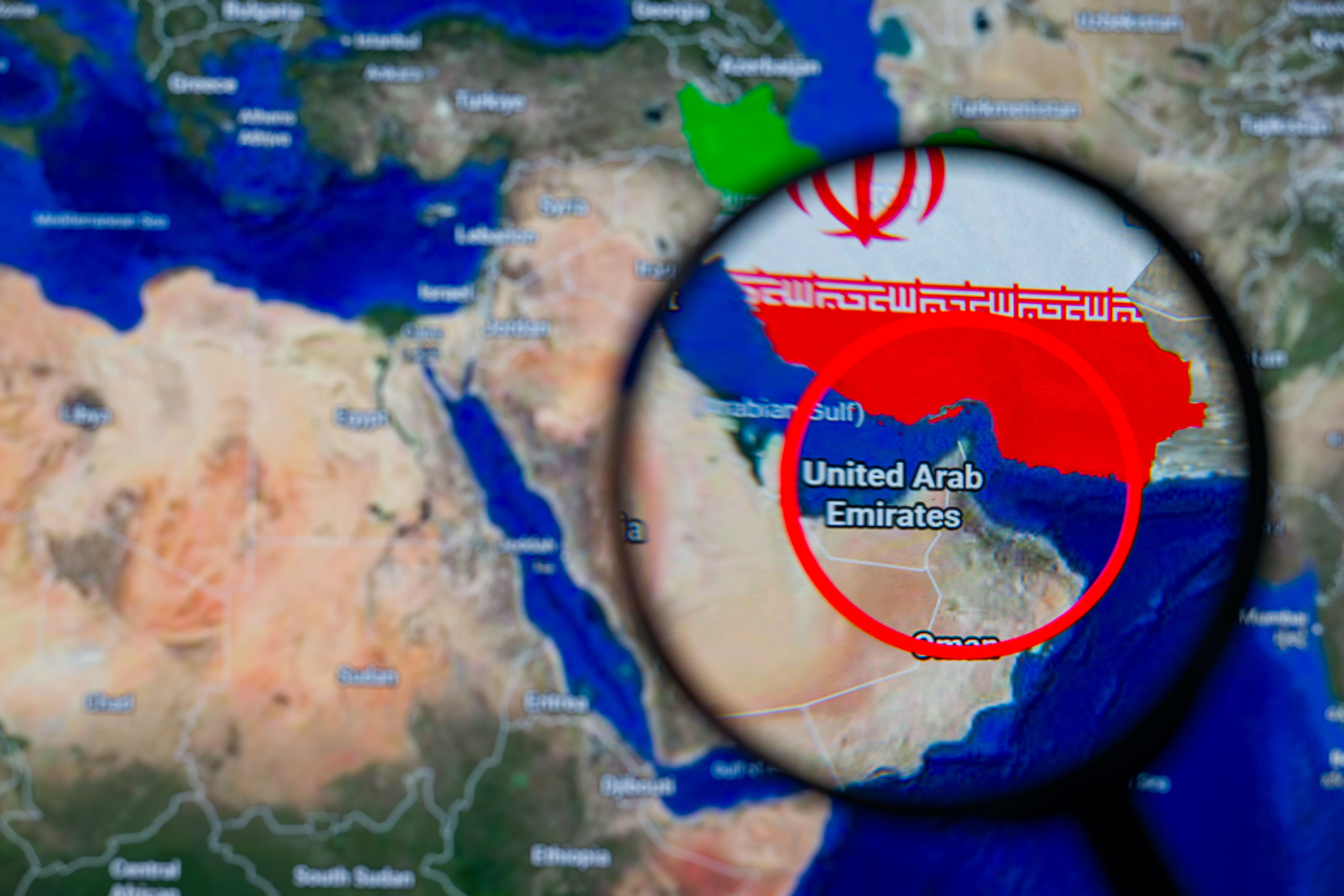
Brussels – The European Commission is seeking to emphasise the importance of diplomacy amid the frequent and intense threats levelled at Iran by US President Donald Trump. “We have always maintained that diplomacy is the answer and, for our part, we reject any threats, including attacks on critical civilian infrastructure,” said the European Commission’s spokesperson for Foreign Affairs, Anitta Hipper, during the daily press briefing replying to a question about the intimidation issued by Trump last night (6 April) to blow up every bridge and power station in Iran if the country fails to meet the deadline for reopening the Strait of Hormuz, set for 8 pm US time today, Tuesday 7 April. Not only that. The White House occupant stressed that he was “not at all” concerned by the possibility of committing war crimes by targeting civilian infrastructure, as reported by Tehran, and retorted: “Do you know what a war crime is? Possessing a nuclear weapon.”
The Berlaymont Building rejects Washington’s position: “These attacks risk affecting millions of people across the Middle East and beyond, and could also lead to a further dangerous escalation.” Therefore, “the EU calls for the utmost restraint, the protection of civilians and civilian infrastructure, and full respect by all parties for international law and international humanitarian law”.
But Brussels’ voice is faint, and this morning in the US, Trump was once again hurling threats on his social media platform Truth. “An entire civilisation will die tonight, never to be brought back. I don’t want that to happen, but it will probably happen,” he wrote. “However, now that we have a complete and total regime change, where different, smarter, and less radicalised minds prevail, perhaps something wonderful and revolutionary can happen, who knows?” he added. “We will find out tonight, one of the most important moments in the long and complex history of the world. Forty-seven years of extortion, corruption and death will finally come to an end. God bless the great Iranian people!” he concluded.
With just a few hours to go before the deadline and under pressure from the US, negotiations between the two sides are continuing. “The President has set a deadline of around 12 hours from now, US time, and we will find that there will be a lot of negotiations between now and then. And I hope we reach a good resolution,” said US Vice-President James David Vance at a press conference in Budapest, where he is visiting to show support for Viktor Orbán’s election campaign. “The fundamental question is: what will the situation be like afterwards? That is the central point of the negotiations. The President has also been very clear that, while the Iranians are trying to impose the greatest possible economic cost through the Strait of Hormuz, the United States has the capacity to impose economic costs on Iran far greater than those Iran can impose on our friends around the world or us. So I hope they are sensible,” he added.
Vance claimed that “the United States has largely achieved its military objectives.” Although “there are still some things we would like to do, for example, regarding Iran’s weapons production capabilities, which we would like to work on a little more from a military perspective, fundamentally, the US military objectives have been completed” and “this means, as the President said, that this war will soon come to an end.” But “the nature of the conclusion ultimately depends on the Iranians,” he clarified.
In this context, the US Vice-President sees two possible paths: the first, in which Tehran “will no longer fund terrorism, will join the global system of trade and commerce, and this will mean far better things for them economically, and will mean better things for world peace and security”; the second, where “the Iranians do not sit down at the negotiating table and remain engaged in terrorism, in terrorising their neighbours, not only Israel, but, of course, their Arab neighbours as well.” In this second scenario, “the economic situation in Iran will continue to be very, very bad and will probably get worse.”
In this context, “the president asked his entire team, in particular Steve Witkoff and Jared Kushner”—the former a property developer and US Special Envoy for the Middle East, the latter Trump’s brother-in-law—”to work out the details of a potential agreement.”
Meanwhile, Tehran responded last night to the barrage of threats from Washington. “The crude and arrogant rhetoric, as well as the baseless threats from the unhinged US president, who finds himself in a difficult situation and is trying to justify the US military’s repeated defeats, have no effect on the continuation of the offensive and the overwhelming operations” of the Iranian army, said the spokesperson for Khatam Al-Anbiya, the Iranian armed forces command, as quoted by state radio and television.
Meanwhile, according to a Financial Times analysis, the war is costing the United States hundreds of millions of dollars a day. Elaine McCusker, a senior fellow at the American Enterprise Institute (AEI) and former senior Pentagon budget official, estimates the cost of the campaign against Iran at between $22.3 billion and $31 billion over the five weeks since the attack began. Her calculations include the cost of deploying additional US resources to the Middle East since late December, but do not include a full assessment of the war damage, which will only become clear once hostilities have ended.
English version by the Translation Service of Withub
![[foto: Wikimedia Commons]](https://www.eunews.it/wp-content/uploads/2026/04/Hormuz_map-350x250.png)
![Il commissario per l'Energia, Dan Jorgensen [Bruxelles, 31 marzo 2026. Foto: European Council]](https://www.eunews.it/wp-content/uploads/2026/03/jorgensen-260331-350x250.jpg)