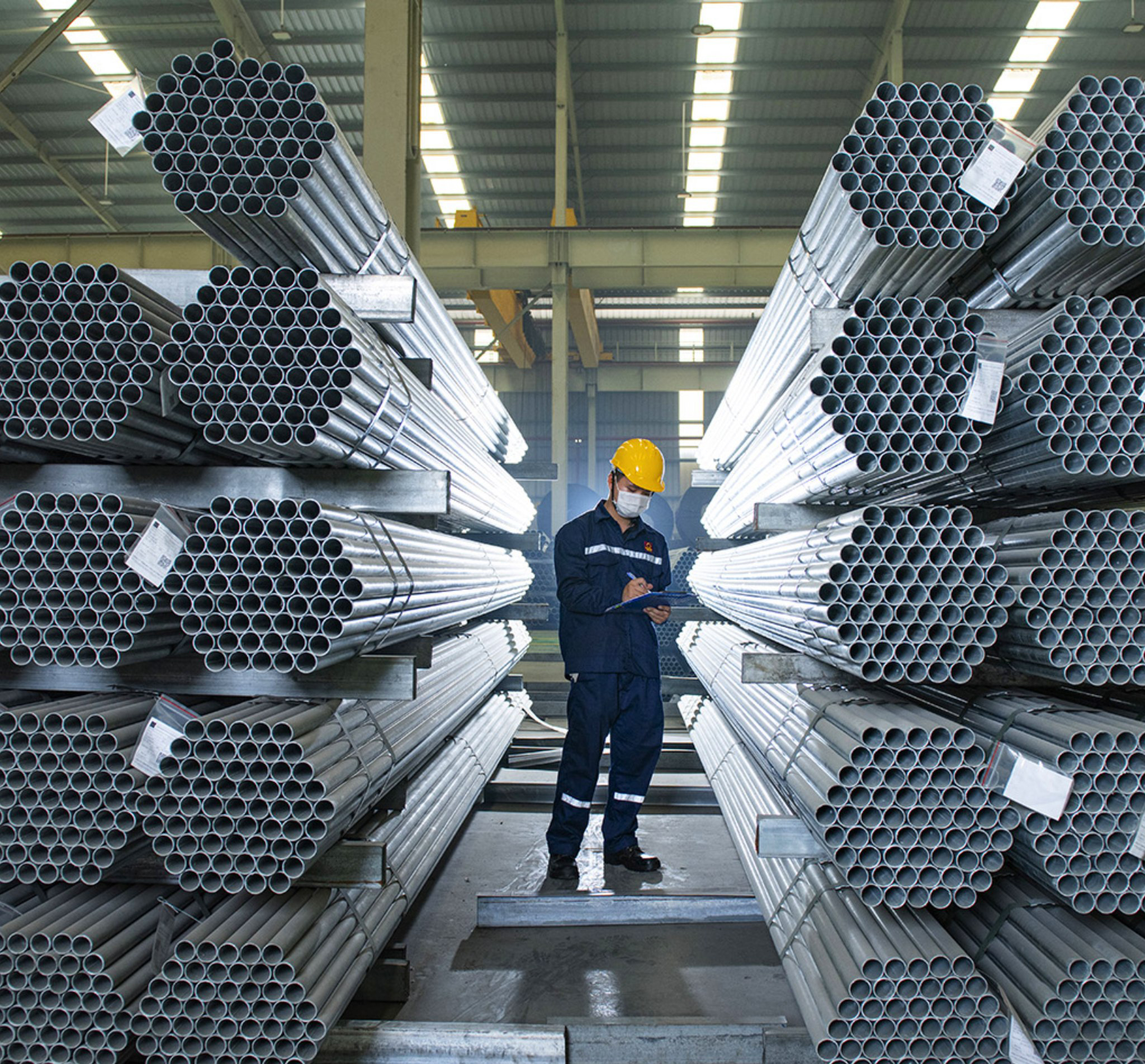
Brussels On Monday evening (13 April), the European Parliament and the Council of the European Union reached an agreement on new measures to curb the negative effects of global steel oversupply. Put simply, too much steel worldwide drives down prices and puts European companies under pressure. The steel sector is considered strategic for the European Union, not only for the economy but also for defense and industry. In recent years, however, it has suffered greatly from international competition and low prices linked to global overproduction. Since 2008, an estimated 100,000 jobs have been lost in the sector. With these new rules, the EU is therefore attempting to strike a balance: remaining open to international trade, but without leaving one of its most important industries exposed.
The EU has decided to raise its defenses. The main change concerns imports: the quantity of steel that can enter the Union without incurring duties will be reduced to 18.3 million tonnes per year, almost half the 2024 levels (-47 percent). If this threshold is exceeded, a much heavier customs duty will be triggered: 50 percent, instead of the current 25 percent. The same applies to certain steel products not covered by the quota system. The aim is clear: to make it less cost-effective to import low-cost steel and to give European producers some breathing space.
Another key point concerns traceability. The new rules require importers to demonstrate more clearly the origin of the steel. This is to prevent circumvention of the rules, for example, by passing products off as originating from countries other than their actual country of origin. Furthermore, the Commission will have to take the steel’s origin into account when allocating annual quotas. After six months, the Commission will conduct an initial review to assess whether the rules are working or need to be extended to other products. The aim is to adapt quickly to a highly dynamic and often unstable global market.
Karin Karlsbro, the chief negotiator for the dossier, emphasized the importance of the agreement: “Combating the negative trade effects from global overcapacity on the EU steel market is essential. With the agreement, the Parliament, the Council, and the Commission could jointly declare the importance of swiftly phasing out all imports of Russian steel products.”
Before they come into force, the new rules will need to be formally approved by both Parliament and the Council. The final vote could take place as early as May. If everything goes according to plan, the measures will come into force on 1 July 2026, immediately after the expiry of the current World Trade Organization (WTO) safeguard measures, which have been in force since 2018.
English version by the Translation Service of Withub