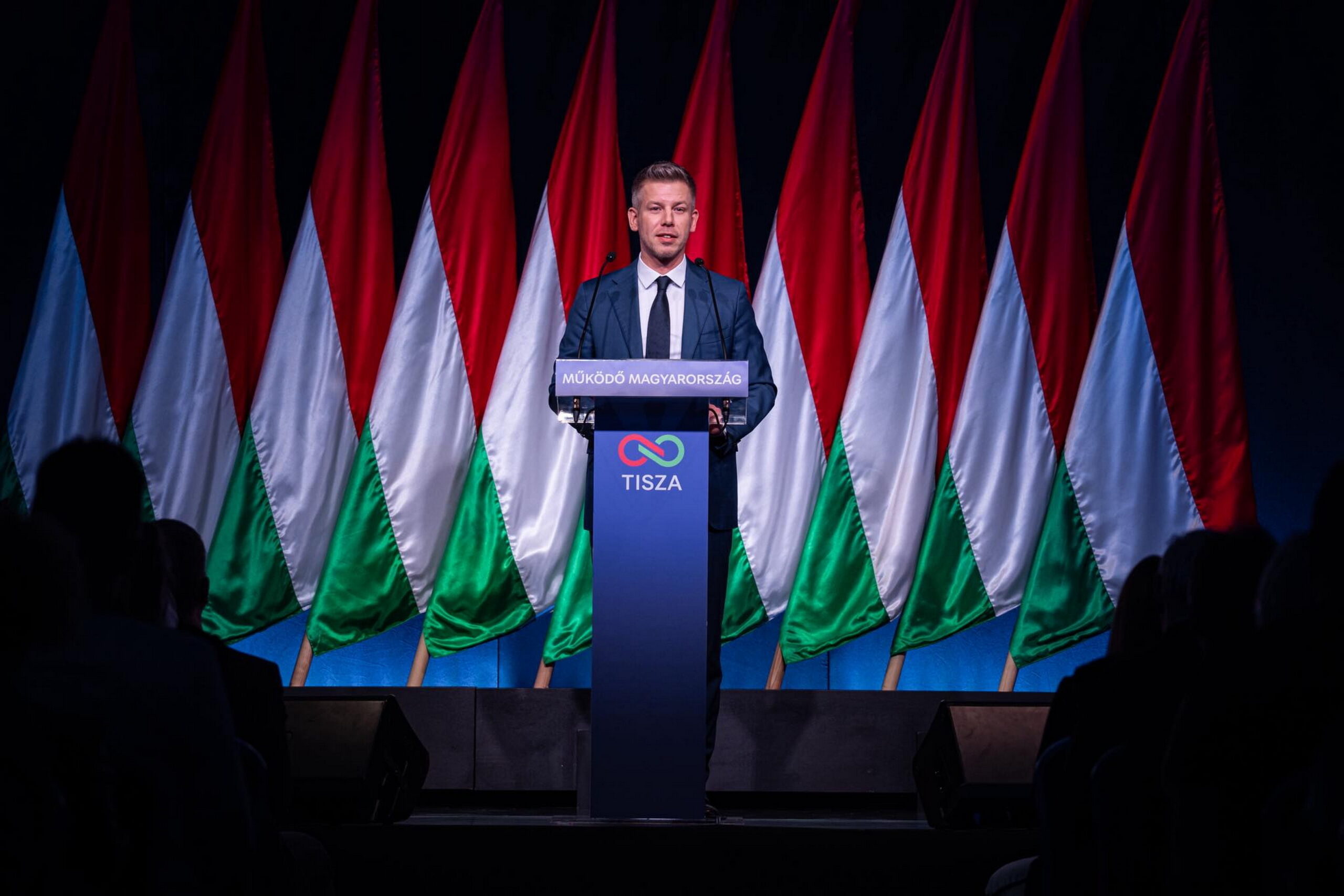
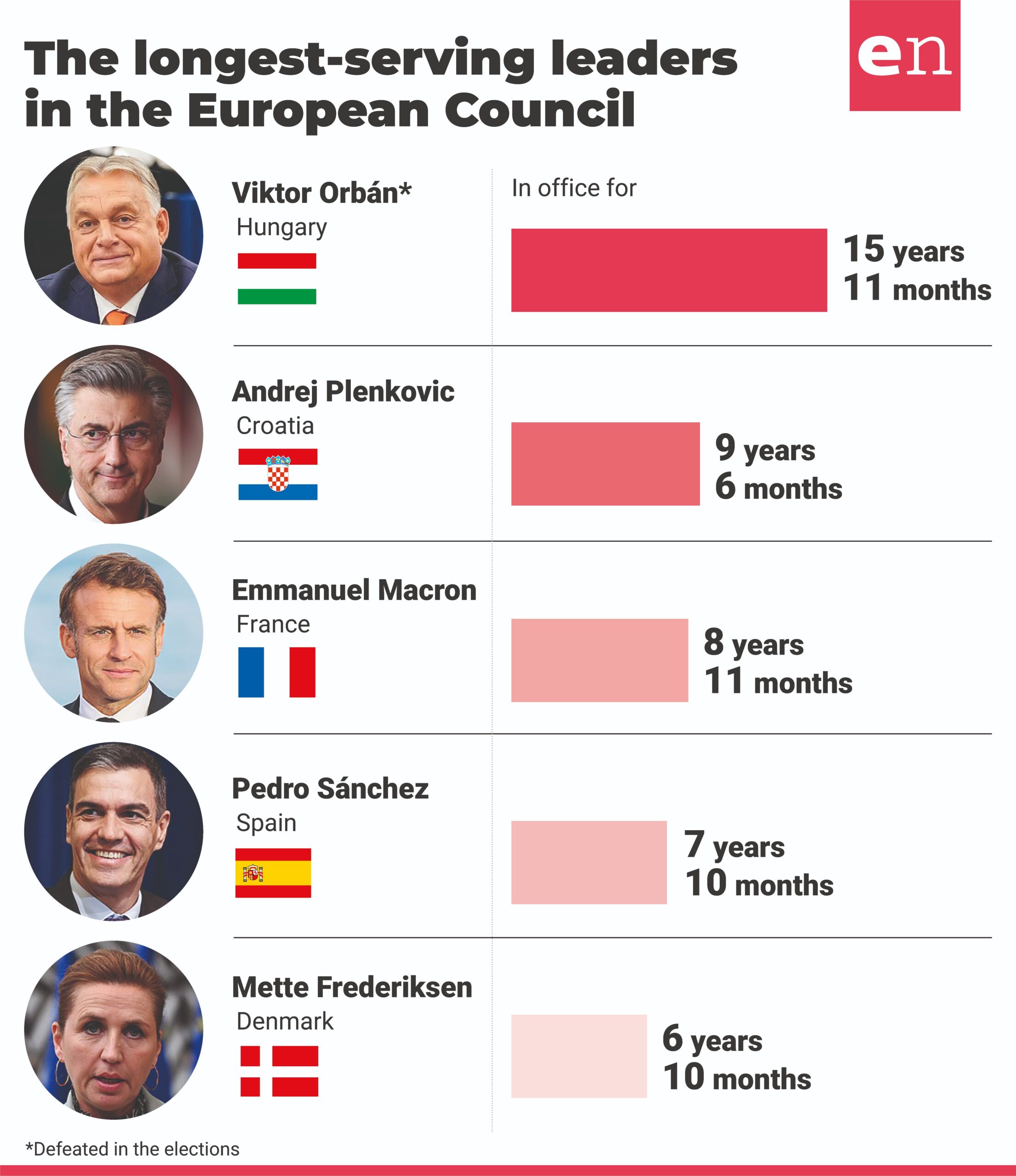
Brussels – “Today, the Hungarian people have said yes to Europe, they have said yes to a free Hungary.” About four hours had passed since the polls closed in the Hungarian elections — held yesterday (April 12) — when, around 11 p.m., Péter Magyar chose to open his victory speech with these words. Before him stood a crowd of supporters cheering him on to the tune of Frank Sinatra’s “My Way.” With 98.9 percent of polling stations counted, the victory of the opposition over the government of Hungarian Prime Minister Viktor Orbán, and the end of a sixteen-year political era (Orbán has led the country continuously since 2010), are now a certainty: TISZA – the center-right party led by Magyar – is set to win 138 of the 199 seats available in the Hungarian Parliament, while Fidesz – the far-right political party led by the outgoing head of government – is expected to secure 55 seats. A further 6 seats are likely to go to the Our Homeland Movement, an ethno-nationalist party situated to the right of Fidesz.
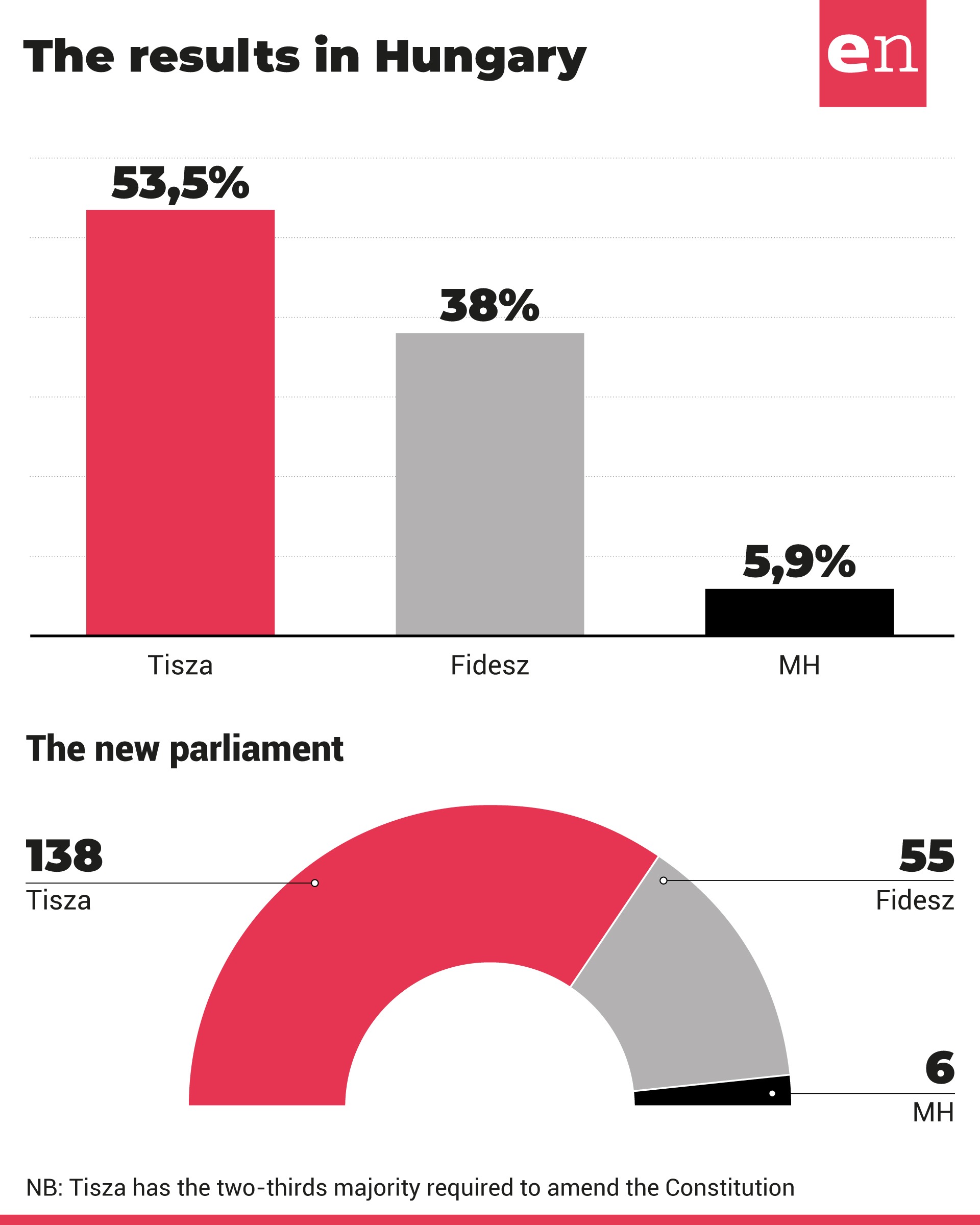
Thanks to a huge turnout (exceeding 78 percent, a record in the history of post-communist Hungary), with the highest figures recorded in precisely those urban areas traditionally most hostile to Orbán, TISZA managed to surpass the crucial threshold of 133 seats and thus secure at least two-thirds of the Budapest legislative assembly. Achieving the so-called “super-majority” was one of the opposition’s key objectives: thanks to these figures, Magyar will be able to amend the Constitution independently, thereby restoring the guarantees of the rule of law dismantled by the government over the past sixteen years and returning the country to a fully democratic system.
Despite TISZA’s clear victory, some of the figures from this vote say a great deal about the heavy intervention Orbán has carried out on Hungary’s electoral system to make it structurally favorable to his party. The most significant figure is that of the seats allocated via the proportional representation system: while in the majority system TISZA clearly prevails over Fidesz with 93 constituencies won to 13 (the only victories secured by the ruling party are concentrated in the main north-eastern and north-western border counties), with the list vote, the party led by Magyar wins 45 seats, “only” three more than Fidesz, despite TISZA having secured 53.07 percent of the total vote and Fidesz having stopped at 38.43 percent. This asymmetry in the allocation of proportional seats is due precisely to the controversial electoral reforms that Orbán has implemented over the years to increase his chances of re-election.
 This time, however, nothing could stop an opposition that was finally united after decades of division and, once Magyar’s victory became clear, the only remaining issue to be resolved was that of the outgoing prime minister’s reaction. Fears of a Capitol Hill 2021-style scenario, with Orbán determined to refuse to recognize the election result and initiate the orderly handover to Magyar, were widespread, especially following statements made by certain government officials while polling stations were still open. In a post on X, for example, the government spokesperson, Zoltán Kovács, had reported “continuous reports of attempts at electoral fraud by TISZA.” Following him was the Prime Minister’s political director, Balasz Orbán, who claimed that opposition candidates were responsible for “attempts to buy votes, intimidation, and aggressive behavior at polling stations, and instances of pressure being exerted on election officials.”
The head of government’s conduct, on the other hand, has so far been in accordance with the Constitution and institutional practice. After Magyar announced on Facebook that he had received a phone call from his rival “who congratulated us on our victory,” it was Orbán himself, at Fidesz headquarters, who described the election results as “painful for us, but clear,” and acknowledged defeat. “The responsibility and opportunity to govern have not been granted to us, and we will serve our country from the opposition,” he added, before concluding by recalling what had been “difficult and easy, good and bad years” and stating that “we will never, ever, ever give up.”
With the risk of a disputed election averted, at least for the time being, Magyar addressed his supporters, mostly young students gathered around a stage set up along the banks of the Danube. “Together we have replaced Orbán’s regime, together we have liberated Hungary,” exclaimed the leader of TISZA, celebrating a victory so resounding “that it can be seen from the Moon and from every window in Hungary.” “Never in our country’s democratic history,” he added, “have so many people voted, and never has a party received such a resounding mandate.”
Magyar immediately sought to send a message to the country’s main international partners, particularly the European Union. “Hungary will once again be a strong ally of the EU and NATO, because our country’s place has been, is, and will be in Europe,” declared Orbán’s former right-hand man, before announcing that his first two official visits would be to Poland (in order to mend relations between Budapest and Warsaw after years of strain caused by constant tensions between Orbán and Polish prime minister Donald Tusk)) and to Brussels, with the aim of persuading the Union to begin releasing the funds earmarked for Hungary and frozen due to Orbán’s violations of the rule of law.
Finally, Magyar addressed his opponents directly. “Those who have defrauded our country will be held to account,” he warned, while also announcing the implementation of the package of anti-corruption measures on which he had based his entire election campaign. Magyar also cautioned Orbán against adopting measures aimed at limiting his executive’s room for maneuver, before asking the President of the Republic, Tamás Sulyok, to entrust him with the task of forming a government as soon as possible and then to resign. The call for resignation was also extended to other prominent figures in Orbán’s “inner circle,” such as the President of the Supreme Court and the Attorney General, described as “puppets” in the hands of the outgoing Prime Minister. “Today, the Hungarian people have decided to change the regime, and those who are part of it must leave public life,” Magyar remarked before leaving the stage.
Meanwhile, the streets of Budapest continued to celebrate throughout the night, chanting “Ruzkik Haza!” (“Russians, go home”). In the name of that hope which the President of the European Parliament, Roberta Metsola, summed up as follows: “Hungary’s place is at the heart of Europe.“
English version by the Translation Service of Withub!["Niente valori, niente soldi". Il Parlamento europeo torna a chiedere provvedimenti contro l'Ungheria di Viktor Orban [foto: Renew Europe, sito internet del gruppo]](https://www.eunews.it/wp-content/uploads/2022/08/orban-rff.png)