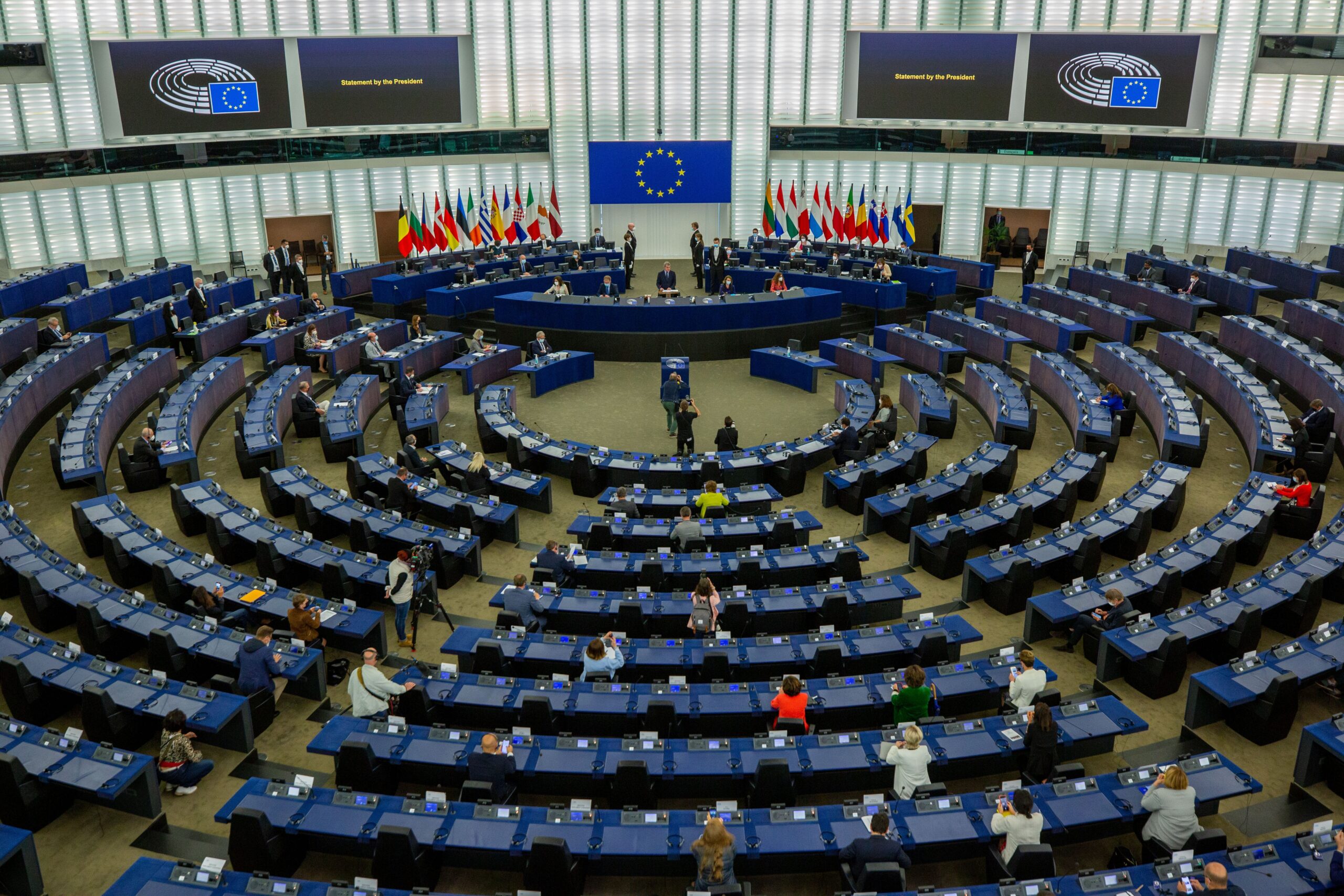
Brussels – The structure of the new Multiannual Financial Framework (MFF)—the European Union’s budget for the seven-year period 2028–2034—and the management of the energy crisis. These are the two major issues on which the European Parliament’s debate will focus during the plenary session scheduled to take place in Strasbourg from Monday, 27 to Thursday, 30 April. As regards the MFF, the main objective of the position approved on 15 April by the European Parliament’s Committee on Budgets (BUDG)—now ready to be voted on in plenary—is to increase its economic weight compared to the proposal put forward by the European Commission on 16 July and to strengthen guarantees on some of the expenditure headings considered most urgent. On the issue of high energy prices, however, the debate will centre on the need to find unified solutions to protect EU citizens from rising prices and on the diplomatic role that Brussels could play in finding a solution to the Middle East conflict from which the current crisis stems.
The Multiannual Financial Framework
The European Parliament’s position on the next MFF, drafted by the Romanian Siegfried Muresan (EPP) and the Portuguese Carla Tavares (S&D), will be debated and voted on on Tuesday, 28 April. “The aim,” explained the European Parliament’s spokesperson, Delphine Colard, today (24 April), “is to ensure a budget capable of addressing the challenges posed by the current geopolitical and economic circumstances.”
The actual figures were provided by the Democratic Party MEP Giuseppe Lupo (S&D) during a briefing for Italian MEPs and journalists. “The text proposes strengthening the next EU budget by calling for an increase in Member States’ contributions to 1.26 per cent of national GDP, a more ambitious threshold than the 1.15 per cent proposed by the Commission,” he explained, adding that “in this way the total budget will be increased to €2,014 billion and spending capacity will rise by 10 per cent.” The main beneficiaries of this increase would be the items dedicated to the Common Agricultural Policy (CAP), cohesion funds, competitiveness and defence.
The proposal has the support of MEPs from the People’s Party (EPP), the Socialists (S&D) and the Liberals (Renew Europe). According to the EPP spokesperson, Pedro Lopez De Pablo, “this is a text that highlights our priorities and will help us influence the rest of the negotiation process with the Commission and the Council.” Utta Tuttlies, representing S&D, also highlighted the “significant improvements” compared to the Berlaymont proposal from last July, whilst Renew spokesperson Linda Aziz-Rohlje highlighted “the victories secured by the Liberals on the Competitiveness Fund and on the creation of stricter rules to link the disbursement of EU funds to respect for the rule of law.”
MEPs from The Left and those belonging to the far-right group Patriots for Europe (PfE), however, will vote against it. According to The Left’s spokesperson, Thomas Shannon, “the proposal cuts funding for social spending in order to buy weapons, at a time when people are struggling to put food on the table and pay their rent and bills,” while according to Alfonso de Mendoza Asensi for the Patriots, “Brussels wants to cut the CAP and cohesion funds to transfer these funds to migration policies.” Finally, the position of the Conservatives and Reformists (ECR), the group to which Fratelli d’Italia belongs, remains more nuanced. According to Meloni’s MEP, Carlo Fidanza, “the group has yet to decide how to vote, as there are positive aspects but also purely ideological measures that we do not agree with, such as the insistence on the Green Deal.”
The war in the Middle East and the energy crisis
Developments in the Middle East conflict and rising energy prices will be the focus of parliamentary debate on Wednesday, 29 April. The morning debate will centre on measures taken so far by the EU to tackle the crisis and on any other measures that might be taken to protect European citizens from the consequences of the war. In the afternoon, attention will turn to a specific theatre of the multifaceted Middle East conflict: southern Lebanon.
Spokespersons for S&D, Renew, the Greens and The Left all agreed on one point: this new crisis is yet another demonstration of how much Europe needs to end its dependence on fossil fuels and must invest more and more in renewable, clean, and domestically produced energy sources. The Greens and The Left went even further, calling on the EU to take action to impose a windfall tax on energy companies.
Finally, S&D and The Left criticised the decision by the Foreign Affairs Council to rule out a suspension of the EU-Israel Association Agreement, calling on the European Parliament to add a debate on this issue to the agenda. “The EU continues to treat Israel as an excellent trading partner, and this makes it complicit in genocide,” explained Shannon, while according to ECR spokesperson Michael Strauss, “the priority remains preventing Iran from acquiring nuclear capabilities.”
The rest of the agenda: from the war in Ukraine to the rape law
Just a few days after the final adoption of the new 90-billion-euro EU aid package for Ukraine, the war launched by Russia against Kyiv will be the third major topic on the agenda of the next plenary session. In particular, on Tuesday MEPs will debate (with a vote scheduled for Thursday) a resolution on “efforts to ensure that Russia is held accountable for its war of aggression against Ukraine” and on the same day they will vote on whether to use the urgent procedure for the EU’s accession to the convention establishing the International Claims Commission for Ukraine (a body established in 2025 under the auspices of the Council of Europe, with the aim of assessing and compensating for the damage caused by the Russian military to the Ukrainian population).
Finally, attention will focus on protecting citizens and upholding EU values. In particular, two reports on fundamental rights and the rule of law in the EU will be put to the vote and, most importantly, a report encouraging the Commission to present a legislative proposal on a common definition of rape based on the absence of consent. This is an issue on which it remains to be seen how Italian MEPs from the parties supporting the national government will vote, given that a similar bill in Italy has been stalled for several months precisely because of reservations within the parliamentary majority.
English version by the Translation Service of Withub