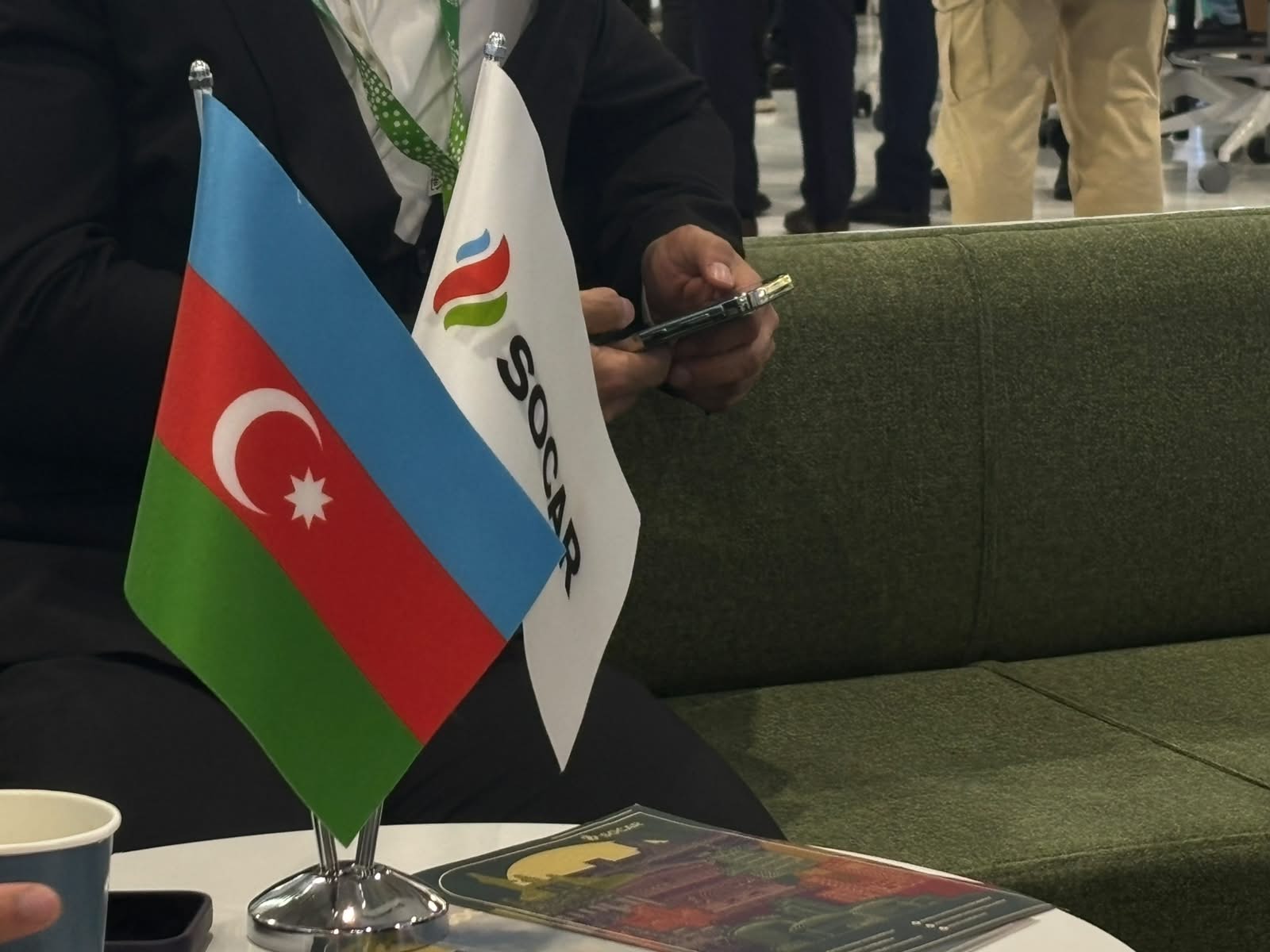
Baku, from our correspondent – Three billion dollars invested in Italy, a gas pipeline linking the Caspian Sea to Puglia, and a political partnership that even Brussels is once again taking into consideration. Italy and Azerbaijan appear closer than ever today, with a relationship that goes far beyond energy supplies and encompasses investment, infrastructure, and strategic relations. The figures from Sofaz, the sovereign wealth fund of the Republic of Azerbaijan, demonstrate the strengthening of relations between Rome and Baku. During a visit to the fund’s headquarters in the Azerbaijani capital, senior officials revealed that its exposure in Italy has reached around $3 billion, accounting for 4 per cent of the total portfolio. This share makes Italy the fourth-largest country by investment in the fund.
This is no coincidence. According to Levan Davitashvili, CEO of Italiana Petroli—the company acquired by the Azerbaijani sovereign wealth fund, Support us—interest in the Italian market is the result of a relationship consolidated over the years. The decision to invest in our country, he explained, “represents the logical continuation of what has already been done in terms of energy expansion, because Italy is not new to Azerbaijan. It is a very important trading partner. It is the leading trading partner in terms of energy resource exports.” A link that is also confirmed by the figures on energy trade. “For Italy, Azerbaijan is the second-largest supplier of natural gas and oil,” added Davitashvili, highlighting Baku’s growing role in the European energy landscape following the crisis in Russian supplies.
It is gas, above all, that acts as the glue binding the two countries together. Between 2020 and 2025, Italy received around 45 billion cubic metres via the Trans-Adriatic Pipeline (TAP), an infrastructure designed to transport gas from the Shah Deniz field in the Azerbaijani sector of the Caspian Sea to the coast of Puglia. However, the TAP represents only the final segment of a much wider network. Together with the South Caucasus Pipeline and the Trans-Anatolian Pipeline, it forms the Southern Gas Corridor to Europe, Europe’s main route of access to the Caspian’s energy resources. Between 25 and 28 million cubic metres of Azerbaijani gas destined for the Italian market arrive daily via the Melendugno terminal in the province of Lecce.
A capacity set to increase further. In 2022, the European Commission and the government in Baku signed a memorandum of understanding to double the TAP’s capacity, from 10 to 20 billion cubic metres per year. A process already underway which, in January this year, brought the pipeline’s total capacity to 11.2 billion cubic metres per year. A development that confirms the growing centrality of the Azerbaijani energy corridor in Europe’s supply strategies.
Azerbaijan’s central role in the European energy strategy was also a key focus of Giorgia Meloni’s visit to Baku in early May. On that occasion, the Prime Minister had highlighted the need to expand cooperation with strategic partners in the region. “We need to build a new strategy, engaging in dialogue and extending cooperation to our geographical area, to like-minded countries, that is, to the many friends we continue to have,” she stated. These words reflect a long-term vision of energy cooperation between Rome and Baku.
But the relationship between Rome and Baku extends beyond the energy sector. Sofaz also regards Italy as a prime destination for its financial investments. The sovereign wealth fund holds stakes in Italo, in FSI, in renewable energy plants and in the Azzurra Capital Investment Fund. And interest is set to grow. “We are looking for new investment opportunities,” said Sofaz’s deputy managing director, Rovshan Javadov, speaking to journalists in the Azerbaijani capital. “We are in talks with new partners in Europe, and Italy is the first country. We are looking at liquid markets, mainly in Western Europe.” This approach confirms Azerbaijani investors’ confidence in the Italian market.
The warming of relations between Brussels and Baku also helps to further strengthen this framework. The European Union and Azerbaijan have, in fact, officially resumed negotiations on a new bilateral agreement. According to a statement on X by the European delegation in the Caucasian country, the parties have finalised the initial text of the new “Partnership Priorities”, which are intended to form the political basis for future cooperation. “Our main objective is to strengthen dialogue, connectivity, and economic cooperation,” reads the statement issued by the European Union delegation. This is a sign of the strengthening of relations between Brussels and Baku at a crucial stage for the continent’s energy balance.
English version by the Translation Service of Withub