- Europe, like you've never read before -
Wednesday, 6 May 2026
No Result
View All Result
  • it ITA
  • en ENG
Eunews
  • Politics
  • World
  • Business
  • News
  • Defence
  • Health
  • Agrifood
  • Other sections
    • Culture
    • Diritti
    • Energy
    • Green Economy
    • Finance & Insurance
    • Industry & Markets
    • Media
    • Mobility & Logistics
    • Net & Tech
    • Sports
  • Newsletter
  • European 2024
    Eunews
    • Politics
    • World
    • Business
    • News
    • Defence
    • Health
    • Agrifood
    • Other sections
      • Culture
      • Diritti
      • Energy
      • Green Economy
      • Finance & Insurance
      • Industry & Markets
      • Media
      • Mobility & Logistics
      • Net & Tech
      • Sports
    No Result
    View All Result
    Eunews
    No Result
    View All Result

    Home » Business » Digital euro: Sovereignty, public service, and economic interests at the heart of the EU debate

    Digital euro: Sovereignty, public service, and economic interests at the heart of the EU debate

    A debate at the European Parliament between institutions, political parties, and business groups on the future of the single currency

    Caterina Mazzantini by Caterina Mazzantini
    6 May 2026
    in Business
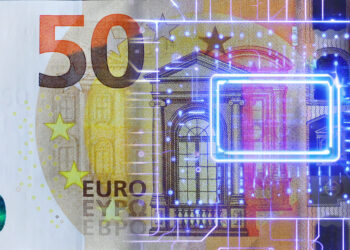
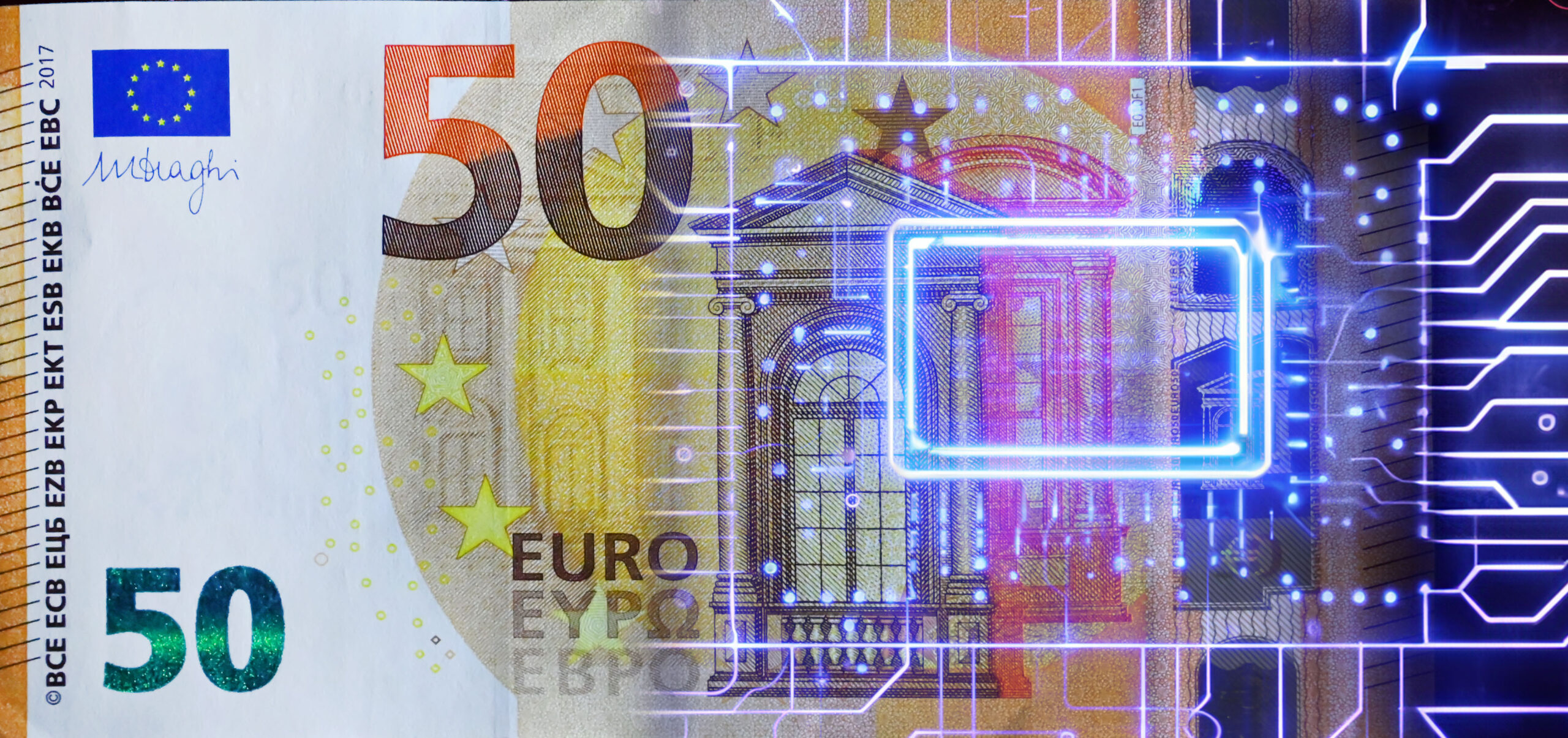
    Source: Imagoeconomica EURO DIGITALE ECONOMIA FINANZA SOLDI 50 EURO GENARATE AI IA BANCONOTA

    EURO DIGITALE ECONOMIA FINANZA SOLDI 50 EURO GENARATE AI IA BANCONOTA

    Brussels – European sovereignty and the geopolitical risks of dependence on US giants. Guided by these fundamental principles, the future of the digital single European currency was the focus of a debate in the European Parliament between MEPs, representatives of institutions, the banking sector, and the business community, in an initiative backed by almost all political groups (The Left, the EPP, S&D, the Conservatives, Renew and the Greens).

    Pasquale Tridico (Five Star Movement, in the Left group) brought the focus  to the privatisation of payments, pointing out that today, “two-thirds of our payments are made via credit cards provided by American providers. Do we want our payment system to be dependent on private, non-European companies? We don’t think so.” In support of this view, Ignazio Marino (Independent, with the Greens) expanded on the argument by pointing out how Europe is dependent on the United States for oil, gas, weapons, and even vaccines: “Now is the right time to discuss a public currency in order to establish a Europe that is increasingly independent both as a continent and as a union.”

    For MEP Marco Falcone (Forza Italia, in the European People’s Party group), sovereignty must translate into tangible benefits for the end user. He stressed the need to resolve issues relating to deposit limits and compensation. The aim is to create incentives for merchants and citizens that can lead to real “savings in their use.”

    “A universal public service” is the concept that Alessandro Giovannini (representing the ECB) sought to convey. He compared the digital euro’s infrastructure to a public transport system, explaining that what they aim to offer is a payment option that is “public, open, reliable, and available to everyone.”

    Renew MEP Elisabetta Gualmini also described the new currency as a “common public good” capable of providing resilience against global geopolitical turmoil. Gualmini noted that for “Generation Z,” the use of physical currency now seems “dystopian,” believing that “the move to the digital euro could help Europeans become digital citizens.”

    On the technical front, Marco Pieroni (Bank of Italy) confirmed that the infrastructure will be based on systems already in operation, such as “TIPS”, and that Italy will be one of the host countries for the digital euro data centres. However, concerns remain regarding costs: Salvatore Vescina (representative for Confcommercio) expressed fears about fees, urging that they be “fair, i.e. low, uniform, and easy to quantify.” The retailers’ proposal is to set a limit of 0.1 per cent with a cap.

    Irene Tinagli (PD, S&D) stressed the delicacy of this phase, noting that incentive schemes must be aligned to ensure that costs and benefits are distributed fairly throughout the value chain. Tinagli suggested adopting a transition phase to test various technical solutions: “For small transactions, a zero fee could be a good design choice to encourage adoption.” According to the Socialist MEP, we must prevent the digital euro from “becoming the next lucrative business captured by major non-European tech players at the expense of European operators.”

    In conclusion, Guido Borgato, Italy’s Permanent Representative to the European institutions, reiterated the importance of striking a balance: “We must ensure that the payments industry is able first to recoup its costs and then to make a profit; otherwise, the project simply won’t get off the ground.”

    Whether it is safeguarding geopolitical autonomy, ensuring universal public services, or protecting the profit margins of small retailers, the digital currency seems to have brought everyone to the same table, at least for now.

    English version by the Translation Service of Withub


    Tags: digital euroue

    Related Posts

    NEBIUS AZIENDA INDUSTRIA TECNOLOGIA AI IA PRODUZIONE INFRASTRUTTURE INTELLIGENZA ARTIFICIALE DATA CENTER
    Green Economy

    EU warns on AI: digital is not always green

    5 May 2026
    Source: Imagoeconomica. LOGITECH
    Net & Tech

    40 per cent of EU citizens still lack basic digital skills

    23 April 2026
    PIERO CIPOLLONE ECONOMISTA E BANCHIERE
    Business

    Digital euro: ECB urges EU to act: “It is important to have the legislation by the end of the year”

    22 April 2026
    EURO DIGITALE ECONOMIA FINANZA SOLDI 50 EURO GENARATE AI IA BANCONOTA
    Business

    Cipollone: “The ECB is preparing to introduce the digital euro; we are awaiting the EU regulations”

    24 March 2026
    map visualization
    Mandatory Credit: Photo by Shutterstock (15557186p)
A wall painting pictured during a visit to Le Bois du Cazier industrial heritage site and former coal mine, in Marcinelle, on the second day of the official state visit of the Italian President, on Tuesday 21 October 2025, in Brussels. The Italian President and his daughter are on an official state visit to Belgium from 20 to 22 October 2025.
Belgium Italy State Visit Tuesday, Marcinelle, Belgium - 21 Oct 2025

    European Parliament proposes making Marcinelle a symbol for victims of workplace accidents

    by Valeria Schröter
    6 May 2026

    Members of the European Parliament’s Committee on Employment and Social Affairs have approved a motion for a resolution to establish...

    Source: Imagoeconomica EURO DIGITALE ECONOMIA FINANZA SOLDI 50 EURO GENARATE AI IA BANCONOTA

    Digital euro: Sovereignty, public service, and economic interests at the heart of the EU debate

    by Caterina Mazzantini
    6 May 2026

    A debate at the European Parliament between institutions, political parties, and business groups on the future of the single currency

    Gli effetti del ciclone Harry in Sicilia [foto: Wikimedia Commons - Jeanne Griffin - Own work, CC BY-SA 4.0, https://commons.wikimedia.org/w/index.php?curid=183289612]

    Cyclone Harry: EU tells Italy to use structural funds

    by Emanuele Bonini emanuelebonini
    6 May 2026

    Executive Vice President Fitto: "There are 156 million euros left over from the ERDF, and they are available. As for...

    AFCO PFE Patrioti per l'europa cordone sanitario

    The cordon sanitaire at the European Parliament has been breached: the report on democracy has been assigned to Patriots for Europe

    by Annachiara Magenta annacmag
    5 May 2026

    Seven MEPs from the EPP brought down the pro-European, centrist coalition that had been in place in the European Parliament...

    • Director’s Point of View
    • Opinions
    • About us
    • Contacts
    • Privacy Policy
    • Cookie policy

    Eunews is a registered newspaper
    Press Register of the Court of Turin n° 27


    Copyright © 2025 - WITHUB S.p.a., Via Rubens 19 - 20148 Milan
    VAT number: 10067080969 - ROC registration number n.30628
    Fully paid-up share capital 50.000,00€


    No Result
    View All Result
    • it ITA
    • en ENG
    • Politics
    • Newsletter
    • World politics
    • Business
    • General News
    • Defence & Security
    • Health
    • Agrifood
    • Altre sezioni
      • Culture
      • Diritti
      • Energy
      • Green Economy
      • Gallery
      • Finance & Insurance
      • Industry & Markets
      • Media
      • Mobility & Logistics
      • Net & Tech
      • News
      • Opinions
      • Sports
    • Director’s Point of View
    • Draghi Report
    • Eunews Newsletter

    No Result
    View All Result
    • it ITA
    • en ENG
    • Politics
    • Newsletter
    • World politics
    • Business
    • General News
    • Defence & Security
    • Health
    • Agrifood
    • Altre sezioni
      • Culture
      • Diritti
      • Energy
      • Green Economy
      • Gallery
      • Finance & Insurance
      • Industry & Markets
      • Media
      • Mobility & Logistics
      • Net & Tech
      • News
      • Opinions
      • Sports
    • Director’s Point of View
    • Draghi Report
    • Eunews Newsletter

    Attention