- Europe, like you've never read before -
Monday, 25 May 2026
No Result
View All Result
  • it ITA
  • en ENG
Eunews
  • Politics
  • World
  • Business
  • News
  • Defence
  • Health
  • Agrifood
  • Other sections
    • Culture
    • Diritti
    • Energy
    • Green Economy
    • Finance & Insurance
    • Industry & Markets
    • Media
    • Mobility & Logistics
    • Net & Tech
    • Sports
  • Newsletter
  • European 2024
    Eunews
    • Politics
    • World
    • Business
    • News
    • Defence
    • Health
    • Agrifood
    • Other sections
      • Culture
      • Diritti
      • Energy
      • Green Economy
      • Finance & Insurance
      • Industry & Markets
      • Media
      • Mobility & Logistics
      • Net & Tech
      • Sports
    No Result
    View All Result
    Eunews
    No Result
    View All Result

    Home » Green Economy » EU warns on AI: digital is not always green

    EU warns on AI: digital is not always green

    According to the data, Europe accounts for 15 per cent of global electricity consumption by data centres, the United States for 45 per cent, and China for 25 per cent. Meanwhile, the use of water resources for cooling equipment and power generation could reach around 1,068 billion litres by 2028

    Valeria Schröter by Valeria Schröter
    5 May 2026
    in Green Economy, Net & Tech
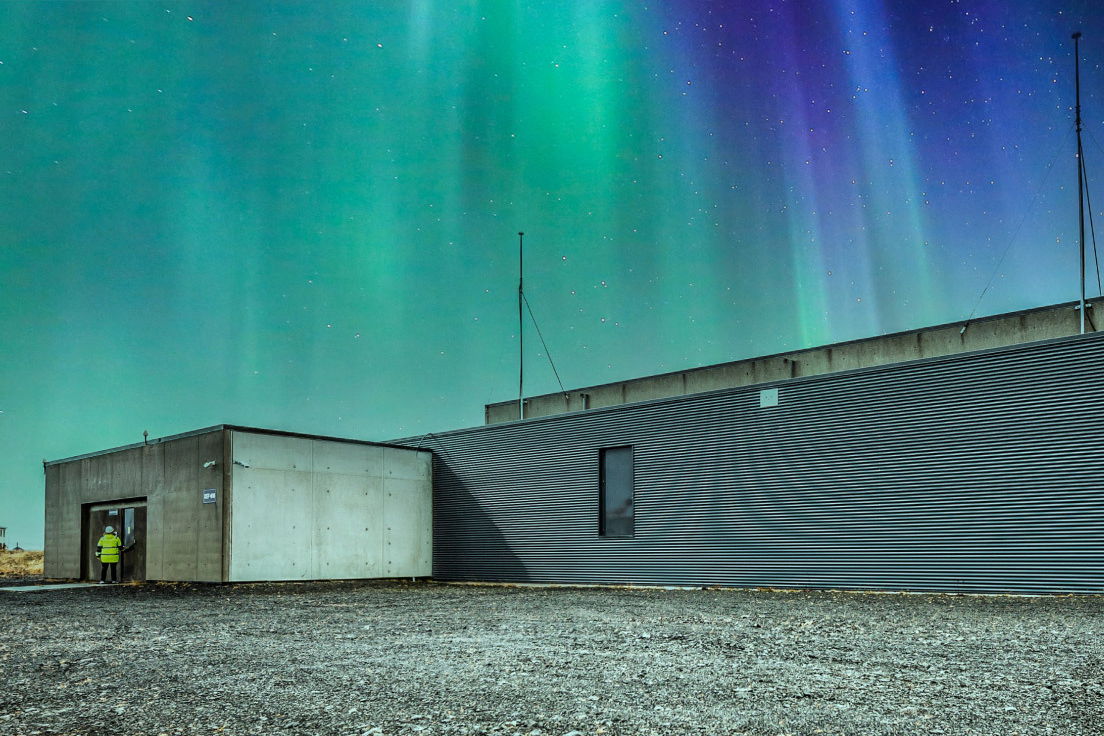
    NEBIUS AZIENDA INDUSTRIA TECNOLOGIA AI IA PRODUZIONE INFRASTRUTTURE INTELLIGENZA ARTIFICIALE DATA CENTER

    NEBIUS AZIENDA INDUSTRIA TECNOLOGIA AI IA PRODUZIONE INFRASTRUTTURE INTELLIGENZA ARTIFICIALE DATA CENTER

    Brussels – In Ireland, data centres already account for over 20 per cent of the country’s total electricity consumption. This is one of the most visible effects of a transformation that is reshaping European energy consumption and creating tension between the European Union’s environmental ambitions and the global artificial intelligence race. More generally, Europe accounts for 15 per cent of global electricity consumption by data centres, the United States for 45 per cent, and China for 25 per cent. These figures were released today (5 May) by the European Environment Agency (EEA), underlining that, at a time of growing geopolitical competition and economic uncertainty, digital technologies are considered key for the competitiveness and autonomy of the 27 member states.

    The EEA stressed that tackling the twin transition – the green and digital transitions – is not only an environmental challenge, but also a strategic one. As stated in the document Navigating Europe’s twin transition — opportunities and challenges of digitalisation in the green transition, digitalisation is not inherently environmentally friendly. The rapid expansion of artificial intelligence, in fact, represents a growing challenge to achieving climate neutrality in Europe. The training of AI models is driving exponential growth in computational resources. According to the report Artificial intelligence and sustainable consumption in Europe, the computing power required for training increased a million-fold between 1960 and 2010 and by approximately a trillion-fold between 2010 and 2025.

     In 2024, data centres accounted for around 1.5 per cent of global electricity consumption and around 3 per cent of European consumption. Their energy demand, however, is growing rapidly and is often concentrated locally. “Driven largely by artificial intelligence, the sharp rise in data centres in Europe is expected to lead to a near doubling of the sector’s energy demand by 2030,” according to documents published by the EEA. Germany has the most facilities. Many data centres are concentrated around major urban hubs, particularly in Frankfurt, London, Amsterdam, Paris, and Dublin. Meanwhile, new markets are emerging in countries such as Spain, Italy, and Poland.

    One impact that is sometimes overlooked is on water resources. Artificial intelligence generates demand for water at various stages of its life cycle, including cooling on-site data centres, power generation, and semiconductor production. Current projections indicate that data centres could increase their annual water consumption for cooling and electricity generation to around 1,068 billion litres by 2028, an eleven-fold increase from 2024 estimates.


    Artificial intelligence systems, moreover, rely on strategically crucial minerals such as gallium, germanium, indium, palladium, and tantalum. Europe’s high dependence on imports and the global concentration of mining and refining capacity for many of these materials expose AI infrastructure to geopolitical and supply chain risks. 

    Another key factor in assessing the impact of artificial intelligence is its role in influencing online behaviour. The consumption footprint of EU citizens is expected to increase by 2030, with online shopping accounting for an ever‑growing share. Therefore, for the EEA, “understanding the potential of AI to foster sustainable consumption is becoming crucial, as it shapes consumer behaviour and the way households relate to sustainability.”

    Despite these challenges, the Agency believes that digitalisation could promote sustainability by improving the collection and analysis of environmental data, supporting more efficient industrial processes, and enabling smarter energy and transport systems. The main challenge, therefore, is “to ensure that digitalisation is guided by explicit sustainability objectives, without assuming that environmental benefits will emerge indirectly from efficiency improvements alone.”

    English version by the Translation Service of Withub

    Tags: artificial intelligenceartificial intelligencecrisi climaticadigital transitioniaimpattoirlandaue

    Related Posts

    Ambiente, Hoekstra, ETS, emissioni
    Green Economy

    Hoekstra hints at an easing of the ETS and delays the EU’s 2050 climate targets

    4 May 2026
    Source: Imagoeconomica. LOGITECH
    Net & Tech

    40 per cent of EU citizens still lack basic digital skills

    23 April 2026
    map visualization
    The EU-US agreed a trade - tariff deal with 15% tariff for the vast majority of EU products, seen in this photo illustration. Taken in Brussels, Belgium, On 28 July 2025. (Jonathan Raa / Sipa USA) *** Strictly for editorial news purposes only ***

    Trade: Italy, along with four other countries, calls for a stronger EU policy towards the US and China

    by Giorgio Dell'Omodarme
    25 May 2026

    In a non-paper co-signed by Spain, France, the Netherlands, and Lithuania, Rome stresses the need for an “appropriate response” from...

    Anziani per le vie di Siena. Fonte: Photo de Jan Stonesur Unsplash

    An ageing population, a huge number of elderly people, and few births: Eurostat presents a picture of a fading Italy

    by Emanuele Bonini emanuelebonini
    25 May 2026

    Data from the European statistical office paint a picture that serves as a real wake-up call for the country’s future:...

    Alluvioni Grecia inondazioni

    Floods and combined climate risks: the EU must adopt a multi-risk approach

    by Annachiara Magenta annacmag
    25 May 2026

    This is the warning issued by an international study conducted by scientists at the Joint Research Centre, in collaboration with...

    ROBERT PREVOST, PAPA LEONE XIV

    Leone XIV and Ursula, a Shared “Magnifica” Problem

    by Roberto Zangrandi
    25 May 2026

    The encyclical Magnifica Humanitas: how it measures up against the European Union’s ongoing work on artificial intelligence, and against the...

    • Director’s Point of View
    • Opinions
    • About us
    • Contacts
    • Privacy Policy
    • Cookie policy

    Eunews is a registered newspaper
    Press Register of the Court of Turin n° 27


    Copyright © 2025 - WITHUB S.p.a., Via Rubens 19 - 20148 Milan
    VAT number: 10067080969 - ROC registration number n.30628
    Fully paid-up share capital 50.000,00€


    No Result
    View All Result
    • it ITA
    • en ENG
    • Politics
    • Newsletter
    • World politics
    • Business
    • General News
    • Defence & Security
    • Health
    • Agrifood
    • Altre sezioni
      • Culture
      • Diritti
      • Energy
      • Green Economy
      • Gallery
      • Finance & Insurance
      • Industry & Markets
      • Media
      • Mobility & Logistics
      • Net & Tech
      • News
      • Opinions
      • Sports
    • Director’s Point of View
    • Draghi Report
    • Eunews Newsletter

    No Result
    View All Result
    • it ITA
    • en ENG
    • Politics
    • Newsletter
    • World politics
    • Business
    • General News
    • Defence & Security
    • Health
    • Agrifood
    • Altre sezioni
      • Culture
      • Diritti
      • Energy
      • Green Economy
      • Gallery
      • Finance & Insurance
      • Industry & Markets
      • Media
      • Mobility & Logistics
      • Net & Tech
      • News
      • Opinions
      • Sports
    • Director’s Point of View
    • Draghi Report
    • Eunews Newsletter

    Attention