- Europe, like you've never read before -
Wednesday, 6 May 2026
No Result
View All Result
  • it ITA
  • en ENG
Eunews
  • Politics
  • World
  • Business
  • News
  • Defence
  • Health
  • Agrifood
  • Other sections
    • Culture
    • Diritti
    • Energy
    • Green Economy
    • Finance & Insurance
    • Industry & Markets
    • Media
    • Mobility & Logistics
    • Net & Tech
    • Sports
  • Newsletter
  • European 2024
    Eunews
    • Politics
    • World
    • Business
    • News
    • Defence
    • Health
    • Agrifood
    • Other sections
      • Culture
      • Diritti
      • Energy
      • Green Economy
      • Finance & Insurance
      • Industry & Markets
      • Media
      • Mobility & Logistics
      • Net & Tech
      • Sports
    No Result
    View All Result
    Eunews
    No Result
    View All Result

    Home » Business » International Monetary Fund warns EU energy‑price measures benefit the wealthiest

    International Monetary Fund warns EU energy‑price measures benefit the wealthiest

    The recommendation is not to repeat the mistakes of 2022, but to implement targeted, temporary measures for the most vulnerable. And to continue on the path of transition to reduce exposure to price shocks

    Giulia Torbidoni by Giulia Torbidoni
    6 May 2026
    in Business, Energy
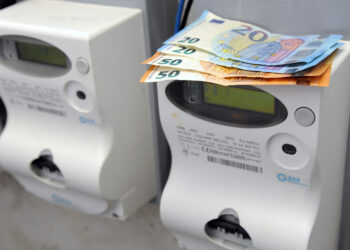
    Secondo la Bce il caro-energia continuerà a pesare sui consumi reali nei prossimi trimestri [foto: imagoeconomica]

    Secondo la Bce il caro-energia continuerà a pesare sui consumi reali nei prossimi trimestri [foto: imagoeconomica]

    Brussels – The measures that European Union countries are implementing to respond to the energy crisis triggered by the US and Israeli attacks on Iran favour the wealthiest rather than the poorest. This was confirmed before the Ministers of Economy and Finance gathered at the Eurogroup meeting on Monday (4 May) by the Deputy Director of the European Department of the International Monetary Fund (IMF), Oya Celasun. In practice, the risk is that debt and deficit end up being used to support the consumption of higher‑income households as they face fuel and energy costs.

     The IMF’s analysis begins with the observation that EU governments’ responses to the 2026 energy price shock were largely based on “untargeted and price-distorting” measures, as had already been the case in 2022 following Russia’s invasion of Ukraine and the ensuing crisis. But this poses a “risk.” In its review of the measures introduced between March and April 2026, the IMF identifies 125 support measures across the EU. The result is that “around 70 per cent of countries adopted at least one
    excise tax cut, and many also limited price pass-through, subsidized firms, reduced VAT rates, or
    introduced other—often untargeted—measures.” Furthermore, “more than 90 per cent of countries took at least one
    price-distorting measure.” The outcome is that, “so far, the average fiscal cost is estimated at about 0.18 per cent of GDP, with
    most costs stemming from untargeted measures,
    ” blanket measures, which “are not just untargeted—they benefit the rich much more than the poor.” In numerical terms, “for
    an economy-wide price reduction of €100, on average, the richest 20 per cent receive €34 via a road transport-fuel subsidy and €33 via an electricity subsidy,” while “the bottom 20 per cent would receive €9 and €11,
    respectively.” In practice, “price-suppressing support skews benefits toward higher-income households.“

     Although the rise in gas prices due to the war in the Middle East is estimated to be around a fifth of that seen in 2022, instability remains high and, in this context, according to the IMF, the response four years ago offers clear lessons on what to avoid, as “untargeted support was costly.” In 2022 and 2023, EU countries spent around 2.5 per cent of GDP on support for households, and around 70 per cent of the total cost stemmed from measures that were untargeted, price-distorting, or both. “Instead, fully compensating
    the bottom 40 per cent of households by income would have cut the fiscal bill to 0.9 per cent of GDP, while
    achieving the objective of reaching the most affected​
    ”, the IMF points out. At present, “near-term effects are concentrated in
    transport fuels” and, “the average EU household would lose about €375 in 2026—0.7
    per cent of average consumption—from all price hikes.” This picture also shows significant variations in the impacts, ranging from €620 in Slovakia to €134 in Sweden. In a “severe” scenario, however, the average loss would rise to €1,750. As for Italy, the estimated impact ranges from €400 to €450 in the baseline scenario and from €2,000 to €2,500 in the severe scenario.

    In practice, according to the IMF, any form of support should be “targeted, temporary, and implementable—without distorting price signals.” In other words, avoid cuts to consumption taxes or price controls (cuts, price caps) and allow international prices to be passed on to end consumers to encourage saving, given that global supply is limited and import prices are high. Where provided, support should instead focus on vulnerable households through targeted cash transfers, ideally delivered via existing social safety nets, and scaled up using income data from tax or payroll systems. Alternatively, where income-based assistance is not feasible, targeted cash transfers by category (e.g., by age, disability, or family status), lump-sum utility bills discounts for households below a certain income threshold, and bill smoothing. As for businesses, support “should be strictly limited”, and in any case “coordinated at the European level to
    safeguard the level playing field (and limit cascading calls for support).” According to IMF estimates, “fully compensating the
    bottom 20 per cent of households for the rise in energy prices this year would cost about 0.03 per cent of
    GDP under current market pricing, rising to 0.15 per cent in the severe scenario.” 

    Finally, the report highlights how social equity and the energy transition go hand in hand. According to the Fund, continuing along this path is the “surest way” for the EU to reduce its exposure to fossil-fuel price shocks and lower long-term energy costs. For example, greater efficiency and the shift to renewable energy over the last five years have reduced the impact on households by 12 per cent at current prices, and in the severe-case scenario, the reduction rises to 17 per cent, or €270 per household, amounting to total savings of around €53 billion. For this reason, the path forward appears clear and is one where “energy security, affordability, and the transition to renewables are mutually reinforcing.” However, it is acknowledged that “more remains to be done to expand low-carbon, low-marginal-cost energy generation and further
    integrate Europe’s electricity grid.”
    English version by the Translation Service of Withub
    Tags: costsdeficitexpensive energyfmiiranpricesue

    Related Posts

    Eelco Heinen, ministro delle Finanze dei Paesi Bassi, con Valdis Dombrovskis, commissario europeo per l'Economia. Fonte: Consiglio UE
    Business

    The Netherlands against Meloni: “The response to shocks cannot be more debt”

    4 May 2026
    Milano - Aumento dei costi delle bollette della luce elettrica
    Business

    Rising energy prices drive Eurozone inflation: up 0.4 percentage points in April to 3 per cent

    30 April 2026
    GAS AUMENTI SOLDI ECONOMIA  CARO ENERGIA METANO GRAFICO FORNELLI BOLLETTA
    Business

    EU relaxes state aid rules for agriculture, fisheries and transport as energy prices soar

    29 April 2026
    map visualization
    Secondo la Bce il caro-energia continuerà a pesare sui consumi reali nei prossimi trimestri [foto: imagoeconomica]

    International Monetary Fund warns EU energy‑price measures benefit the wealthiest

    by Giulia Torbidoni
    6 May 2026

    The recommendation is not to repeat the mistakes of 2022, but to implement targeted, temporary measures for the most vulnerable....

    Mandatory Credit: Photo by Shutterstock (15557186p)
A wall painting pictured during a visit to Le Bois du Cazier industrial heritage site and former coal mine, in Marcinelle, on the second day of the official state visit of the Italian President, on Tuesday 21 October 2025, in Brussels. The Italian President and his daughter are on an official state visit to Belgium from 20 to 22 October 2025.
Belgium Italy State Visit Tuesday, Marcinelle, Belgium - 21 Oct 2025

    European Parliament proposes making Marcinelle a symbol for victims of workplace accidents

    by Valeria Schröter
    6 May 2026

    Members of the European Parliament’s Committee on Employment and Social Affairs have approved a motion for a resolution to establish...

    Source: Imagoeconomica EURO DIGITALE ECONOMIA FINANZA SOLDI 50 EURO GENARATE AI IA BANCONOTA

    Digital euro: Sovereignty, public service, and economic interests at the heart of the EU debate

    by Caterina Mazzantini
    6 May 2026

    A debate at the European Parliament between institutions, political parties, and business groups on the future of the single currency

    Gli effetti del ciclone Harry in Sicilia [foto: Wikimedia Commons - Jeanne Griffin - Own work, CC BY-SA 4.0, https://commons.wikimedia.org/w/index.php?curid=183289612]

    Cyclone Harry: EU tells Italy to use structural funds

    by Emanuele Bonini emanuelebonini
    6 May 2026

    Executive Vice President Fitto: "There are 156 million euros left over from the ERDF, and they are available. As for...

    • Director’s Point of View
    • Opinions
    • About us
    • Contacts
    • Privacy Policy
    • Cookie policy

    Eunews is a registered newspaper
    Press Register of the Court of Turin n° 27


    Copyright © 2025 - WITHUB S.p.a., Via Rubens 19 - 20148 Milan
    VAT number: 10067080969 - ROC registration number n.30628
    Fully paid-up share capital 50.000,00€


    No Result
    View All Result
    • it ITA
    • en ENG
    • Politics
    • Newsletter
    • World politics
    • Business
    • General News
    • Defence & Security
    • Health
    • Agrifood
    • Altre sezioni
      • Culture
      • Diritti
      • Energy
      • Green Economy
      • Gallery
      • Finance & Insurance
      • Industry & Markets
      • Media
      • Mobility & Logistics
      • Net & Tech
      • News
      • Opinions
      • Sports
    • Director’s Point of View
    • Draghi Report
    • Eunews Newsletter

    No Result
    View All Result
    • it ITA
    • en ENG
    • Politics
    • Newsletter
    • World politics
    • Business
    • General News
    • Defence & Security
    • Health
    • Agrifood
    • Altre sezioni
      • Culture
      • Diritti
      • Energy
      • Green Economy
      • Gallery
      • Finance & Insurance
      • Industry & Markets
      • Media
      • Mobility & Logistics
      • Net & Tech
      • News
      • Opinions
      • Sports
    • Director’s Point of View
    • Draghi Report
    • Eunews Newsletter

    Attention