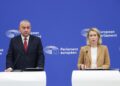
Brussels – “Due to the remaining uncertainties and the long incubation period, it is possible that further cases may emerge among former passengers and crew members in the coming weeks.” This is the comment of Pamela Rendi-Wagner, Director of the European Centre for Disease Prevention and Control (ECDC), on the current situation regarding the Andean hantavirus outbreak. “For this reason,” she added, “the precautionary approach adopted by the ECDC from the outset has been crucial.”
Meanwhile, the European Commission is seeking to reassure the public. “According to the latest assessment by the World Health Organisation, the risk to the general European population associated with Hantavirus is currently considered low,” said Eva Hrncirova, the European Commission’s spokesperson for health, during the daily press briefing. “Protecting public health is the Commission’s number one priority,” and it “is working tirelessly to coordinate a European response,” she explained. “We are bringing together Member States, the European Centre for Disease Prevention and Control, the World Health Organisation and G7 partners to ensure a unified response based primarily on scientific data,” she added.
On 2 May 2026, the ECDC was informed of an outbreak of severe respiratory illness on board the MV Hondius, a Dutch-flagged cruise ship carrying passengers and crew from 23 countries. As of 11 May, a total of nine cases of hantavirus have been reported, of which seven are confirmed, and two are probable. One woman was taken to Paris in a serious condition, and three people have died in recent days. Meanwhile, on 10 May, the ship arrived at the port of Granadilla, Tenerife, in the Canary Islands, and from there, the evacuation of passengers and crew to their respective countries of origin is underway.
With the ship’s arrival on its territory, Spain requested and secured the activation of the European Civil Protection Mechanism. “We coordinated repatriation flights for EU citizens over the weekend” and “yesterday (Sunday 10 May, ed.) four flights were carried out under the Civil Protection Mechanism, using dedicated transport and applying the necessary health protocols to protect passengers, crews, operational staff and the general public,” the spokesperson explained. “We have also actively supported and coordinated the evacuation operations carried out by Spain,” and “we remain on standby regarding additional transport, logistical capacity, and protective equipment, should they be required,” she concluded.
Ursula von der Leyen, President of the European Commission, with a post on X, expressed her gratitude to the Spanish government and the local authorities “for the swift and efficient disembarkation.”
Very grateful for the swift and efficient disembarkation of the Hondius ship in Tenerife.
My thanks to the Spanish government and all the authorities involved on the ground.
We are working hand in hand with Spain, @WHO and @ECDC_EU organising evacuation flights.
We will spare…
— Ursula von der Leyen (@vonderleyen)
May 11, 2026
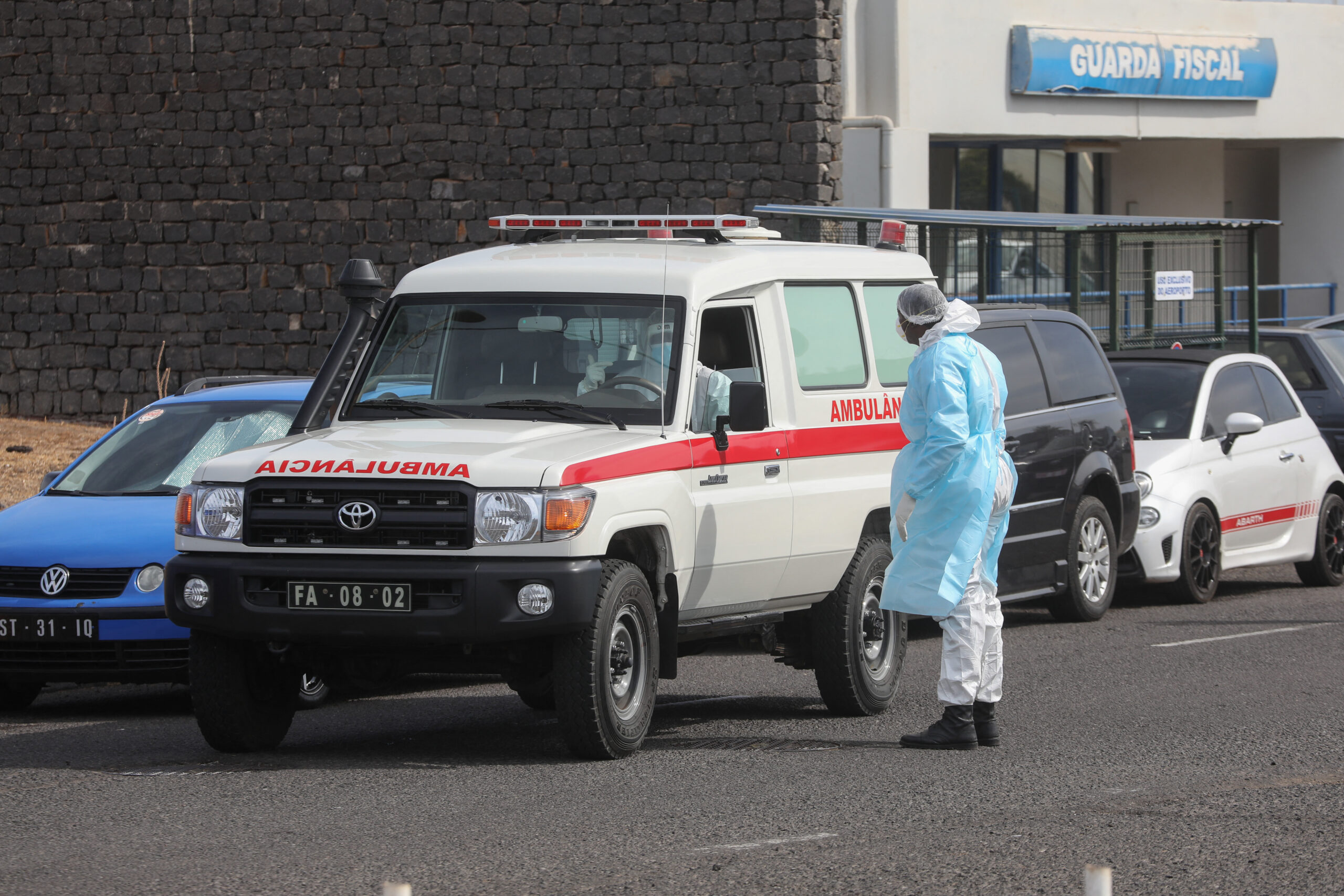
António Costa, President of the European Council, also praised this “example of multilateral cooperation, which enables us to deal effectively with health emergencies.” Upon arrival at the port, the European Centre reports, “all are considered high-risk and repatriated, whether symptomatic or not, via non-commercial flights.” Those presenting symptoms require immediate medical isolation, testing, and medical care, while those without symptoms are placed in quarantine.
English version by the Translation Service of Withub