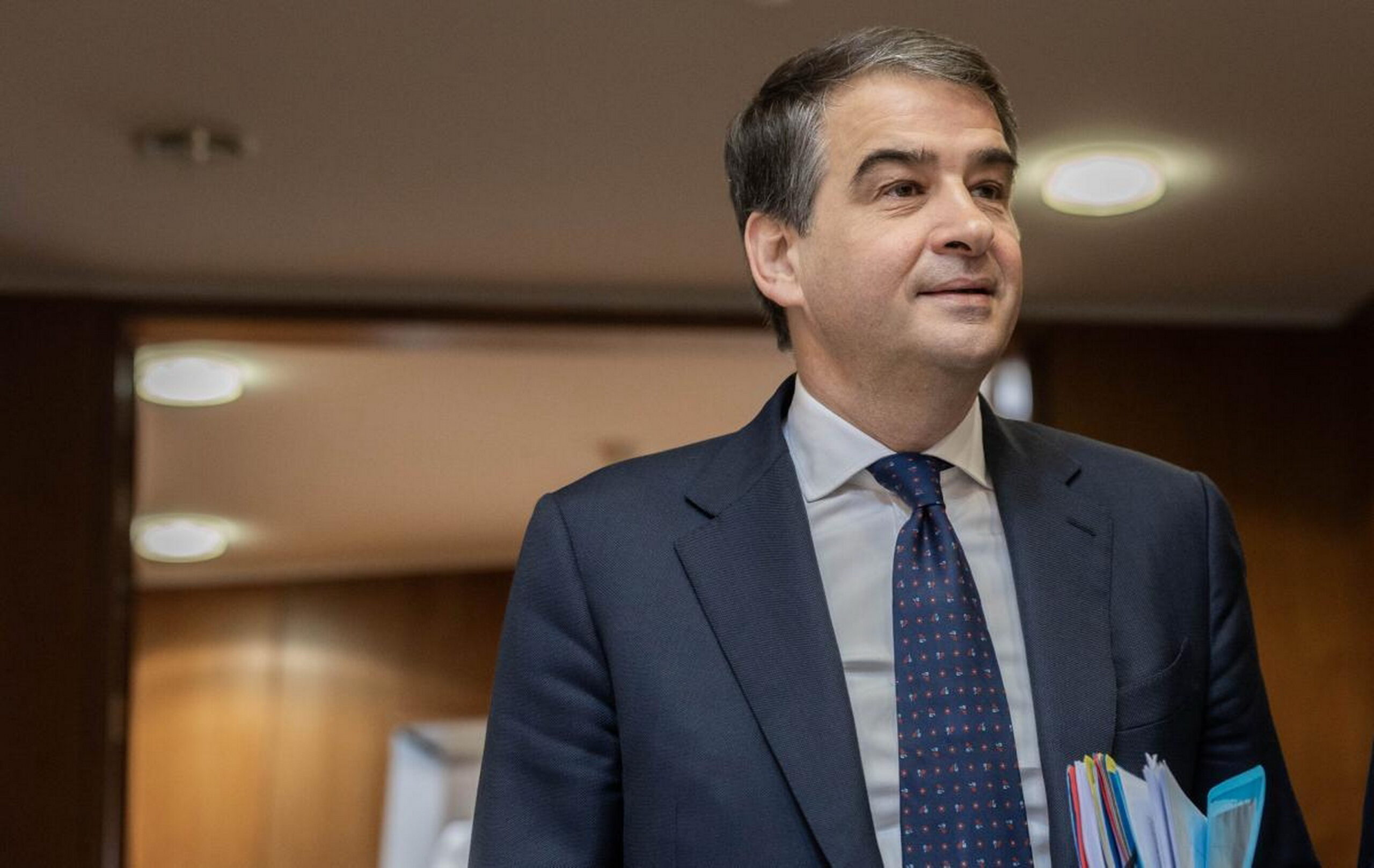
Brussels – Farewell to the Directorate‑General for Regional Policy? “Not now,” but it is certainly a possibility for the future that cannot be ruled out. Raffaele Fitto, Italy’s member of the European Commission and one of its executive vice‑presidents, acknowledges this, explaining that he is not unaware of the potential scrapping of what is effectively his ‘ministry’: DG REGIO. He is keen to stress that “this is not on the agenda at the moment,” but he confirmed at the press conference that the current Commission is considering a far‑reaching reorganisation of the executive’s architecture and its operations.
“The Commission, together with the Directorate-General for Regional Policy, is considering whether it would be appropriate to have a more efficient directorate-general,” and how to establish the “best possible model” for a central office managing the funds allocated to regions and local authorities. “However, this is the general approach for all DGs, for the organisation,” he points out. No decisions have been taken, but the only certainty is that the Directorate-General for Regional Policy is under discussion. The Commission’s large-scale review “is ongoing and we will have the opportunity to address this point, but it is not on the agenda at the moment,” he clarifies.
The European Commission is organised around the (DGs), administrative divisions around which the legislative and implementing activities of European policies are centred. These are the EU’s “ministries,” structures, which, like national ministries, can be created, merged, closed down, expanded, or downsized. Specifically, DG REGIO is responsible for managing structural funds, which account for a third of the European Union’s seven-year budget (in the 2021–2027 budget period, EU funds allocated to Cohesion Policy total 392 billion euros). Scrapping it, merging it, or even simply reducing its powers is no small matter.
In the view of the President of the European Commission, Ursula von der Leyen, the current Directorate-General for Regional Policy should be overhauled and brought into line with von der Leyen’s own vision for the future of the EU: with the merger of cohesion funds with agricultural ones into a single large fund, as proposed for the next multiannual budget for 2028–2034, the DGs could also adopt the same funding structure as European policies. The idea, therefore, is of a single large Directorate-General for Investment, incorporating the current Directorate-General for Regional Policy.
Scrapping DG REGIO would move even further towards the centralisation of structural funds on which Cohesion Policy is based, which would then be managed by offices and staff no longer dedicated to this specific programme, but to a whole range of tasks, including support for local areas. “I can say that cohesion is and will remain central to our policy, and we are working to adapt and modernise it,” Fitto assured, or at least tried to. Which may, perhaps, involve a new directorate-general.
English version by the Translation Service of Withub