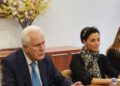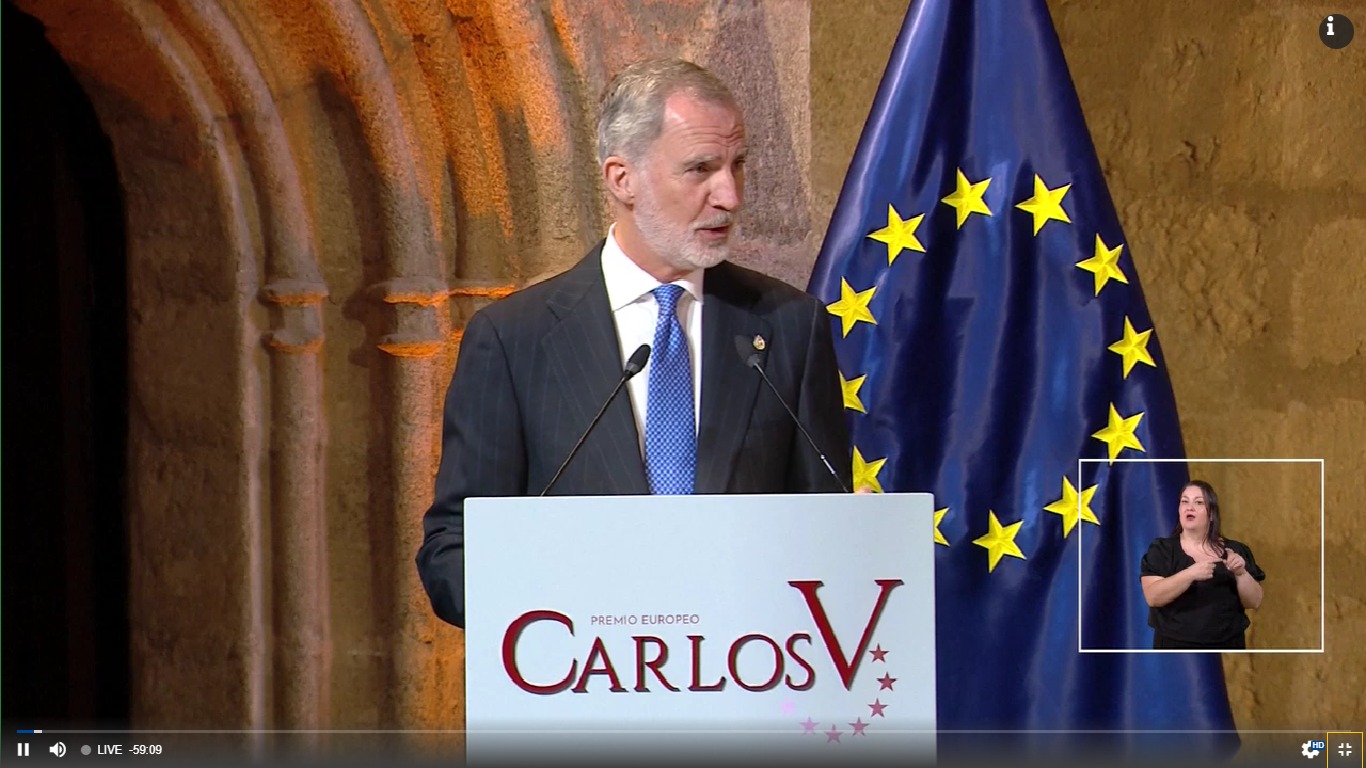
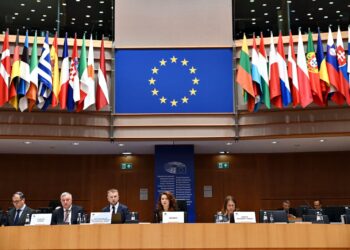
Brussels – The Charles V European Award, a distinction given to those who promote the unification and cultural values of the European Union, was presented today (25 May) to the European Committee of the Regions, during a ceremony presided over by King Felipe VI of Spain. The Yuste European and Ibero-American Academy Foundation is a Spanish cultural institution, based in the monastery of the same name in Extremadura, which promotes European integration and the historical ties between Europe and Ibero-America – the region of the American continent comprising all the countries historically colonised by Spain and Portugal. Every year, the foundation awards a prize to individuals, institutions, or projects that have made a significant contribution to the European Union’s integration process or to the promotion of its historical, scientific and cultural values. A distinctive feature of the prize is that the majority of its financial endowment is allocated to scholarships and research grants named after the winner. In previous years, the prize has been awarded to political leaders such as Angela Merkel, Mario Draghi, Antonio Tajani, Felipe González Márquez, José Manuel Durão Barroso, and Marcelino Oreja Aguirre, as well as representatives of international organisations such as António Guterres and Javier Solana Madariaga, in addition to projects such as the European Disability Forum and the Council of Europe Cultural Routes.
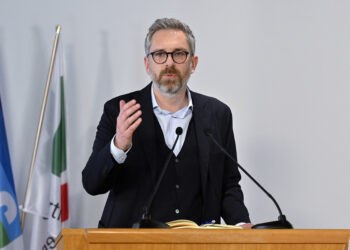
This year, the award went to the European Committee of the Regions, accepted by its president, Kata Tüttő. In her speech, President Tüttő emphasised the role of local leaders, describing them not merely as administrators but as “stabilisers” in times of uncertainty. She noted that regions and cities are responsible for implementing around 70 per cent of European policies. At the heart of her speech was the metaphor of the “translator”, inspired by Umberto Eco: “Europe survives thanks to this constant effort to understand one another and to translate across languages, cultures, histories, ideologies, fears, and hopes. Because how does translation work? To truly understand someone else, another person, another reality, you must give up something of your own.” An image Tüttő used to reiterate that European integration cannot be based solely on markets but requires structural solidarity: in an interconnected system, the failure of one part inevitably weakens the whole.
King Felipe VI of Spain brought the ceremony to a close by reflecting on the theme of diversity: he likened Europe to a jigsaw puzzle in which every piece, regardless of its size, is essential to the success of the whole: “Any missing piece would leave a glaringly obvious and irreplaceable gap.” The King praised the Committee of the Regions for its ability to embody the principle of subsidiarity, bringing public administration as close as possible to the citizens. “The Committee of the Regions must remain a meeting point for Europeans,” the Spanish monarch said, highlighting how the Committee’s work acts as a bulwark against current trends towards fragmentation and social atomisation, serving instead as an essential meeting point for keeping trust in the institutions alive through the practicality of local politics: “Thanks to a united Europe, thanks to the European institutions and thanks to the Committee of the Regions, we Europeans can speak and decide in the same terms, even if in different languages, on the direction our journey is taking,” the monarch concluded.
English version by the Translation Service of Withub


![[Copyright: European Union]](https://www.eunews.it/wp-content/uploads/2026/10/euco-261015-120x86.png)