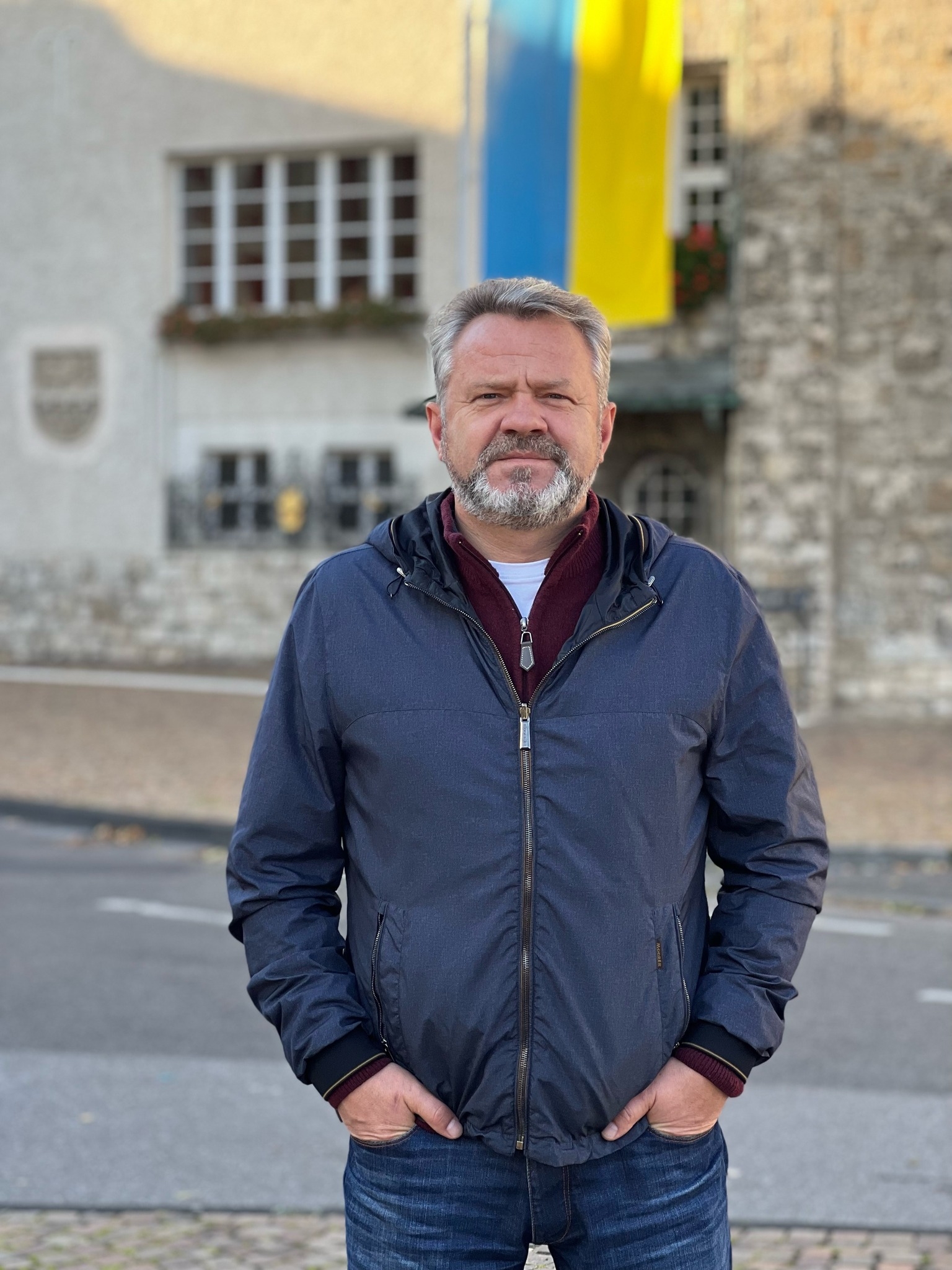
Brussels – “With Europe, we feel we are pursuing a common cause.” These are the words of the Mayor of Mariupol, Vadym Serhijovyč Bojčenko, speaking to Eunews in an interview given today (7 May). Beside him was Anatoliy Fedoruk, Mayor of Buča, who travelled to Brussels for an important event: the opening of a representative office at the Committee of the Regions, which aims to facilitate access to cooperation programmes and practical territorial reconstruction projects, thereby strengthening the link between local communities and European institutions.
Eunews: What does having a representative office here at the Committee of the Regions mean for your city, for you, and for its citizens?
Anatoliy Fedoruk: “Let’s say that it is above all a question of status that offers both Brussels and Ukraine – and Bucha in particular – the opportunity to feel that we are pursuing a common cause. It allows us to perceive that the Ukrainian issue and the events unfolding in Bucha are also relevant according to ‘Brussels time’, so to speak.”
E: Ukraine is on the path to European integration: what do you expect from this new link with European institutions?
A. F.: “I think that sooner or later, Ukraine will pass this test. Everything will depend on how committed both sides are to honouring their commitments. As for this collaboration and the opening of the office: it may remain merely a matter of status, but it will depend on our willingness to make use of the programmes and opportunities that will become available when we discuss practical projects and concrete realities.”
E: What is the current situation for the citizens you represent in terms of energy supply, the food chain, and services such as education?
A.
F: Obviously, the situation remains difficult because, as long as the war continues, no Ukrainian town, city, or region can consider itself safe. Given that the Russians are targeting energy infrastructure, the electricity situation is complex. However, we are trying to cope and provide services using alternative energy sources. For this, we are grateful to our colleagues, our municipal partners, and the funds that are helping us. One fact that instils hope and confidence is that 95 per cent of residents have returned to Bucha from the places where they had taken refuge. Furthermore, 12,000 internally displaced persons from combat zones or occupied territories have chosen our city as their second home. Our country desires peace more than anyone else, but Russia’s recent actions show that the war will continue.
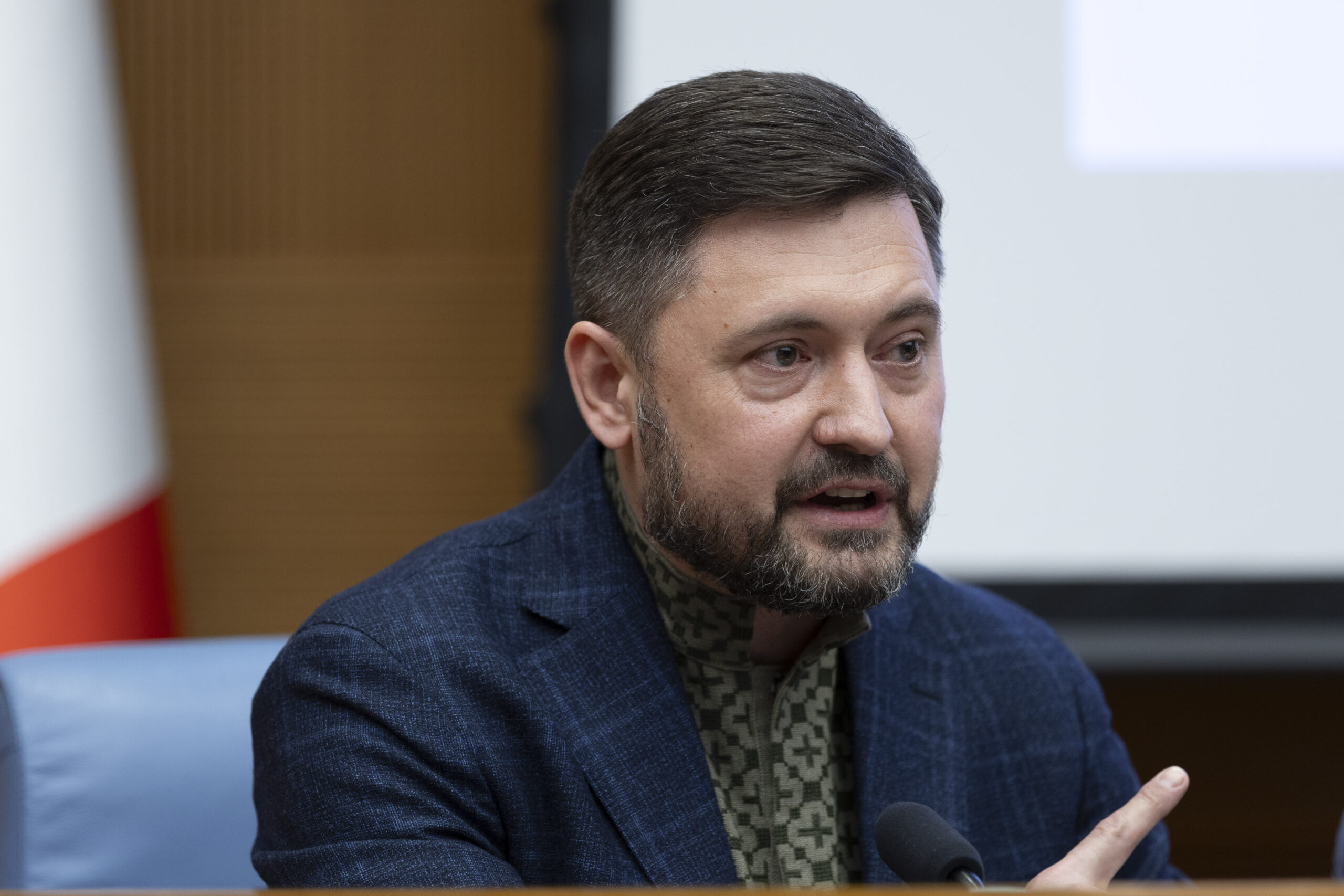
Meanwhile, from Mariupol, mayor Vadym Serhijovyč Bojčenko brought the city’s spirit of resistance and remembrance to Brussels at the event organised by the Committee of the Regions: Engagement de Bruxelles. This initiative sees European mayors at the forefront of defending democracy and the Union’s founding values. Born out of the experience of the City of Remembrance network – which also includes Buča – the document states that it aims to “respond to geopolitical instability and rising extremism through three pillars of action: raising awareness of civil protection, involving the younger generations in dialogue on universal values, and concrete operational solidarity between cities,” with particular support for areas affected by conflict such as Buča and Mariupol.
Eunews: As a city that has witnessed and been the scene of war and resistance, what does it mean to be a city of remembrance?
Vadym Serhijovyč Bojčenko: “When we talk about the network of cities of remembrance, in my view, we are also talking about Mariupol. It is a city that has been the scene of a terrible tragedy in Europe. It is essential that this truth be conveyed and that its memory preserved. This is our quest for justice regarding Russia’s aggression: memory equals truth, which equals justice. If we look at what is happening now in our occupied city, Russia has destroyed the theatre, killing many civilians in the process – around 600 people, including women and children, in that building. If we were to ask the citizens of Mariupol today whether the theatre should be rebuilt, the answer would be no. There should only be a memorial in honour of those who died. Russia, on the other hand, has tried to hide its military crimes. We live in the modern world and have managed to document the destruction of Mariupol using current technology, while we are recording the number of victims through eyewitness accounts. We have come here seeking support and international recognition from Brussels, Strasbourg and other European cities.”
E: What is the current situation in your city and for its residents?
V. S. B.: “Now, in its fourth year, the city is currently occupied by the Russian Federation. People living under occupation are not living; they are merely surviving – without work, without water, without medical care, or education. Russia must be held accountable for this. We operate as a municipality in exile: we have around 200,000 displaced citizens from Mariupol in Ukraine, whom we look after by continuing to provide services. We have opened 43 centres offering legal, medical, and educational support for children. We are present in 22 Ukrainian cities, including Dnipro, Lviv, and Vinnytsia.”
E: What do you expect from European support?
V. S. B.: “Firstly, that the International Commission on Damages begins its work this year and that a compensation fund financed with Russian money be established. Russia must start paying for the crimes, the tragedy, and the destruction of Ukrainian cities. Furthermore, we hope that the special tribunal will begin operating this year so that the Russian political and military leadership can be held accountable for the crimes committed in Mariupol, Bucha, Pokrovsk, Kramatorsk, and other cities.”
E: What would it mean for your citizens to be part of the European Union?
V. S. B.: “Ukraine has chosen its path: it is the path towards Europe and the European Union. Today, we are paying a very high price for this choice: our finest young men and women are defending our freedom and Europe’s independence, holding back Russian aggression. But I hope that in 2027, as promised to Ukraine, Europe will choose Ukraine.”
English version by the Translation Service of Withub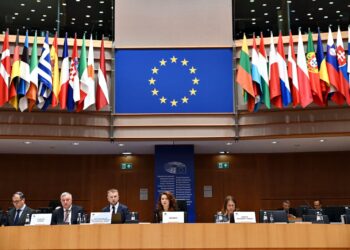


![Da sinistra: il presidente del Consiglio europeo, Antonio Costa; il presidente dell'Ucraina, Volodymir Zelensky: la presidente della Commissione europea, Ursula von der Leyen [Bruxelles, 18 giugno 2024. Foto: European Council]](https://www.eunews.it/wp-content/uploads/2026/06/euco_ua260618-120x86.jpg)
![[foto: Saverio De Giglio/imagoeconomica]](https://www.eunews.it/wp-content/uploads/2026/10/cpt-120x86.png)